



Vintage Washstand Mirror
These vintage washstand mirrors and dressing stands bring functional timber frames and tilting glass into the bedroom with genuine period character.
Vintage Washstand Mirror
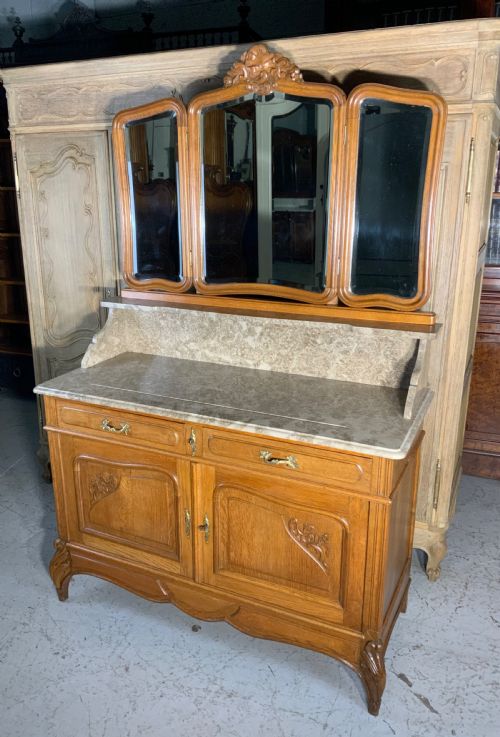
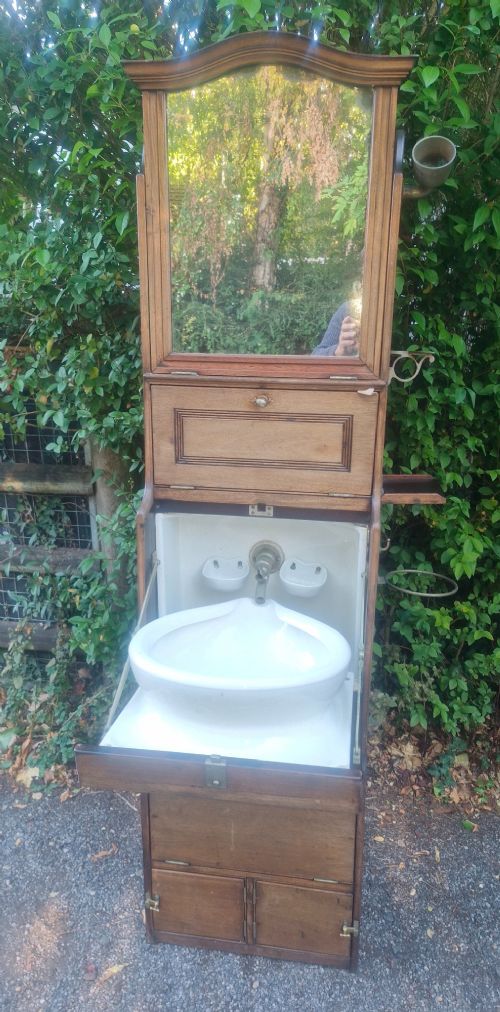
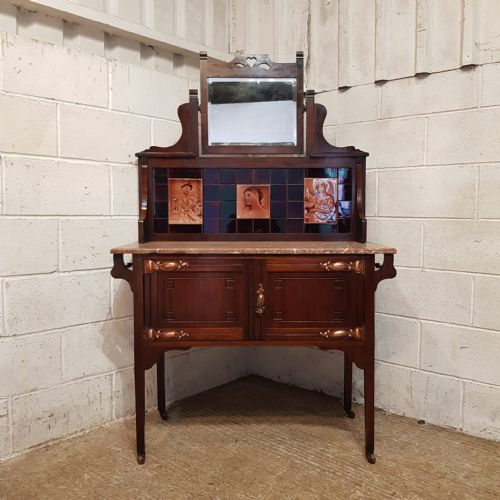
A vintage washstand mirror encompasses Edwardian mahogany and oak washstands, Georgian campaign dressing chests, and French provincial pieces designed for daily ablutions and grooming. These items range from marble-topped washstands with tiled splashbacks and pivoting glass to compact shaving stands and multi-plate dressing tables.
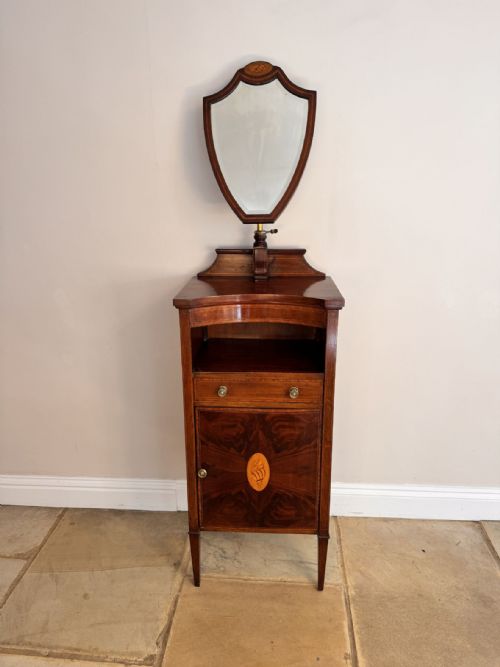
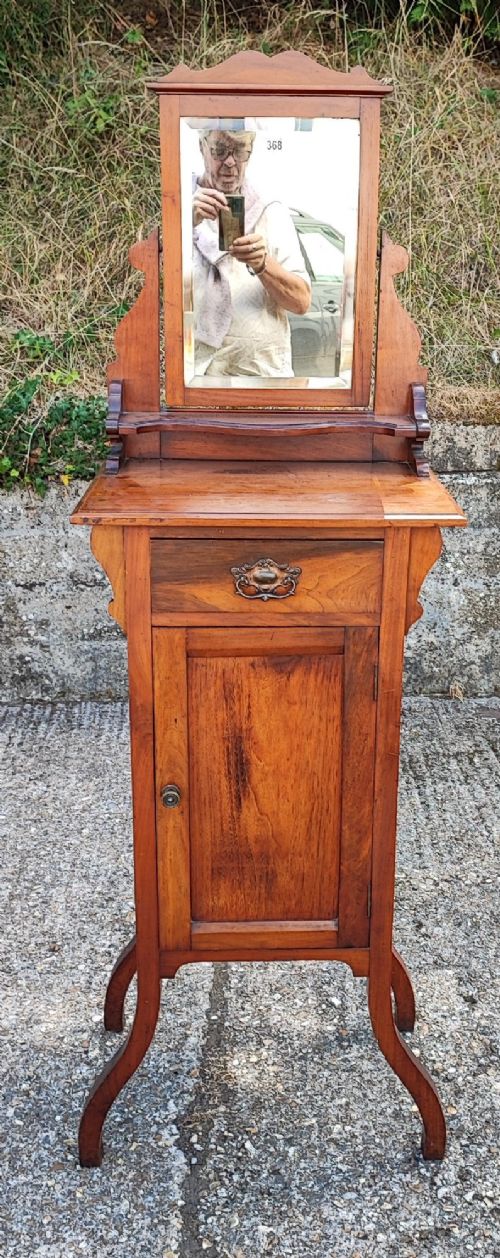
The versions most frequently met on this page date from the Edwardian era and the early twentieth century, constructed in mahogany, oak, and walnut. Many incorporate adjustable plates or swing frames supported by upright arms mounted directly to the timber carcase or table top.
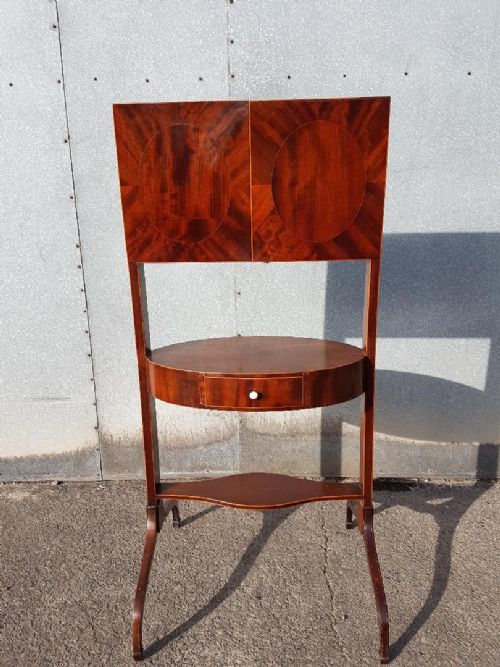
Forms extend beyond standard washstands to include specialised gentleman's shaving stands, campaign chests with integrated mirrors, and faux bamboo dressing chests. Each variety retains the practical arrangement of surfaces, drawers, and tilting glass intended for a nineteenth or early twentieth-century dressing room.
How they were made
Construction relies heavily on solid mahogany, oak, and walnut, frequently accented with satinwood inlay, brass fittings, and carved detail. Timber frames are joined using traditional cabinet-making methods to support heavy elements such as marble slabs and ceramic tiles.
Glass plates are typically bevelled and set within adjustable wooden or forged iron frames that allow the user to alter the angle of reflection. Brass brackets, pivots, and hinges secure the mirror components to the main washstand structure or dressing chest top.
Vintage Washstand Mirror Retail Price Guide 2026
Typical asking prices for vintage washstand mirror among the pieces listed under this phrase on Sellingantiques today, from the lower quarter to the upper quarter. They describe what is for sale here now, not the wider market.
The furniture forms associated with these mirrors span campaign chests, French provincial washstands, and gentlemen's shaving stands.
What varies in quality
Quality separates simple utilitarian pieces from fine cabinet-maker examples through the selection of timber grain, the precision of satinwood inlay, and the weight of the brass hardware. Superior pieces feature heavier marble tops, sophisticated carved oak or mahogany framing, and robust pivot mechanisms for the glass.
The integration of the mirror assembly into the wider washstand or dressing stand dictates the overall harmony of the design. Finer examples balance the proportions of the glass against the supporting chest or stand, utilising high-grade mirrors that retain their original silvering and bevel edge work.
Flashman & Co·James Shoolbred
The Vintage Washstand Mirror Glossary
- Triplate dressing table
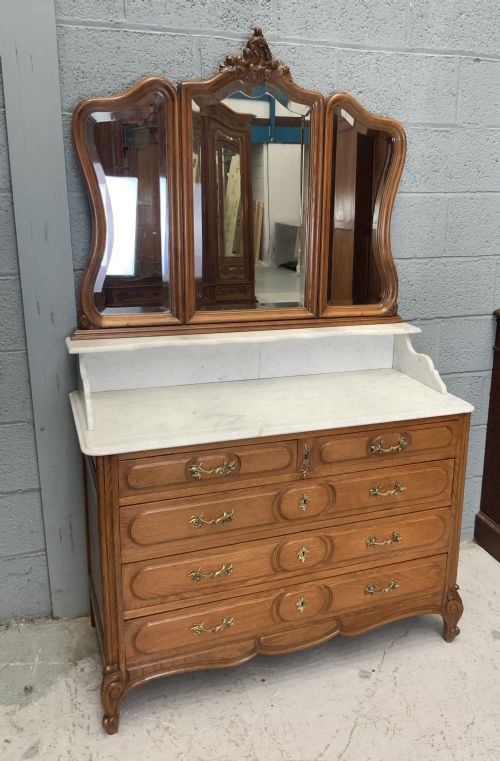
- A dressing table fitted with three hinged mirror plates that allow the user to view angles from the side as well as the front. These multi-glass arrangements are particularly characteristic of Georgian and Edwardian designs.
- Campaign washstand
- A folding or portable piece of furniture designed for travel, constructed with collapsible frames and brass-bound corners. They often incorporate compact mirrors and wash basins for use on military campaigns or journeys.
- Faux bamboo
- A decorative technique where hardwood, typically pine or birch, is carved and painted to resemble natural bamboo stalks. This style appeared frequently on Victorian bedroom furniture and washstands.
- Shaving stand
- A specialised piece of furniture featuring an adjustable mirror, small shelf spaces, and occasionally a shaving cup or basin. They were designed for men's morning grooming routines in Edwardian and Victorian households.
- Satinwood inlay
- A decorative veneer technique utilising pale, yellow-toned satinwood inserted into darker primary timbers such as mahogany or walnut. This method creates contrasting geometric or floral patterns on the surface of dressing stands.
Vintage Washstand Mirror: Frequently Asked Questions
What is a vintage washstand mirror?
A vintage washstand mirror is a pivoting or stationary glass plate originally mounted to a washstand, dressing table, or shaving stand during the Georgian, Victorian, or Edwardian periods. These mirrors were designed to assist with washing, shaving, and dressing before the widespread use of fitted bathroom suites.
Today, they survive as standalone decorative elements on antique timber furniture or as separate components retaining their original brass brackets and wooden support arms.
How were these mirrors used?
Users tilted or adjusted the glass plates to catch the light while washing at the marble-topped basin or shaving at a dedicated stand. The surrounding ledges and drawers held small grooming items, soaps, and shaving cups.
In modern rooms, they serve a similar functional purpose on top of dressing chests or low cabinets, bringing period timber and bevelled glass into the bedroom or hallway.
How do I date a washstand mirror?
Dating relies on identifying the underlying furniture style, timber, and construction methods of the stand holding the glass. Georgian examples often feature mahogany campaign designs or unusual triplate configurations, while Edwardian pieces frequently combine marble tops with inlaid mahogany or oak.
Hardware details such as brass pivot screws, bevelled glass edges, and the presence of ceramic tiles also help narrow the period of manufacture between the mid-nineteenth and early twentieth centuries.
How do I care for antique glass and wood?
Keep wooden frames and marble or mahogany surfaces clean by dusting with a dry cloth and occasionally applying appropriate beeswax to nourish the timber. Avoid using harsh chemical sprays on the wood or getting moisture into the edges of antique mirror plates.
Ensure the brass pivot screws supporting the glass are neither too tight nor too loose to prevent strain on the wooden upright arms when adjusting the angle.