



Vintage Walnut Vanity Unit
These vintage walnut vanity unit examples combine rich timber figure with practical bedroom storage, offering a striking focal point for the room.
Vintage Walnut Vanity Unit
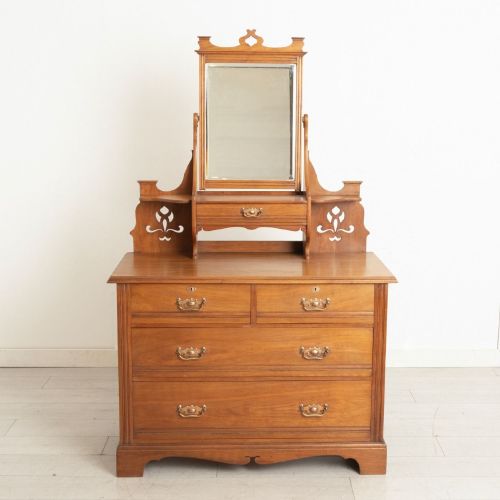
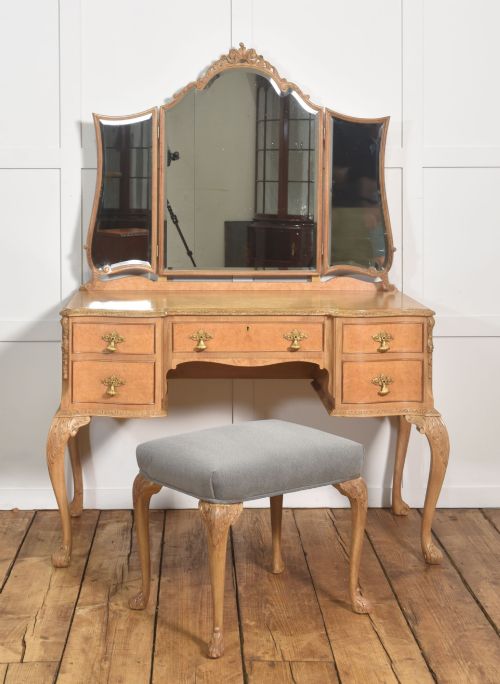
When you search for a vintage walnut vanity unit, you are looking at sophisticated dressing tables, dressing chests, and washstands fashioned from rich walnut timbers. These pieces span multiple decades and design movements, from the ornate curves of Victorian and Edwardian periods to the clean lines of Art Deco.
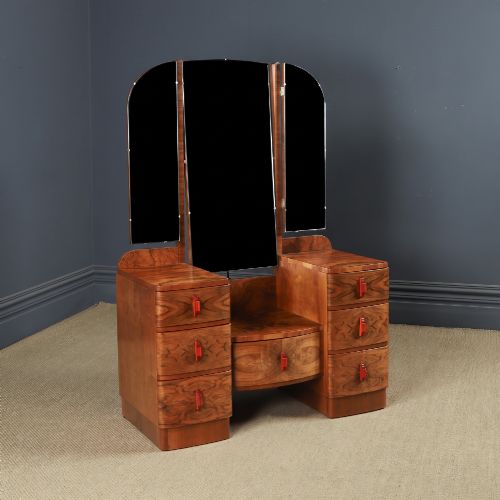
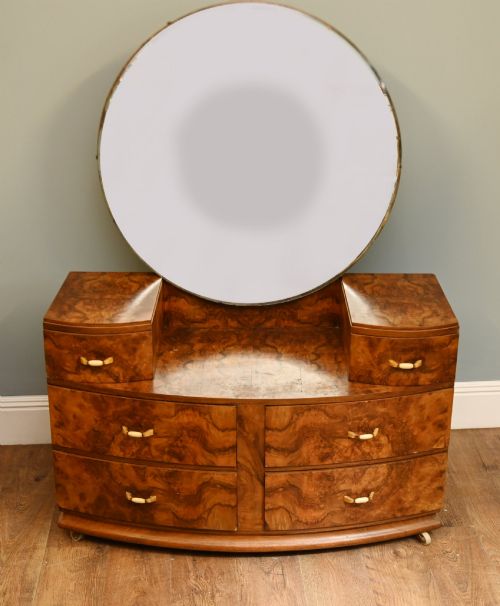
The version you are most likely to meet on this page is the mid-twentieth century Art Deco dressing table, often featuring figured burr veneers and integrated mirrors. Alongside these, earlier Edwardian and Victorian forms offer traditional craftsmanship with timber tops and marble surfaces.
The selection ranges from British workshops to continental examples, including Dutch marquetry and French chateau influences. Each object serves the dual purpose of surface utility and decorative presence in the bedroom.
How they were made
Cabinet makers utilised solid walnut and decorative walnut veneers, often selecting figured burr walnut for drawer fronts and central panels to create striking grain patterns. Frames were constructed using traditional joinery methods suited to the demands of domestic bedroom furniture.
Surfaces were frequently paired with functional elements such as mirror glass, brass hardware, and occasionally marble tops for washstands. Finishing involved polishing to enhance the warm tones of the timber and protect the wood from daily use.
Vintage Walnut Vanity Unit Retail Price Guide 2026
Typical asking prices for vintage walnut vanity unit among the pieces listed under this phrase on Sellingantiques today, from the lower quarter to the upper quarter. They describe what is for sale here now, not the wider market.
Listings span periods from the 1800s through the Edwardian era to Art Deco examples of the 1930s.
What varies in quality
The distinction between standard examples and the finest work lies in the selection and matching of walnut veneers. Master makers arranged grain patterns symmetrically across drawer fronts to create harmonious visual effects.
Execution of detail also sets superior pieces apart, from the precision of marquetry inlay to the quality of cast brass mounts and integrated mirror frames. The integrity of the original construction and the condition of the timber surfaces dictate the standing of each piece.
Maurice Adams·Harry and Lou Epstein·Maples
The Vintage Walnut Vanity Unit Glossary
- Burr walnut
- A prized timber harvested from tree growths, yielding intricate, swirling grain patterns. It was frequently utilised on high-end Art Deco drawer fronts.
- Marquetry
- The art of applying small pieces of veneer to a structure to form decorative patterns or pictures. Dutch examples on this page showcase this intricate technique.
- Pedestal dressing table
- A form featuring banks of drawers supporting a central mirror and writing or grooming surface. This layout provides substantial storage alongside surface utility.
- Washstand
- A precursor to the modern vanity unit, designed to hold a basin and washing equipment. Edwardian versions frequently incorporated tile backs and marble tops.
Vintage Walnut Vanity Unit: Frequently Asked Questions
How do I date a walnut dressing table?
Dating relies on stylistic clues, construction methods, and material choices. Pieces from the Art Deco period display geometric forms and burr veneers, while Edwardian and Victorian versions feature more traditional carving and turned supports.
Examining the drawer construction and mirror hardware further helps place the piece within its specific decade.
How do I care for walnut furniture?
Walnut furniture requires gentle cleaning with a soft, dry cloth to remove dust. Avoiding direct sunlight and maintaining stable room humidity protects the timber and veneer from fading or splitting.
Applying specialised furniture wax occasionally helps nourish the polished surface and preserve the grain depth.
Where were these pieces made?
The pieces originate from British workshops, regional schools such as the Cotswold School, and continental makers. Regional cabinet makers utilised local traditions alongside prevailing international styles.
Makers ranged from large department stores to specialised modernist design studios.