



Vintage Walnut Tray
A vintage walnut tray brings warmth and rich grain to any room, serving equally well as a portable server or set atop a folding stand.
Vintage Walnut Tray
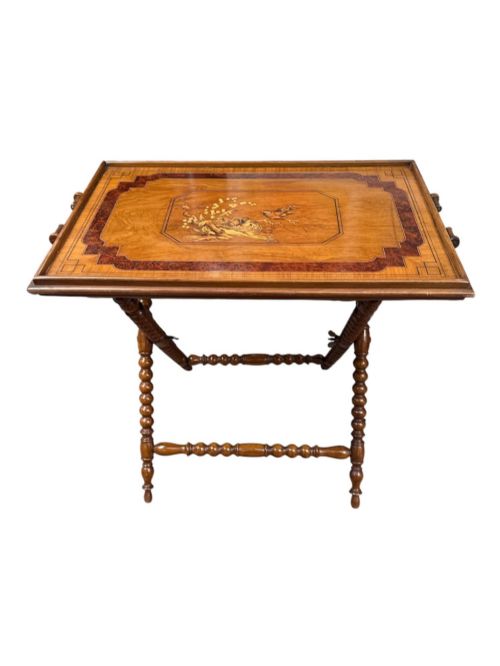
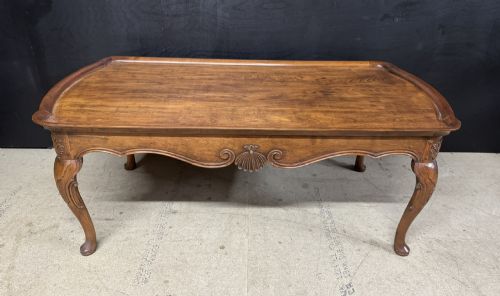
When you search for a vintage walnut tray, you encounter everything from portable serving pieces and butler's trays to permanent coffee tables and tray-top tables set upon folding stands. These items span periods from the Georgian era through the Victorian and Edwardian periods up to the 1930s, reflecting diverse domestic uses over more than a century.
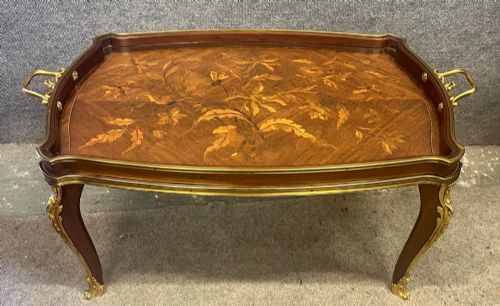
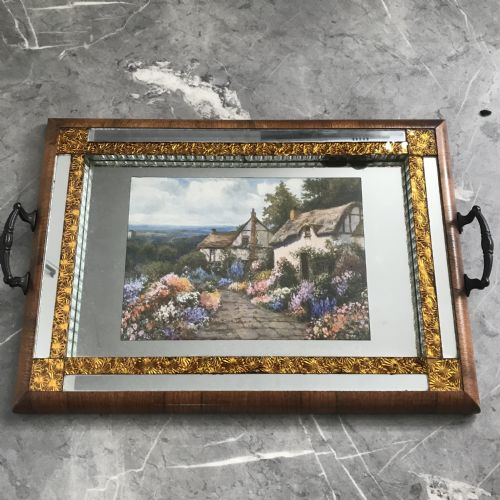
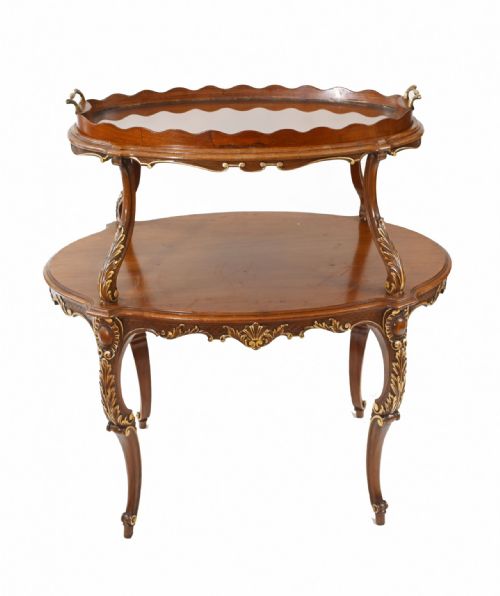
The pieces on this page range from standalone serving trays with handles and brass mounts to complex tiered etageres and silver display tables. You will also find specialised variants like an oyster veneered oval serving tray, an Art Deco mirrored glass tray with walnut veneer, and carved folding tray tables.
Origins vary widely across the inventory, encompassing English country house pieces alongside Italian Sorrento ware, Kashmiri craft, and French revivals. Whether utilised as a desk set, a bedside table surface, or a standalone tray, each object showcases the dark, figured timber characteristic of the material.
What varies in quality
The visual impact of the timber grain sets the finest examples apart, particularly where figured burr walnut or intricate oyster veneering covers the surface. Richness of colour and depth in the wood finish indicate superior selection by the maker.
Integration of secondary materials dictates overall refinement, distinguishing pieces with detailed marquetry, secure brass mountings, and clean glass or bone inlay from simpler utilitarian items. The execution of carved details on stands and folding frames likewise separates standard production from exceptional work.
Vintage Walnut Tray Retail Price Guide 2026
Typical asking prices for vintage walnut tray among the pieces listed under this phrase on Sellingantiques today, from the lower quarter to the upper quarter. They describe what is for sale here now, not the wider market.
Materials recorded across the current inventory include solid timber, walnut veneer, burr walnut, brass, glass, bone inlay, and metal.
Whytock and Reid
The Vintage Walnut Tray Glossary
- Burr walnut
- A prized wood cut from walnut tree growths, yielding intricate, swirling grain patterns highly valued for decorative furniture surfaces.
- Sorrento ware
- Woodwork decorated with detailed marquetry and micro-mosaic inlay, originating from the Italian town of Sorrento during the nineteenth century.
- Butler's tray
- A portable tray with raised edges, traditionally lifted by handles and often paired with a folding X-frame stand for serving.
- Oyster veneer
- Slices cut transversely from small branches or roots, creating circular, oyster-like patterns across a tabletop or tray surface.
- Marquetry
- The art of applying small pieces of veneer to a structure to form decorative patterns, pictures, or geometric designs.
Vintage Walnut Tray: Frequently Asked Questions
How do I use a vintage walnut tray today?
These pieces function brilliantly as traditional servers for drinks or afternoon tea, moving easily between rooms when fitted with carrying handles. Alternatively, place them onto dedicated folding stands or coffee table bases to create permanent display surfaces in a living room.
Smaller desk sets and mirrored variants suit side tables or dressing areas, holding everyday accessories while adding period character to your interior scheme.
What is the difference between a tray table and a serving tray?
A serving tray is designed to be portable, featuring integrated handles or raised rims for carrying items from kitchen to table. It relies entirely on being lifted or placed flat upon existing surfaces.
A tray table pairs the tray top with a dedicated base, often a folding stand or fixed frame, turning the portable server into a stable piece of occasional furniture.
How do I care for walnut veneer and timber?
Keep walnut furniture away from direct sunlight and strong heat sources to prevent the wood from drying out and the veneer from lifting. Dust regularly with a soft, dry cloth and avoid harsh chemical polishes that can damage the antique finish.
Use coasters and mats underneath glasses or hot cups to protect the polished surface from moisture rings and thermal marks.
How can I tell the period of a walnut tray?
Georgian and Victorian pieces often display heavier timber construction, hand-cut joinery, and traditional brass mounts suited to formal country houses. Edwardian and later 1930s items frequently introduce lighter frames, Art Deco mirrored glass, or veneering styles like burr and oyster.
Examine the underside and edges for construction clues, tool marks, and hardware styles that align with known manufacturing eras.