
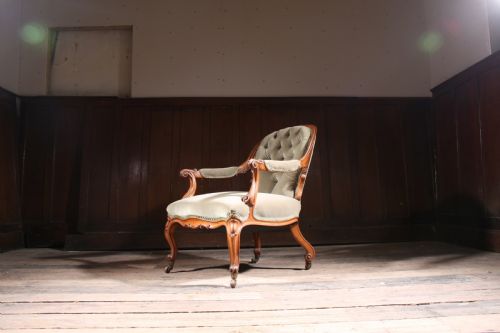
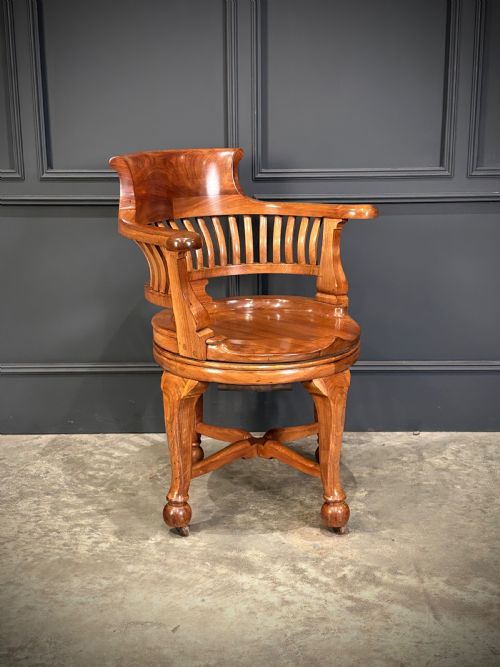


Vintage Walnut Study Chair
A vintage walnut study chair brings tactile warmth and grounding character to a workspace, combining rich timber with supportive forms.
Vintage Walnut Study Chair
A vintage walnut study chair encompasses seating designed for desks, libraries, and offices, drawing on forms from the nineteenth century through the early twentieth century. You will frequently encounter styles influenced by Queen Anne, Georgian, and Art Deco designs, utilising rich timber frames alongside supportive armrests.
The materials paired with these chairs typically include leather, brass studs, and fabric, creating practical seating for working environments. Pieces range from swivel mechanisms dating around nineteen hundred to solid framed library armchairs originating from the Victorian and Edwardian eras.
The selection reflects both open arm desk chairs and enclosed bow back captains chairs, constructed to serve functional seating needs in studies. Walnut veneers and burr walnut surfaces appear alongside solid timbers, often featuring upholstered pads or cushions.
Materials and construction methods
The foundational frames of these chairs rely on walnut and burr walnut, valued for deep grain patterns and sturdy structural properties. Workshops employed traditional joinery techniques to shape open arms, curved backs, and supportive legs suited to daily office or library use.
Upholstery elements incorporate leather, tapestry fabric, and woven textiles secured with brass studs along the edges of seats and backs. Swivel desk variants integrate metal and brass mechanisms to allow rotation, while stationary library models focus on rigid, heavy timber construction.
Listings span multiple decades, incorporating Victorian, Edwardian, and Art Deco eras alongside distinct Queen Anne and Georgian revival styles.
Distinguishing quality in walnut study seating
Quality reveals itself in the depth of the walnut grain and the selection of figured burr timber for prominent surfaces like backrests and arms. Superior examples show careful hand-finishing in the joinery and well-fitted upholstery that respects the period style of the frame.
The integrity of integrated swivel mechanisms and the durability of fitted leather or fabric upholstery dictate the practical longevity of the piece. Chairs retaining original brass studs and cohesive period details command greater appreciation among collectors and daily users alike.
The Vintage Walnut Study Chair Glossary
- Burr walnut
- A figured veneer sliced from tree growths, prized for swirling grain patterns. It provides decorative richness to prominent panels on chair backs.
- Bow back
- A continuous curved wooden rail forming the back and armrests of a chair. This shape offers enveloping support for extended periods at a desk.
- Captains chair
- A robust revolving or stationary armchair with a low, rounded backrest. Originating in office environments, it prioritises sturdy seating during administrative tasks.
- Oil cloth
- A heavy woven fabric treated with boiled linseed oil to create a waterproof surface. It appears on early office chair cushions for practical durability.
- Queen Anne style
- A design movement characterised by cabriole legs and pad feet, prominent in revival pieces. Walnut serves as the primary timber to highlight these flowing curves.
Vintage Walnut Study Chair: Frequently Asked Questions
Are these chairs comfortable for daily desk work?
Many examples feature padded leather seats, upholstered arms, and supportive curved backs designed for prolonged sitting at a desk. Swivel mechanisms and generous proportions further adapt these historical forms to modern workspaces.
However, ergonomics vary significantly across different decades, with older Victorian models prioritising rigid posture over modern lumbar adjustment. Selecting a design with a supportive tilt or a wide seat ensures greater comfort for daily use.
How do I identify a swivel desk chair?
Swivel versions typically incorporate a central metal or brass spindle beneath the seat, allowing the upper wooden structure to rotate freely. These often appear in office or captains chair configurations from the late nineteenth and early twentieth centuries.
Stationary library chairs, by contrast, feature fixed four-leg bases or upholstered frames without rotating mechanisms. Checking beneath the seat reveals the mechanical pivot points characteristic of working desk chairs.
What is the difference between library and desk chairs?
Library chairs frequently feature open arms and substantial upholstered frames intended for reading spaces and studies. They emphasise decorative woodwork and rich textiles like tapestry fabric or leather.
Desk chairs, particularly those from later periods, often prioritize mobility through swivel functions or compact footprints suited to writing tables. Both share walnut construction but serve slightly different functional roles within a room.
How should I care for walnut and leather?
Walnut benefits from occasional polishing with suitable natural waxes to nourish the timber and preserve its deep colour. Avoiding direct sunlight prevents the wood grain from fading over time.
Leather upholstery requires gentle cleaning with a damp cloth and periodic conditioning to prevent cracking. Keeping the material hydrated maintains the supple texture of vintage seats and armrests.