


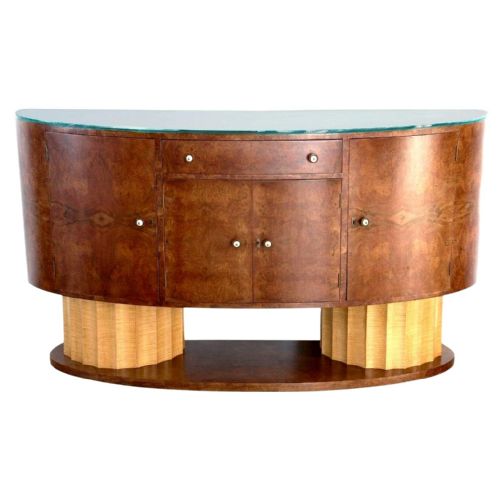


Vintage Walnut Dining Credenza
A vintage walnut dining credenza brings architectural presence and rich grain to a room, offering generous storage for tableware while anchoring the dining space.
Vintage Walnut Dining Credenza
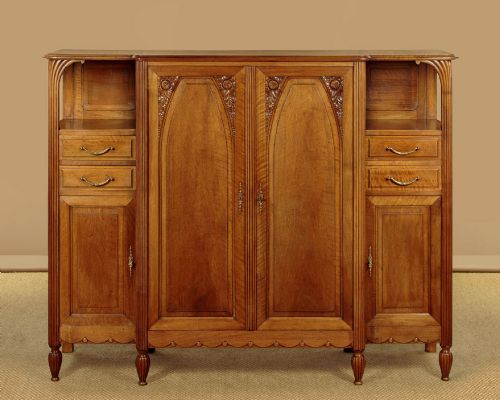
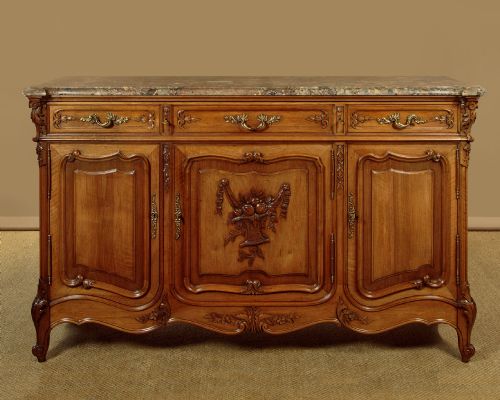
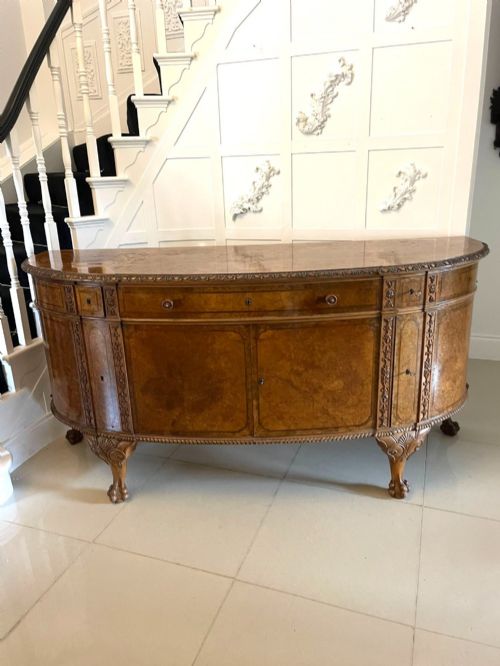
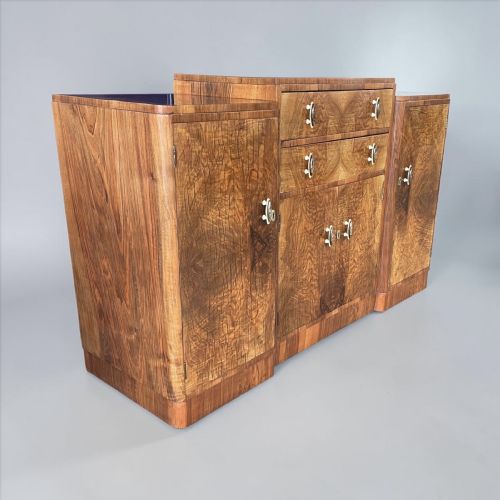
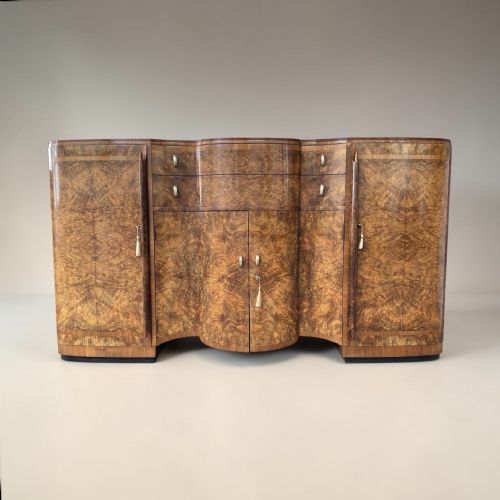
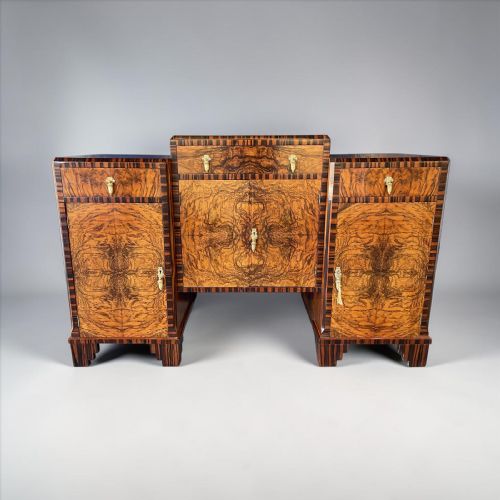
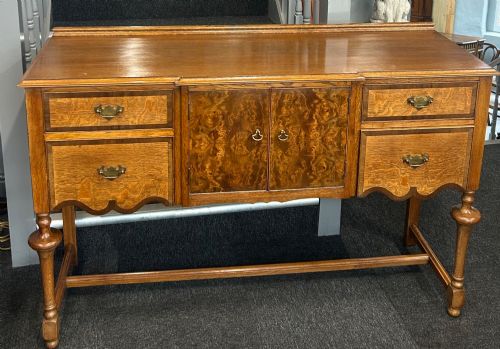
A vintage walnut dining credenza encompasses substantial serving furniture designed for the dining room, drawing heavily on early twentieth-century and Victorian forms. Sideboards, sideboards and buffets, and credenzas form the bulk of the shapes available.
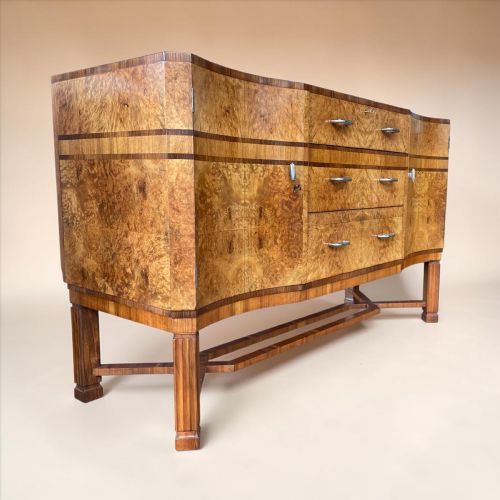
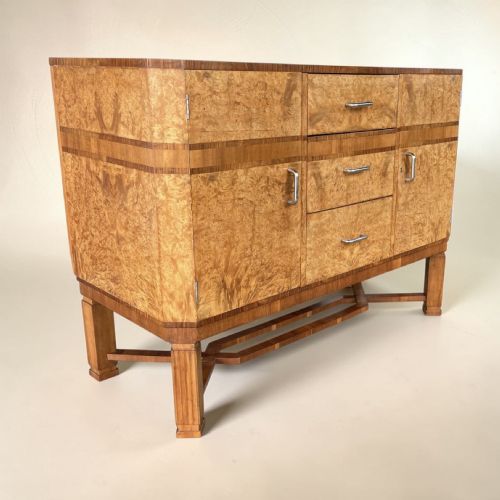
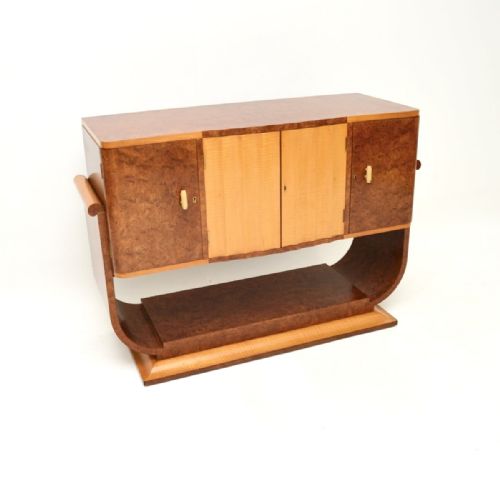
The material palette is dominated by walnut and burr walnut, alongside walnut veneer, supported by occasional brass and glass details. Pieces span multiple decades, led by Art Deco designs from nineteen-thirty alongside Edwardian, Victorian, and nineteenth-century examples.
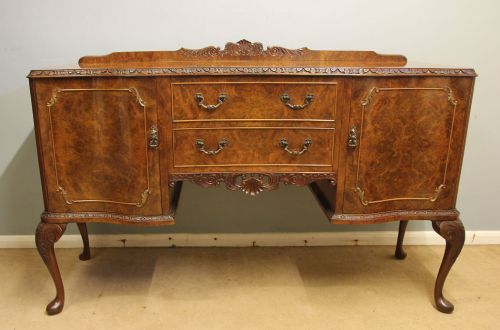
Makers such as Maurice Adams, Hille, and Harry and Lou Epstein appear alongside revival styles including Queen Anne, Georgian Revival, and Italian Renaissance. Buyers encounter everything from serpentine front servers to large breakfront cabinets and compact sideboards.
Materials and Technique
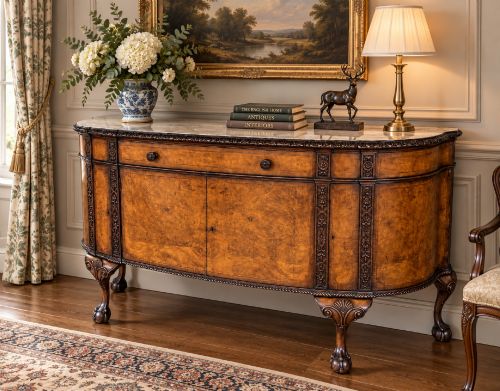
Makers utilised solid walnut and decorative burr walnut veneers applied over hardwood carcases to achieve rich, figured surfaces. Crossbanding and marquetry details add geometric or floral contrast to drawer fronts and cupboard doors.
Brass handles, hinges, and occasional glass panels complement the dark wood tones, while marble surfaces appear on selected server tops. Carved ornamentation defines the earlier Victorian and Edwardian pieces, contrasting with the smooth, curved surfaces of Art Deco designs.
Vintage Walnut Dining Credenza Retail Price Guide 2026
Typical asking prices for vintage walnut dining credenza among the pieces listed under this phrase on Sellingantiques today, from the lower quarter to the upper quarter. They describe what is for sale here now, not the wider market.
Several credenzas arrive with twelve-piece cutlery sets tucked quietly inside, ready for a sudden dinner party.
Build and Design
Quality rests on the selection and matching of burr walnut veneers, where symmetrical grain patterns across doors and drawers demonstrate superior craftsmanship. The depth of the carving and the integrity of the underlying hardwood carcase distinguish standard production from exceptional pieces.
Attribution to documented makers or prominent workshops elevates a credenza through superior joinery, considered proportions, and original hardware. The crispness of marquetry work and the weight of the brass fittings further separate ordinary items from those of high distinction.
Maurice Adams·Hille·Harry and Lou Epstein·Hamptons of Pall Mall London
The Vintage Walnut Dining Credenza Glossary
- Burr walnut
- A figured wood grain derived from the wart or burl growths of the walnut tree, prized for its swirling, decorative patterns.
- Serpentine front
- A furniture front characterised by a concave central section flanked by two convex curves, creating a fluid wave shape.
- Crossbanding
- A narrow strip of veneer laid around the border of a panel, running perpendicular to the grain of the central wood.
- Breakfront
- A large cabinet design where the central section projects forward from the flanking sections, creating architectural depth.
- Marquetry
- The art of applying pieces of veneer to a structure to form decorative patterns, pictures, or designs.
Vintage Walnut Dining Credenza: Frequently Asked Questions
What is a credenza?
A credenza is a low storage cabinet traditionally used for serving food and storing dining accessories. In modern dining rooms, it functions as both a sideboard and a display surface.
These pieces typically feature a combination of cupboards and drawers behind flat, serpentine, or bow fronts. They provide substantial internal capacity while maintaining a low profile that preserves wall space.
How do I date a credenza?
Dating relies on stylistic markers, construction methods, and materials present in the cabinet. Art Deco pieces display geometric lines and burr walnut veneers, whereas Victorian examples often feature mirror backs and heavier carving.
Revival styles such as Queen Anne incorporate cabriole legs and specific proportions tied to the early twentieth century. Examining interior drawer construction and hardware also helps establish the era of manufacture.
How do I care for walnut veneer?
Walnut veneer requires protection from direct sunlight and excessive moisture to prevent fading and lifting. Regular dusting with a soft, dry cloth preserves the polished finish.
Applying a quality beeswax periodically nourishes the wood and maintains its natural lustre. Avoid placing hot dishes directly on the wooden surface to prevent heat marks.
Where should I place a credenza?
A credenza belongs against a dining room wall, often opposite the main table to balance the room. It acts as a natural station for serving dishes during meals.
Beyond the dining room, these cabinets fit well in hallways or living spaces for storing glassware and linens. Ensure adequate clearance for doors and drawers to open fully.