

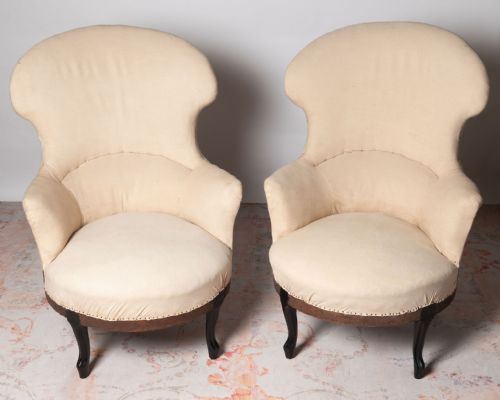
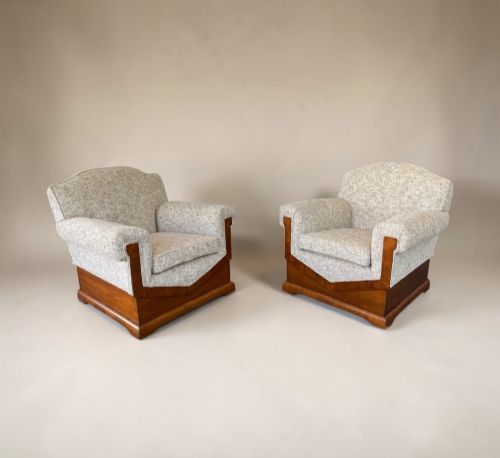
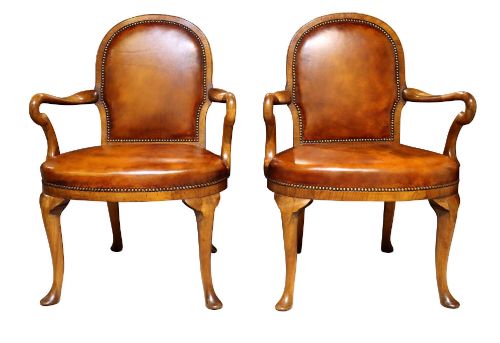

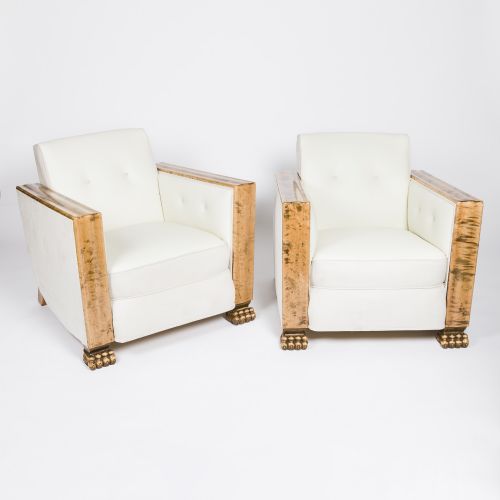
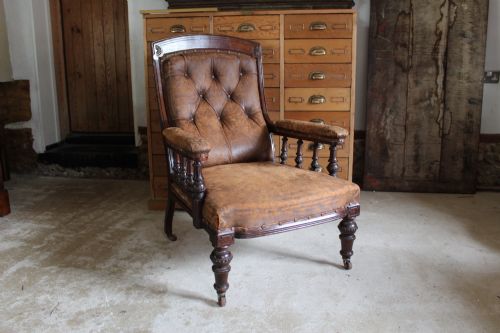

Vintage Walnut Club Chairs
These vintage walnut club chairs bring together solid timber frames and deep seating, offering substantial comfort and period character.
Vintage Walnut Club Chairs
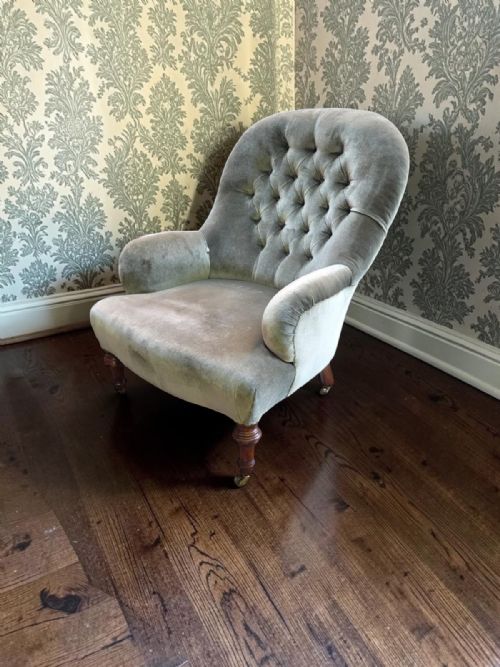
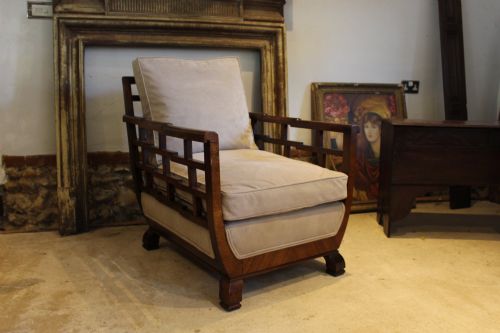
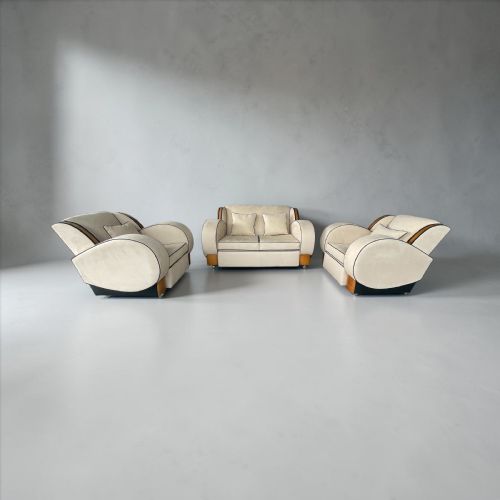
Vintage walnut club chairs encompass low, deep-seated lounge seating designed for comfort, appearing frequently alongside related forms like bergere library chairs and occasional seating. Buyers seeking vintage walnut club chairs encounter substantial frames executed in walnut timber, burr walnut, and wood, often paired with matching armchairs or lounge suites.
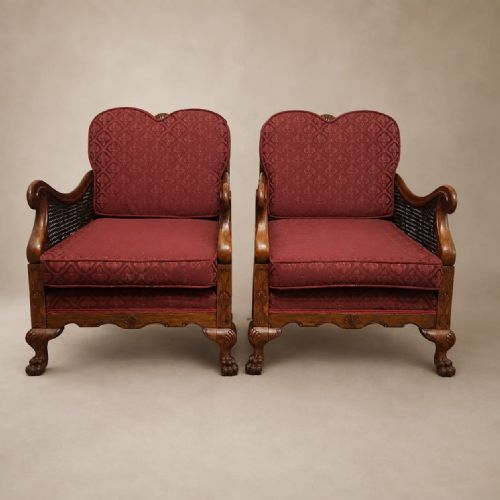
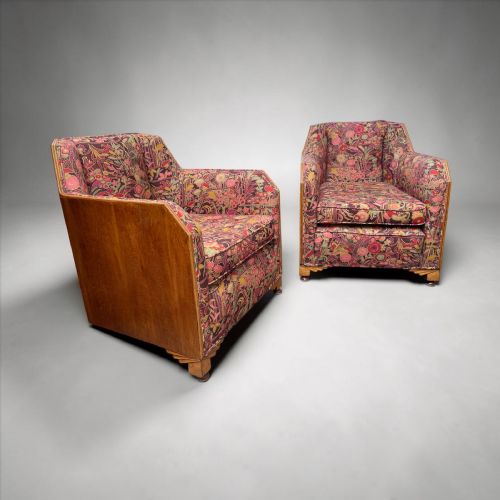
The selection ranges across several distinct periods, with Art Deco examples from the 1930s sitting alongside Edwardian pieces, Victorian leather armchairs, and 19th-century designs. Many listings present pairs or matching suites, incorporating details such as cane panels, button backs, and claw and ball feet.
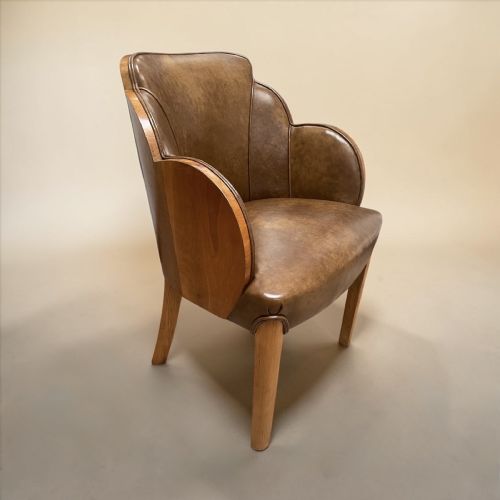
Origins vary from English country house styles to French revival and chateau aesthetics, alongside specific forms like cloud chairs and desk chairs. This variety allows collectors to find matching pairs or single statement pieces suited to traditional and modernist interiors alike.
What varies in quality
Quality separates ordinary seating from exceptional examples through the precision of the timber framing and the integrity of the walnut grain. Pieces featuring burr walnut veneers or solid walnut structures display a depth of finish that elevates the overall presence of the chair.
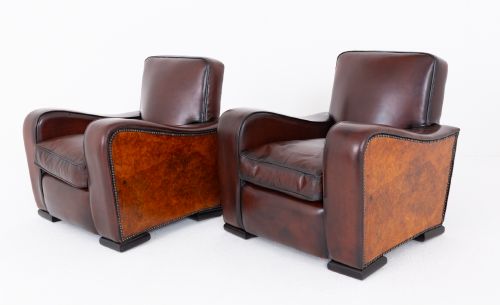
The standard of upholstery and the retention of original materials also define the hierarchy of pieces. Chairs retaining period leather, suede, or specialist maker characteristics hold distinct advantages over later recoveries, though professional restoration maintains structural utility.
Materials documented across the inventory include solid walnut, burr walnut, leather, calf suede, velvet, brass, and cane.
Hille·Harry and Lou Epstein·Howard and Sons
The Vintage Walnut Club Chairs Glossary
- Bergere
- A closed-arm armchair with a wooden frame, where the sides are typically filled with cane work. This style originates from French design traditions.
- Cloud chair
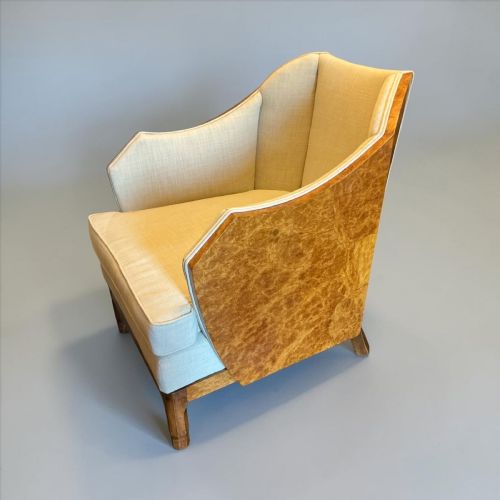
- An Art Deco armchair style characterised by rounded, bulbous upholstered forms resembling cumulus clouds. These pieces emerged prominently during the 1930s.
- Claw and ball feet
- A furniture foot carved to represent a talon grasping a ball, commonly found on traditional Victorian and revival pieces. It denotes a specific decorative ambition in the woodwork.
- Burr walnut
- A specialised timber cut from the abnormal growth of a walnut tree, yielding complex, swirling grain patterns. It is utilised on high-end cabinetry and select chair frames.
- Split cane
- Woven rattan material split for finer cane work panels on chair backs and sides. It provides lightweight durability alongside decorative transparency.
Vintage Walnut Club Chairs: Frequently Asked Questions
What defines a club chair?
A club chair is a deep, comfortable armchair designed for lounging, typically featuring a low back and upholstered arms.
In period pieces, these chairs prioritise solid timber construction paired with generous cushioning to ensure substantial comfort and durability.
How do I identify Art Deco chairs?
Art Deco chairs from the 1930s display streamlined silhouettes, geometric curves, and smooth walnut or burr walnut surfaces.
They often incorporate modernist styling, including cloud shapes and smooth leather or suede upholstery, distinguishing them from earlier ornate periods.
Are these chairs sold in pairs?
Many listings feature matching pairs or multi-piece lounge suites alongside single armchairs.
Pairs provide symmetrical seating options for living spaces, libraries, and drawing rooms, matching the original configuration of many period country house suites.
What materials are used for upholstery?
Upholstery materials span traditional leather, calf suede, velvet, fabric, and kilim coverings.
Some designs also incorporate split cane panels on the arms and back, blending exposed walnut frames with woven textural elements.
How do I care for walnut wood?
Walnut frames require gentle dusting and occasional conditioning to maintain the natural lustre of the timber.
Keeping these chairs away from direct heat sources and excessive moisture preserves both the wooden structure and the surrounding upholstery.