

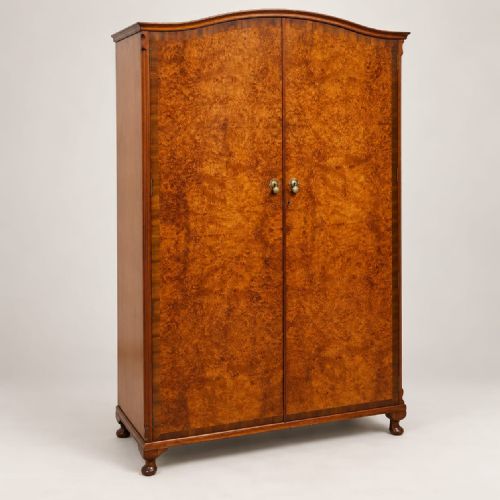
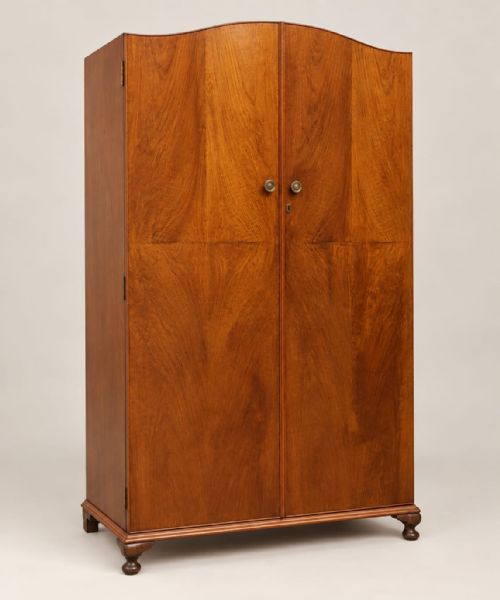
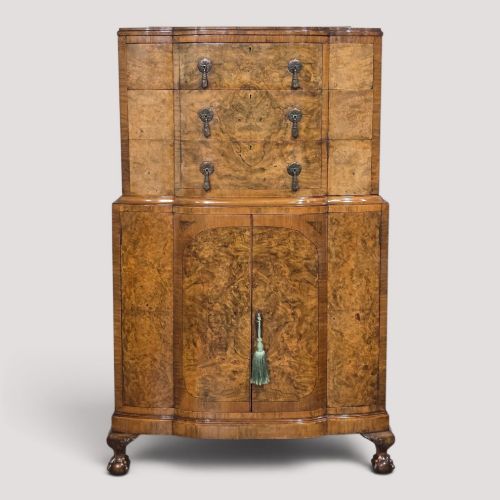
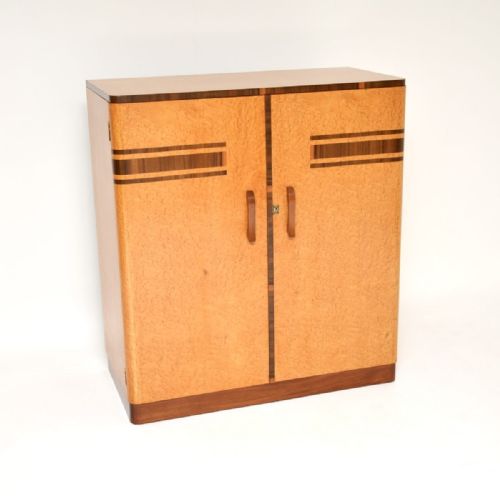
Vintage Walnut Clothes Cupboard
These vintage walnut clothes cupboard pieces offer generous storage in rich timber, combining practical hanging space with striking grain patterns.
Vintage Walnut Clothes Cupboard
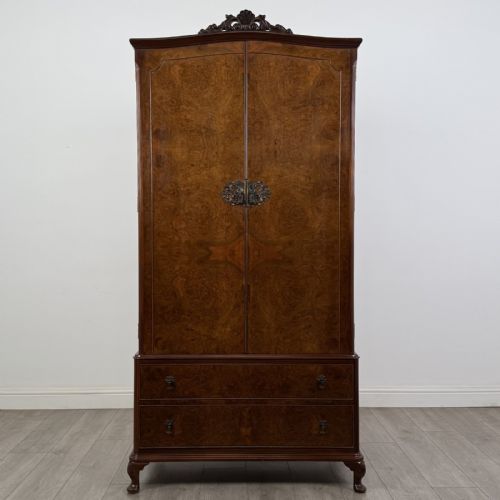
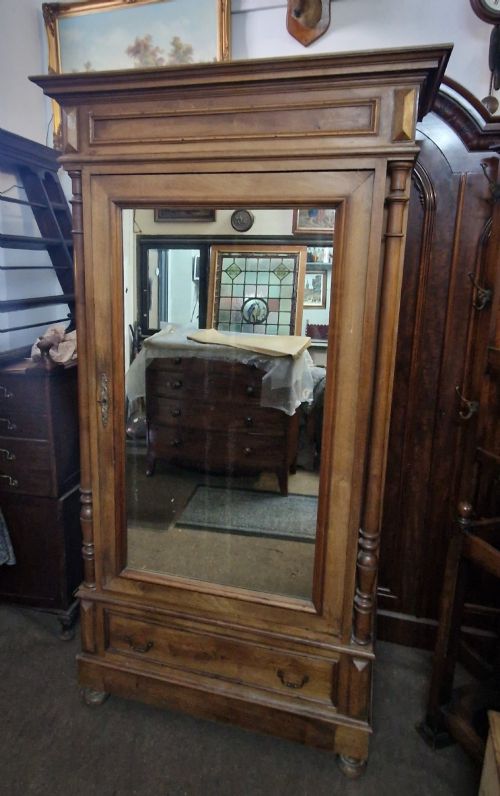
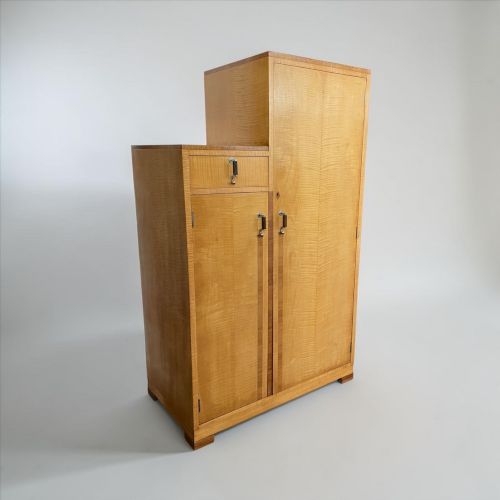
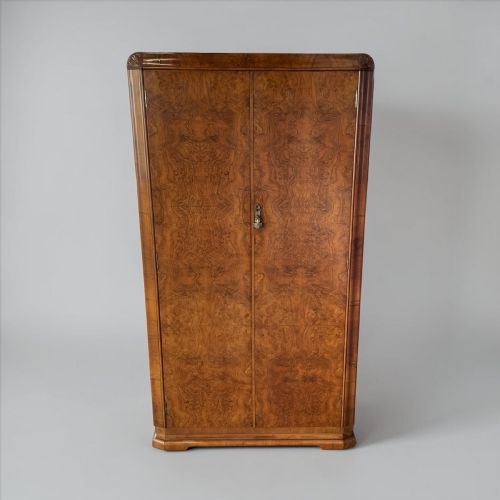
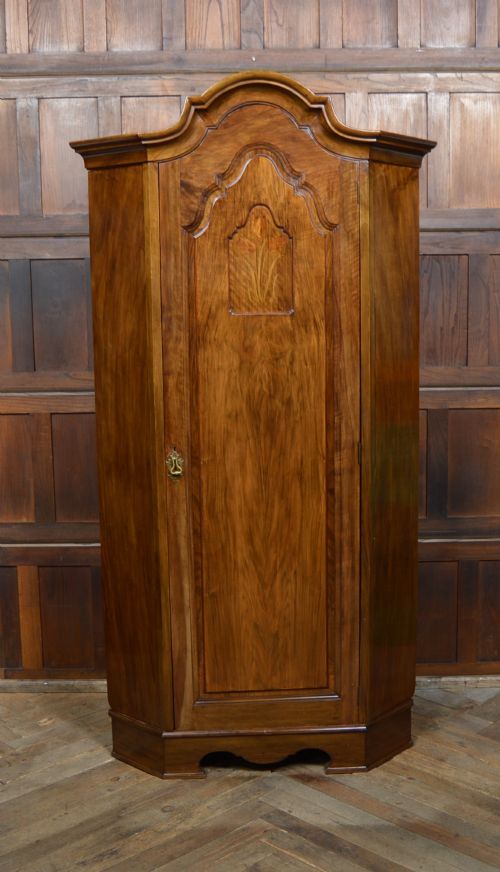
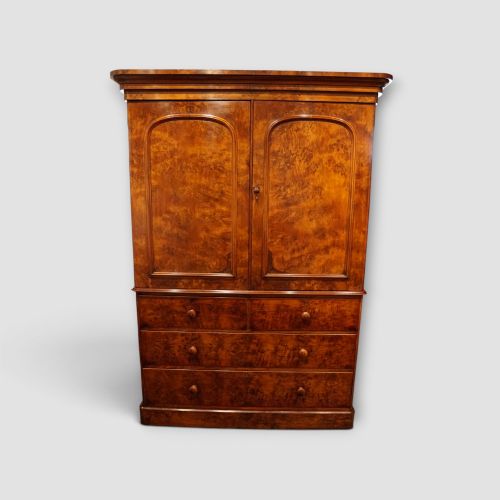
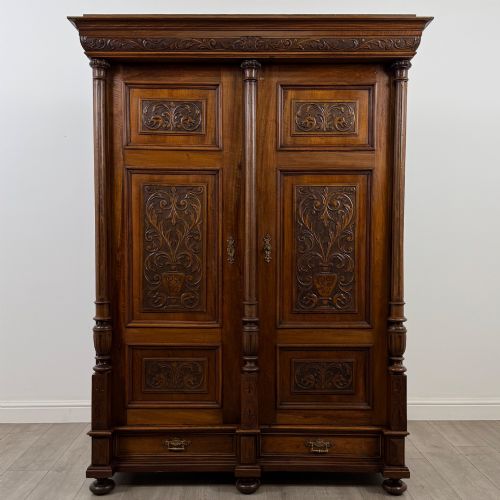
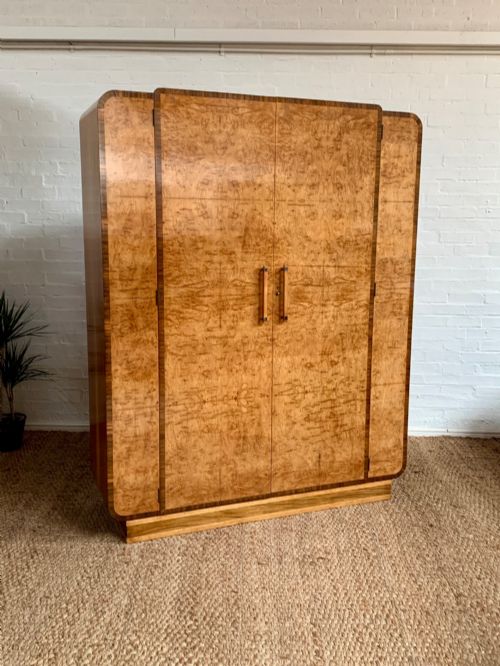
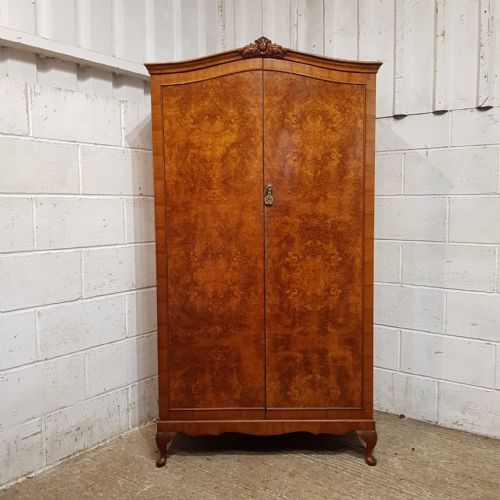
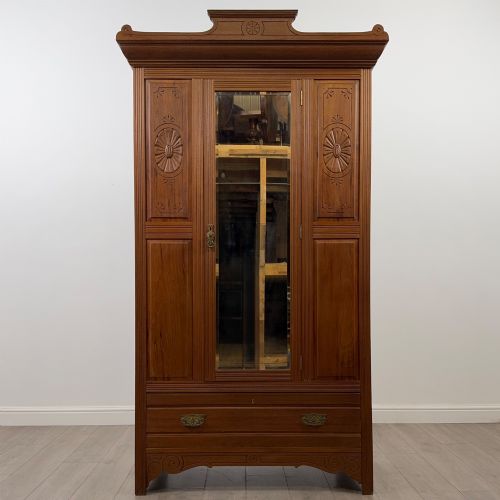
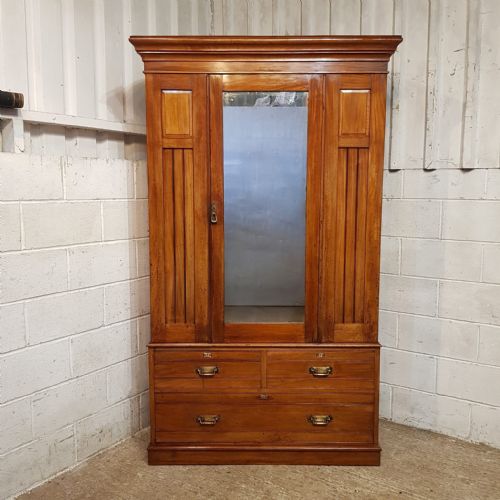
A vintage walnut clothes cupboard is a large storage piece designed for garments, appearing in varied forms from Victorian linen presses to Art Deco wardrobes and Continental armoires. Buyers searching for this phrase encounter sturdy timber carcases spanning the nineteenth and twentieth centuries, including Edwardian, 1920, and 1930 creations.
The selection ranges from single mirrored doors and compactum layouts to broad triple wardrobes and marquetry cabinets. Figured wood surfaces and rich patination define the style across the periods represented.
How they were made
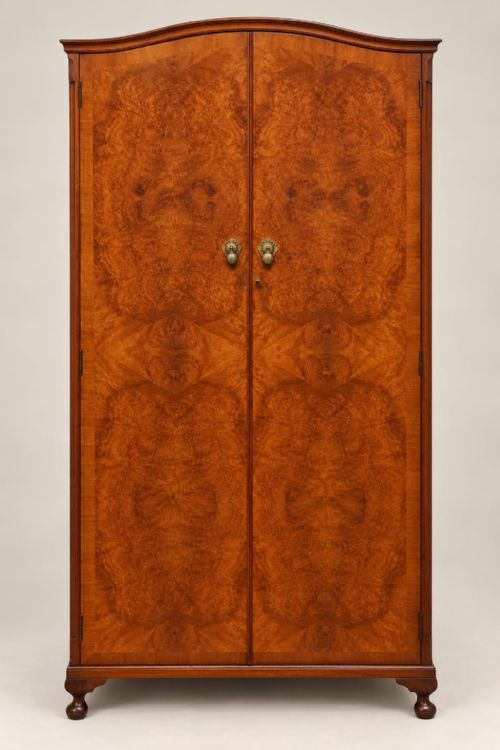
Cabinet makers utilised solid walnut, burr walnut, and walnut veneer over supportive wood frames, building sturdy carcases designed to hold heavy garments and linen. Decorative details often incorporate marquetry, intricate carving, and glass panels.
Functional hardware relied on brass fixtures, while twentieth-century examples occasionally integrated Bakelite elements. These materials combined to produce durable storage units with distinctive figured grain patterns across the doors and panels.
Vintage Walnut Clothes Cupboard Retail Price Guide 2026
Typical asking prices for vintage walnut clothes cupboard among the pieces listed under this phrase on Sellingantiques today, from the lower quarter to the upper quarter. They describe what is for sale here now, not the wider market.
Several cupboards hide internal split-side compartments designed for secret storage of vintage garments.
What varies in quality
The quality of a piece rests in the choice of timber, particularly where figured walnut or burr walnut veneer displays complex grain movement across large surfaces. Superior examples demonstrate precise joinery and balanced proportions, whether built in a restrained Victorian aesthetic or a striking Art Deco style.
Integration of specialised interior fittings, such as drawers within compactum wardrobes or linen presses, also distinguishes finer builds from simpler single-door cupboards. The execution of decorative carving and marquetry further separates standard production from exceptional cabinet work.
Harry and Lou Epstein
The Vintage Walnut Clothes Cupboard Glossary
- Compactum wardrobe
- A fitted wardrobe featuring a combination of hanging space, shelves, and internal drawers. This layout maximises storage efficiency within a single footprint.
- Linen press
- A tall storage cabinet traditionally used for folded textiles, typically featuring sliding trays or drawers enclosed by doors. Victorian examples often combine upper press sections with lower drawer banks.
- Burr walnut
- Timber taken from a tree growth or burl, yielding a swirling, highly figured grain pattern. Cabinet makers prize this material for decorative veneering on prominent door panels.
- Armoire
- A large upright cupboard or wardrobe originating in continental Europe. These pieces often feature deep carcases and detailed carved decoration.
- Marquetry
- The art of applying small pieces of veneer to a structure to form decorative patterns or pictures. Dutch makers frequently utilised this technique on eighteenth and nineteenth-century pieces.
Vintage Walnut Clothes Cupboard: Frequently Asked Questions
How do I date a walnut wardrobe?
Dating relies on architectural styles, construction methods, and materials visible in the carcase. Victorian pieces often show heavier proportions and mirrored doors, while 1930 examples reflect streamlined Art Deco geometry.
Hardware and interior fittings also offer clues. Brass handles, sliding trays, and veneer techniques shift visibly between the nineteenth-century models and later twentieth-century designs.
What is a compactum wardrobe?
A compactum is a multi-functional wardrobe designed to house various types of clothing in one unit. They typically divide internal space between hanging rails, open shelves, and dedicated drawers.
This layout became especially popular during the early twentieth century. It provides efficient organisation for smaller bedrooms without requiring additional chests of drawers.
Are these wardrobes easy to dismantle?
Many larger wardrobes and armoires from the nineteenth and early twentieth centuries were built with knock-down construction to facilitate transport. They utilise pegged joints, bolts, or tongue-and-groove panels.
Buyers should examine how the carcase goes together before moving it into a room with tight access. Modern twentieth-century editions often feature fixed glue-and-screw frames.
How should I care for walnut veneer?
Walnut veneer requires stable indoor humidity and protection from direct sunlight to prevent fading and lifting. Regular dusting with a soft, dry cloth preserves the polished surface.
Avoid placing these pieces near direct heat sources such as radiators. Proper maintenance keeps the figured grain and polish stable for decades.