


Vintage Venetian Accent Mirror
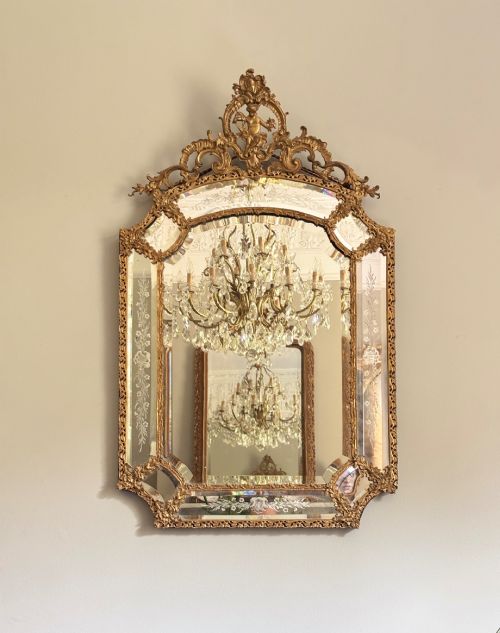
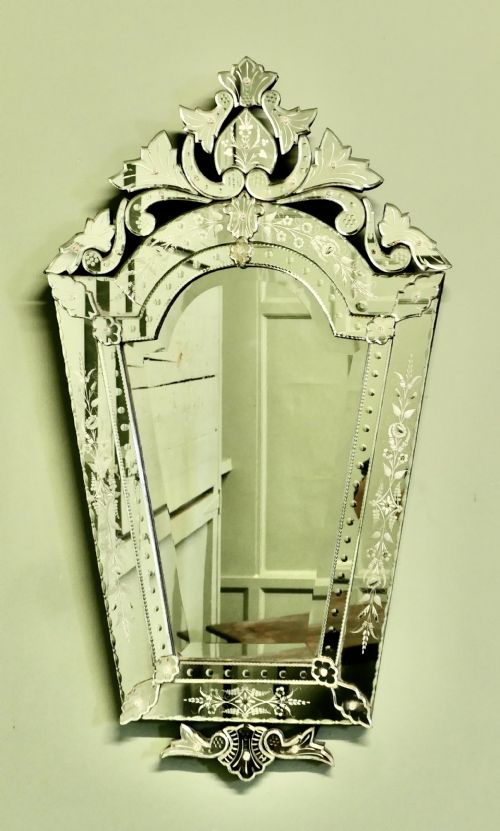
A vintage venetian accent mirror brings luminous Italian craftsmanship and decorative glasswork into a room, catching the light with striking historical presence.
Vintage Venetian Accent Mirror
A vintage venetian accent mirror is a wall hanging designed to reflect light and ornament a room through elaborate glasswork and framing. These pieces range from nineteenth-century examples to mid-twentieth-century designs, each drawing upon traditional Italian decorative arts.
The most common versions encountered here are wall mirrors originating from Italian workshops, often featuring engraved plates or marginal glass sections. They span several distinct periods including the nineteenth century, nineteen-ten, and nineteen-fifty.
Buyers will find styles that incorporate Italian rococo, rococo revival, art deco, and Italian neo-classical influences. The forms include cushion mirrors, pier glass, and ebonised frames with cut glass pediments.
How they were made
Makers constructed these mirrors using wood, giltwood, and painted wood as foundational structures to support heavy glass plates. Gilt bronze and silvered glass elements frequently appear to enhance the reflective surface and decorative trim.
Techniques relied upon manual carving and hand-painted finishes applied to wooden frames alongside intricate glass engraving. Artisans assembled marginal mirror segments and cut glass pediments to build complex, multi-layered visual depth.
Listings feature wall mirrors spanning the nineteenth century through nineteen-fifty, utilising materials including gilt bronze, silvered glass, and painted wood.
What varies in quality
The finesse of the glass engraving and the precision of the hand-carved wooden or giltwood framework separate standard examples from superior pieces. Deeply detailed marginal plates and well-executed painted surfaces indicate higher workshop skill.
Proportion and the harmonious integration of auxiliary glass sections dictate the overall visual success of the mirror. Finer works display meticulous assembly where metal mounts, such as gilt bronze, sit flush and secure within the design.
The Vintage Venetian Accent Mirror Glossary
- Marginal mirror
- A central mirror plate surrounded by smaller, separately framed border pieces of angled glass. These border panels are often bevelled and held by decorative rosettes or clips.
- Pier glass
- A tall, narrow wall mirror traditionally hung on the pier or wall space between windows. They maximise available daylight in a room.
- Cushion mirror
- A frame profile where the outer edges slope outward or inward in a curved, padded form, common in Venetian designs. This shape intensifies reflection angles.
- Giltwood
- Wood carved and coated with a thin layer of gold leaf or metallic powder. It provides a luminous, durable finish.
- Ebonised
- Wood treated with a chemical stain or black finish to imitate ebony. This dark surface contrasts sharply with silvered glass and cut glass pediments.
Vintage Venetian Accent Mirror: Frequently Asked Questions
What is a Venetian accent mirror?
A Venetian accent mirror is a decorative wall hanging characterised by intricate glass-on-glass construction, engraved plates, and shaped borders. These pieces originate from Italian traditions and serve as focal points in interior decoration.
They utilise materials like silvered glass, mirrored glass, and giltwood to maximise light reflection within a living space.
How do I hang a heavy antique mirror?
Hanging a heavy wall mirror requires locating secure wall studs and utilising appropriate fixings rated for the weight of wood and glass combined. Professional installation is often recommended for large antique pieces to ensure structural safety.
Weight distribution across sturdy brackets prevents strain on the original antique frame.
Where should I place an accent mirror?
These mirrors work best on focal walls opposite windows or light sources to amplify natural illumination throughout the room. Entryways, living rooms, and hallways benefit from the added depth and brightness they introduce.
Placement should consider eye level and the surrounding furniture scale to balance the wall composition.
How do I tell an older Venetian mirror apart?
Older mirrors often display hand-engraved details on the glass plate rather than machine-etched lines, alongside traditional construction methods in the wooden backing. Materials such as gilt bronze mounts and hand-painted wood indicate specific period aesthetics from the nineteenth and early twentieth centuries.
Examining the backboards, fixings, and the composition of the silvered glass helps identify the era of manufacture.