



Vintage Veneer Dresser
These vintage veneer dresser examples bring rich grain patterns and practical storage to a room through centuries of cabinet-making skill.
Vintage Veneer Dresser
A vintage veneer dresser encompasses a range of drawer chests, commodes, and sideboards surfaced with decorative wood cuts. Buyers searching this phrase seek storage furniture that displays striking figuring rather than plain solid timber.
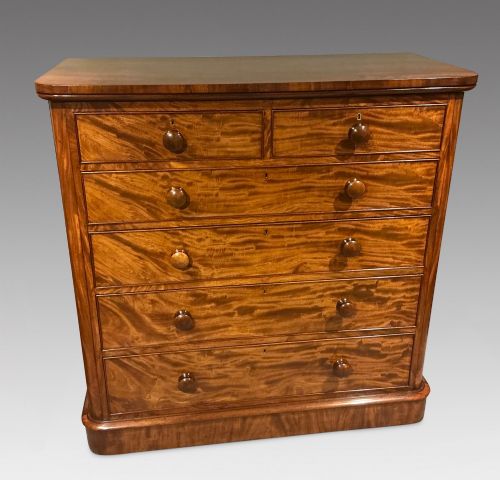
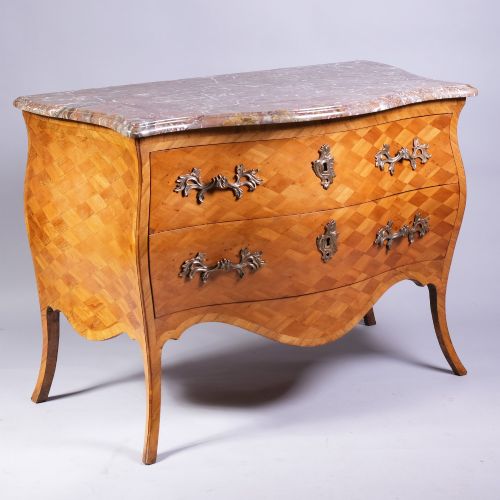
Examples on this page span several periods, from 18th-century William and Mary styles through 19th-century Victorian designs to 1930s Art Deco pieces. Forms include tall chests of drawers, low commodes with marble or faux marble tops, and specialised chests on stands.
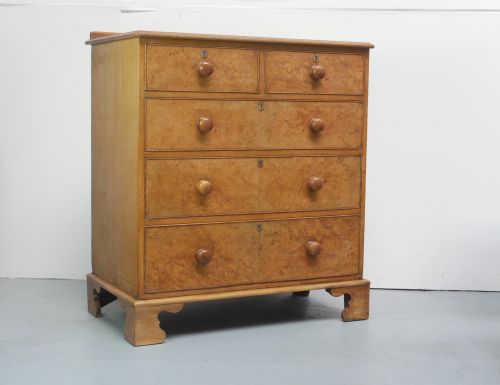
Continental European workshops contribute distinct forms, including French commodes and Swedish chests, alongside English country and Regency pieces. Walnut, mahogany, elm, and burr ash dominate the surfaces seen here.
How they were made
Cabinet makers sliced thin leaves of decorative wood, such as flame mahogany, burr walnut, and burr ash, to lay over secondary timbers like pine and general wood. This technique allowed workshops to display symmetrical grain patterns across large drawer fronts without using costly solid planks for the entire carcase.
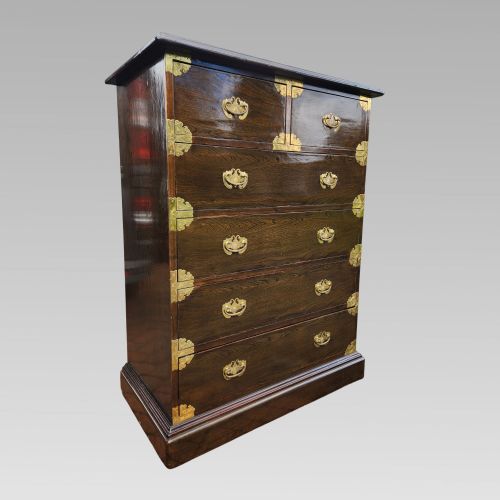
Many pieces incorporate brass handles and escutcheons to complement the dark and figured timber surfaces. Certain commodes feature heavy marble or painted faux marble tops, adding weight and a contrasting cold texture to the warm wood veneers.
Vintage Veneer Dresser Retail Price Guide 2026
Typical asking prices for vintage veneer dresser among the pieces listed under this phrase on Sellingantiques today, from the lower quarter to the upper quarter. They describe what is for sale here now, not the wider market.
Listings span several centuries, combining 18th-century walnut oyster veneer with 1930s Art Deco cabinet work and Victorian mahogany chests.
What varies in quality
Quality rests primarily on the selection and matching of the veneer leaves across the drawer fronts and top. Superior examples display mirrored grain patterns, such as book-matching or oyster-cut circles, executed with precise alignment.
The underlying construction and timber choice also define the tier of a piece, with secondary woods like solid mahogany or pine supporting stable, well-fitted drawer boxes. Maker attribution, seen in workshop labels or branded signatures, elevates certain cabinets above standard commercial production.
Bowman Brothers·R H & J Simpson
The Vintage Veneer Dresser Glossary
- Burr
- A growth on a tree that produces intricate, swirling grain patterns when sliced. Cabinet makers prized burr walnut and burr ash for high-status drawer fronts.
- Commode
- A low chest of drawers or cabinet originating in France. These pieces frequently feature marble tops and decorative mounts.
- Chest on Stand
- A tall chest of drawers elevated on a separate framework or legs. This form gained popularity during the late 17th and early 18th centuries.
- Oyster Veneer
- Small circular slices cut from branch wood laid closely together. The resulting pattern resembles an oyster shell mosaic.
Vintage Veneer Dresser: Frequently Asked Questions
How do I care for a veneered chest?
Keep the wood away from direct sunlight and sudden temperature changes to prevent the glue underneath from drying out.
Dust with a soft dry cloth and apply a quality wax polish sparingly to nourish the grain.
Are marble tops original to these commodes?
Many 19th-century French and continental commodes were built specifically to carry heavy stone surfaces. Some European pieces also utilise painted wooden tops designed to imitate marble.
Examine the seating rebate around the top edge to check how the slab rests against the wood carcase.
What is an oyster veneer?
Oyster veneering involves cross-cutting small branches to create small oval or circular wooden discs. Craftsmen fitted these pieces tightly together to cover surfaces in complex repeating patterns.
This technique appears frequently on pieces from the William and Mary period.
How can I tell a 1930s piece apart from a Victorian one?
Art Deco pieces from the 1930s favor streamlined shapes, geometric layouts, and sleek maker styling. Victorian chests tend to display heavier proportions, turned wooden knobs, and traditional bracket feet or plinth bases.
Look at the internal drawer construction and timber thickness to confirm the manufacturing era.