







Vintage Vanity Benches
These vintage vanity benches bring low seating and character to dressing areas, combining period woods with diverse textile tops.
Vintage Vanity Benches
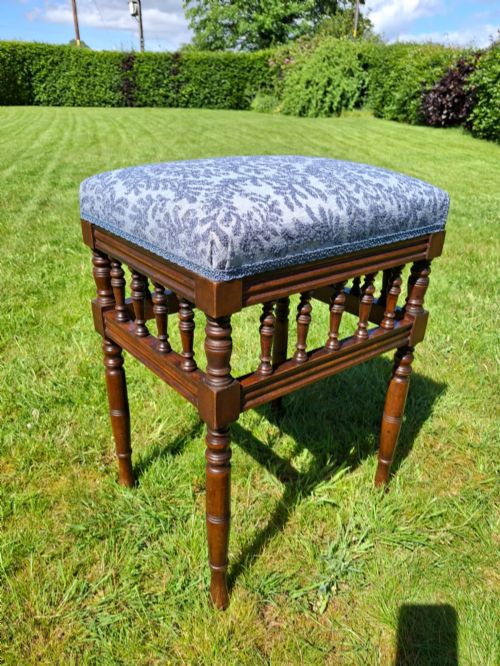
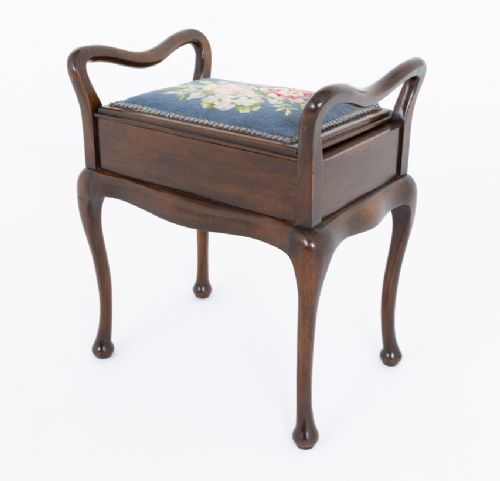
When searching for vintage vanity benches, buyers encounter a range of low seating primarily categorised as dressing table stools, piano stools, and footstools. These pieces serve dressing spaces and low seating areas, often matching the period of dressing tables or pianos.
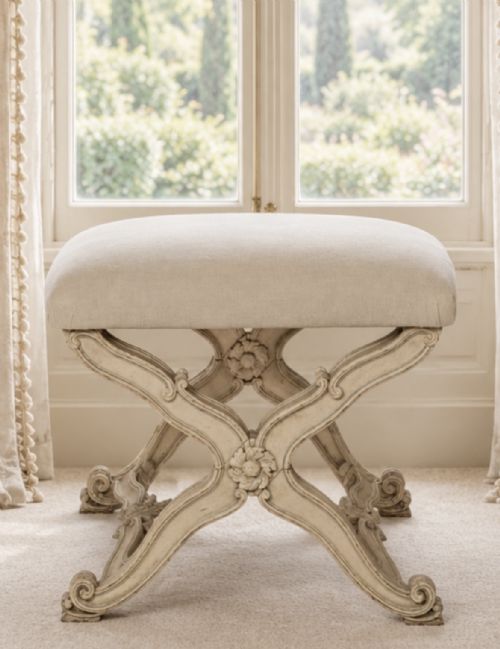
The pieces on this page span the nineteenth century, the Edwardian era, and the nineteen-thirties, reflecting styles from Victorian and Edwardian periods to Art Deco and French Provincial designs. Forms range from simple rectangular frames to X-frame structures and specialised storage stools.
Origin and material vary widely, including English mahogany and walnut alongside French painted items and Anglo-Indian rosewood. Buyers are most likely to meet Edwardian and nineteenth-century mahogany or walnut examples fitted with upholstered, needlepoint, or leather tops.
How they were made
Construction relies heavily on timber frames shaped into styles such as Chippendale, Queen Anne, and Louis XVI Neoclassical using mahogany, walnut, oak, teak, and rosewood. Joinery and carved details define the structural integrity of the frame, occasionally incorporating painted finishes or giltwood.
Upholstery forms a vital part of the construction, utilising fabrics, velvet, leather, textile, tapestry, and needle point. Tops are secured over webbing or padding, sometimes featuring buttoning or new flowery top covers on restored pieces.
Vintage Vanity Benches Retail Price Guide 2026
Typical asking prices for vintage vanity benches among the pieces listed under this phrase on Sellingantiques today, from the lower quarter to the upper quarter. They describe what is for sale here now, not the wider market.
Period styles span Victorian, Edwardian, Art Deco, and French Provincial alongside specific Chippendale, Queen Anne, and Louis XVI designs.
What varies in quality
The choice and execution of upholstery also separate tiers of quality, where hand-worked needlepoint, leather, or tapestry seats demand greater skill than standard modern fabric replacements. The cohesion between the frame material - such as figured walnut or rosewood - and the decorative style dictates the overall standard.
Harry and Lou Epstein·Jas Shoolbred
The Vintage Vanity Benches Glossary
- X Frame Stool
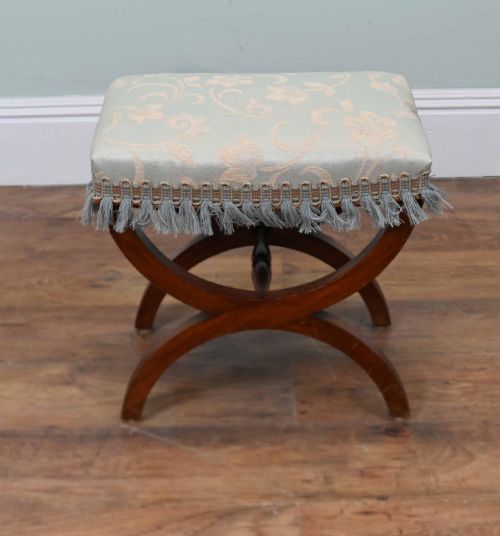
- A seat constructed with intersecting diagonal legs forming an X shape, often seen in nineteenth-century Regency styles. This geometric base provides both structural support and classical visual balance.
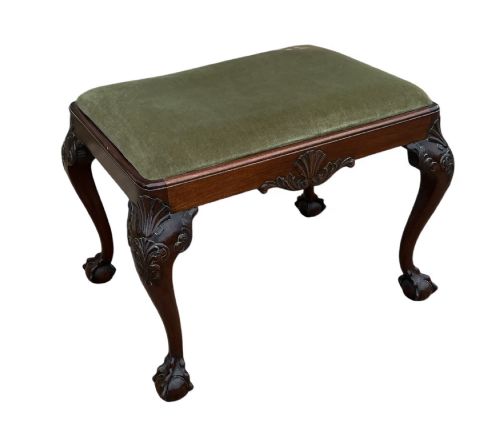
- Cabriole Leg
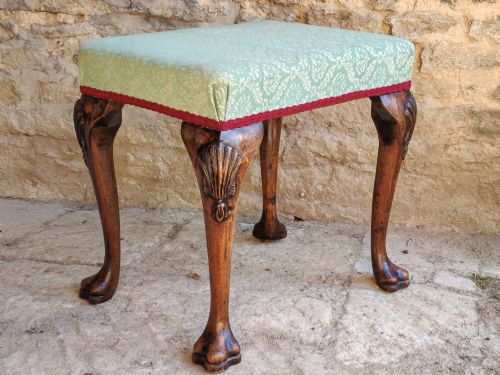
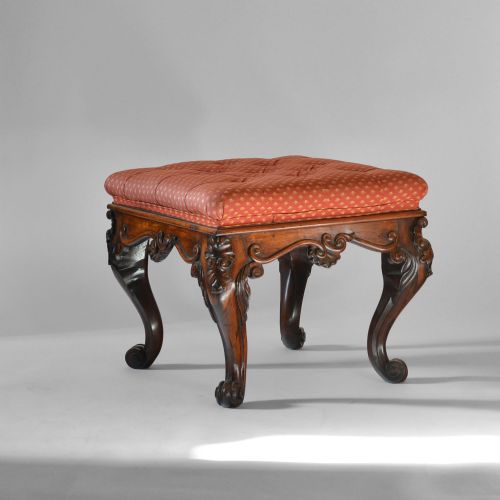
- A furniture leg that curves outward and then tapers inward, mimicking an animal's limb. It appears frequently on Victorian and Queen Anne style dressing table stools.
- Needle Point
- A type of counted thread embroidery stitched onto a stiff canvas mesh, frequently used for historical seat covers. It provides a textured, decorative surface for dressing stools.
- Giltwood
- Wood that has been treated with a thin layer of gold leaf or gilt paint for a decorative metallic finish. This treatment marks more ornate French and Victorian seating.
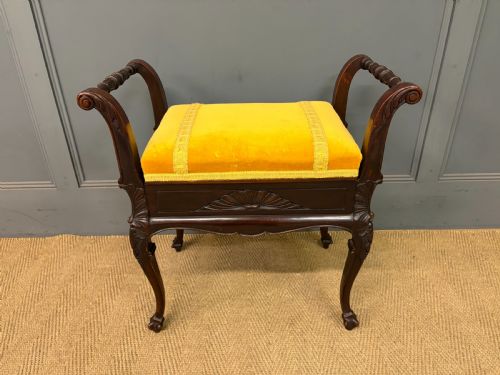
- Duet Stool
- An elongated piano stool designed to seat two players side by side. These wider forms offer expanded upholstered surfaces compared to standard single vanity seats.
Vintage Vanity Benches: Frequently Asked Questions
What is a vintage vanity bench used for?
These low seats are primarily placed in front of dressing tables or vanities to provide comfortable seating during grooming. They also function as piano stools or occasional footstools in living spaces.
Because of their compact dimensions, they fit easily into small alcoves or corners where standard chairs prove too bulky.
How do I identify an Edwardian dressing stool?
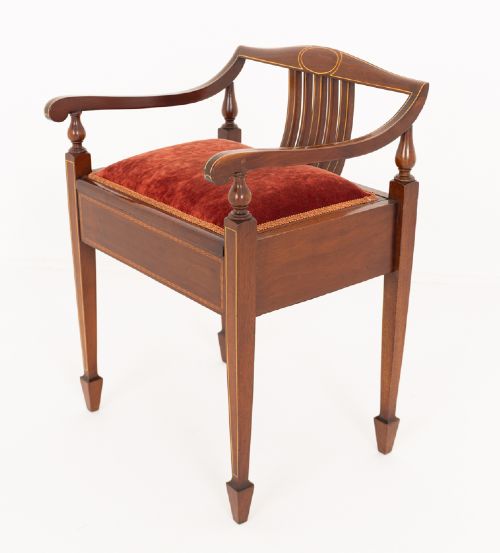
Edwardian pieces often feature lighter mahogany timbers, sometimes incorporating subtle inlay work or Sheraton Revival influences. Their proportions tend to be neat and upright, reflecting the decorative tastes of the early twentieth century.
Upholstery on these examples frequently uses contemporary leather or traditional fabric covers that match the period's domestic interiors.
Can I use a piano stool at a vanity?
Piano stools share the same low height and compact footprint required for dressing tables. Many historical examples offer similar upholstered tops and wooden frames that blend seamlessly with bedroom furniture.
Some piano variants even include internal storage compartments, making them particularly practical for holding cosmetics or small dressing accessories.
How should I care for antique wood and fabric?
Maintain wooden frames by dusting regularly and applying appropriate beeswax to nourish the polished mahogany, walnut, or rosewood surfaces. Avoid placing the furniture in direct sunlight to protect the timber from fading.
Protect upholstered seats, including velvet, tapestry, and leather, by gentle vacuuming with a soft brush attachment and professional cleaning for delicate textiles.