

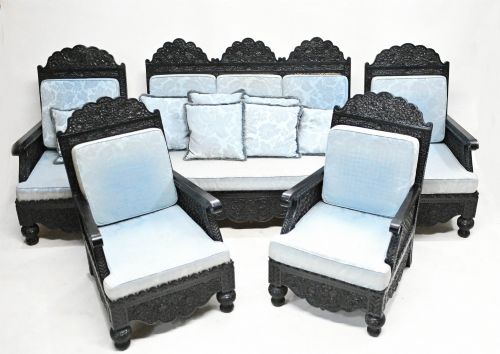
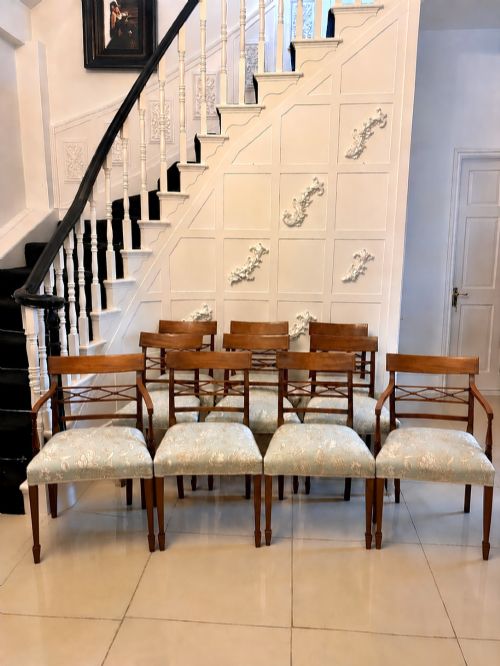
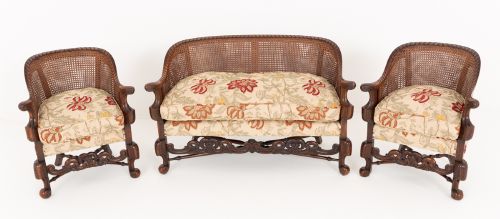
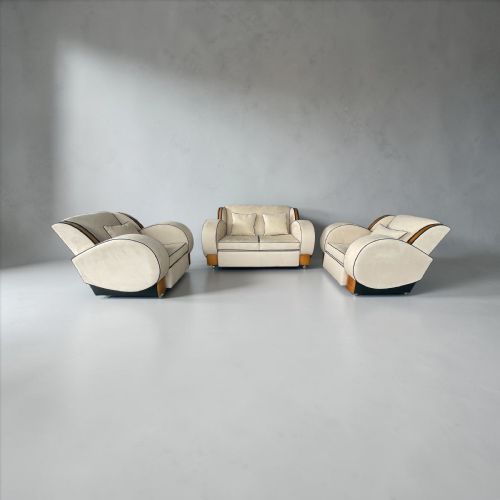


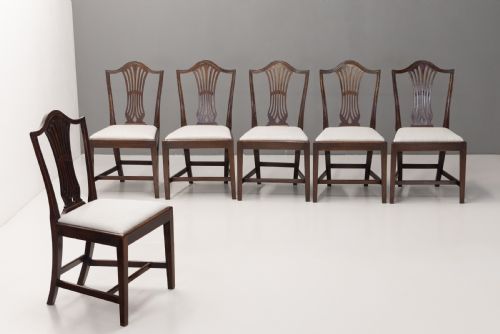


Vintage Upholstered Suite
A vintage upholstered suite brings matched seating and historic character directly into a room, offering both comfort and distinctive period design.
Vintage Upholstered Suite
A vintage upholstered suite gathers coordinated seating pieces, from compact three-piece sets of sofas and armchairs to extensive dining configurations. Buyers seeking a vintage upholstered suite will encounter formats ranging from early twentieth-century parlour groups to robust Art Deco lounge sets.
The selections span distinct periods, including Victorian, Edwardian, and 1930s designs, alongside revival styles like Georgian and Carolean. Many pieces pair timber frames in mahogany, walnut, or padauk with textile or leather coverings.
Materials and construction
Frames rely on hardwoods such as mahogany, walnut, and padauk, often shaped into carved details, inlay, or bentwood forms. Brass accents and detailed timber carving appear across various chair and settee structures.
Upholstery relies on textiles, damask, and leather, paired with buttonback work and traditional cushioning techniques. Wood surfaces receive polish to highlight the natural grain of the timber.
Vintage Upholstered Suite Retail Price Guide 2026
Typical asking prices for vintage upholstered suite among the pieces listed under this phrase on Sellingantiques today, from the lower quarter to the upper quarter. They describe what is for sale here now, not the wider market.
Some dining suites include enough carvers to ensure nobody ever has to sit on a plain chair.
Assessing quality and finish
Quality rests in the precision of the timber framing, the integrity of carved elements, and the execution of wood inlay. Suites retaining original timber patination and sturdy joinery stand apart from simpler productions.
The choice of covering materials, from damask to leather, dictates the finish. Well-executed upholstery maintains firm support and clean lines across matching sofas and chairs.
Baumann·Hille London
The Vintage Upholstered Suite Glossary
- Salon suite
- A matched set of seating, typically comprising a small sofa and armchairs, designed for formal reception rooms. These groupings reflect the prevailing aesthetic of their period of origin.
- Bergere suite
- An upholstered seating group featuring enclosed cane or padded wooden frames. The style offers lighter proportions than fully stuffed armchairs.
- Damask
- A reversible figured fabric woven on a jacquard loom, frequently utilised for traditional upholstery. Patterns often incorporate floral or architectural motifs.
- Padauk
- A dense tropical hardwood displaying reddish-brown tones, used in colonial and period furniture construction. It provides exceptional stability for detailed carving.
Vintage Upholstered Suite: Frequently Asked Questions
What pieces belong in a vintage upholstered suite?
A suite typically includes a settee or small sofa paired with matching armchairs, designed to create a unified seating arrangement in a room. Dining variations combine a table with a set of chairs, sometimes featuring dedicated carver armchairs at the ends.
Matching timber frames and uniform upholstery tie the individual pieces together into a coherent set. These configurations served both formal reception spaces and everyday living rooms.
How do I identify an Art Deco suite?
Art Deco suites from the 1930s often feature streamlined geometric silhouettes, smooth dark veneers like black walnut, and minimal carved ornamentation. The design prioritises clean curves and functional symmetry over historic revival details.
Upholstery fabrics on these pieces complement the architectural lines of the wood frames. They bring a distinct modernist character compared to earlier Victorian or Edwardian seating.
Where were these suites used historically?
These seating groups furnished the principal reception rooms, parlours, and dining spaces of period homes. Parlour and salon suites provided formal seating for guests, while dining suites accommodated family meals.
Larger houses utilised distinct suites for different rooms, ranging from bedroom groups to sprawling dining sets. The choice of timber and fabric reflected the social status of the household.
How do I care for timber and upholstery?
Maintain wooden frames by dusting regularly with a soft cloth and applying appropriate wax polish to nourish the grain. Protect surfaces from direct sunlight and moisture to preserve the timber finish.
Upholstered sections benefit from gentle vacuuming using a low-suction attachment to remove surface dust. Professional cleaning is advisable for delicate fabrics like damask or antique leather.