
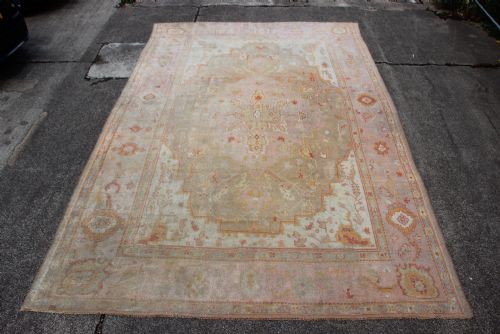
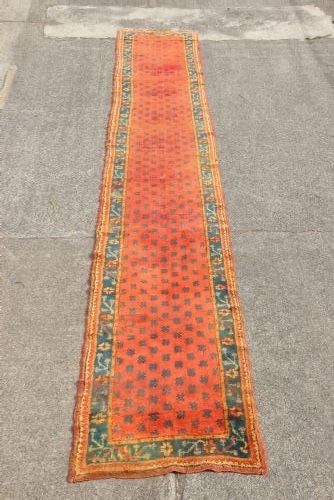
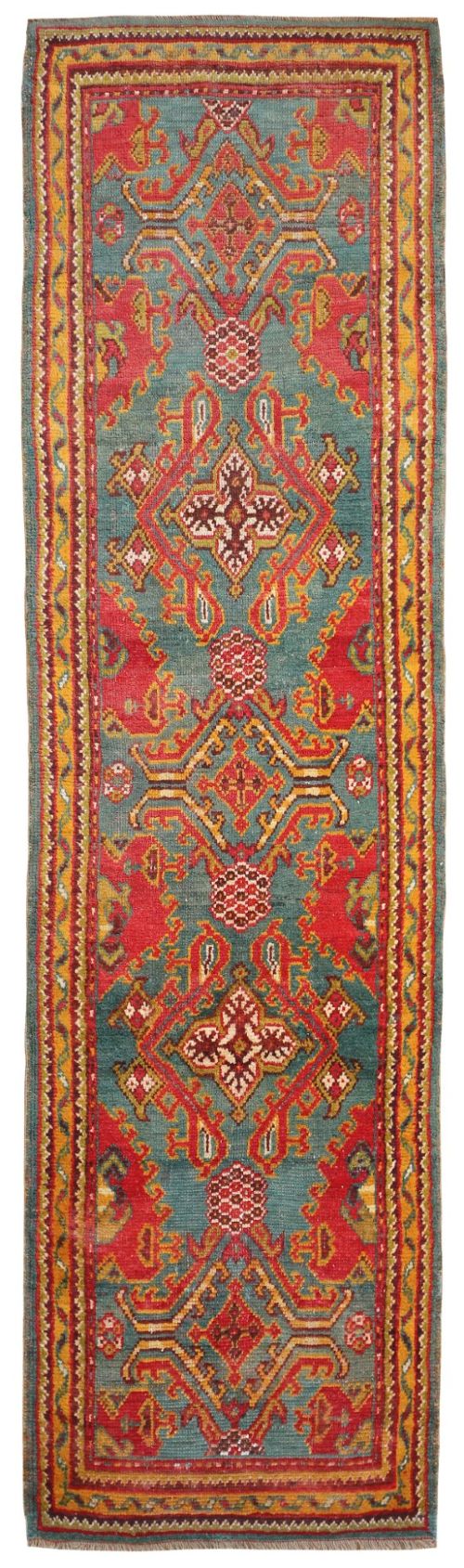
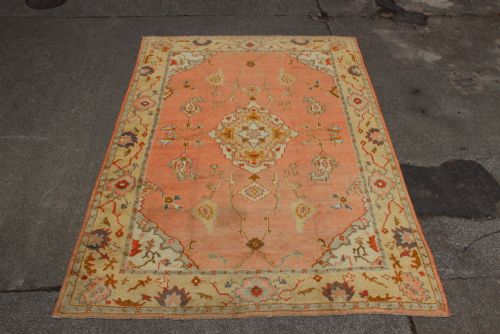

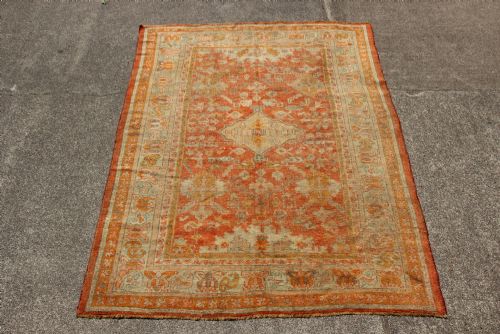
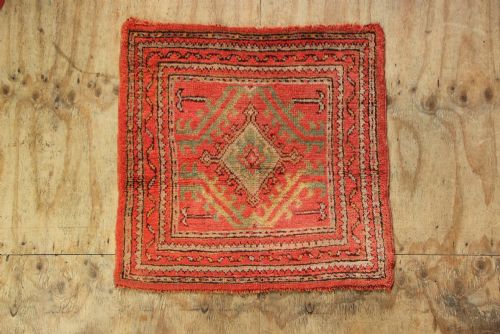
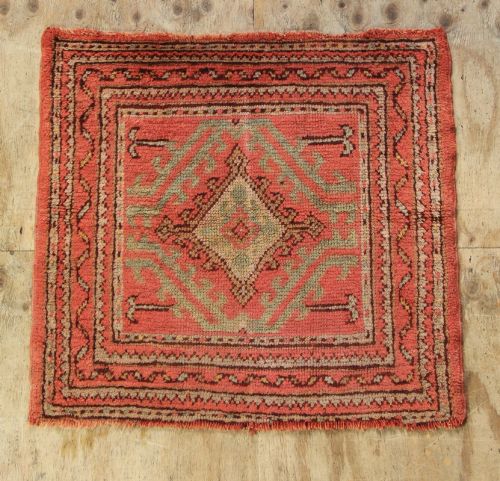


Vintage Turkish Oushak Rug
A vintage turkish oushak rug brings muted warmth and grand Anatolian scale to a room.
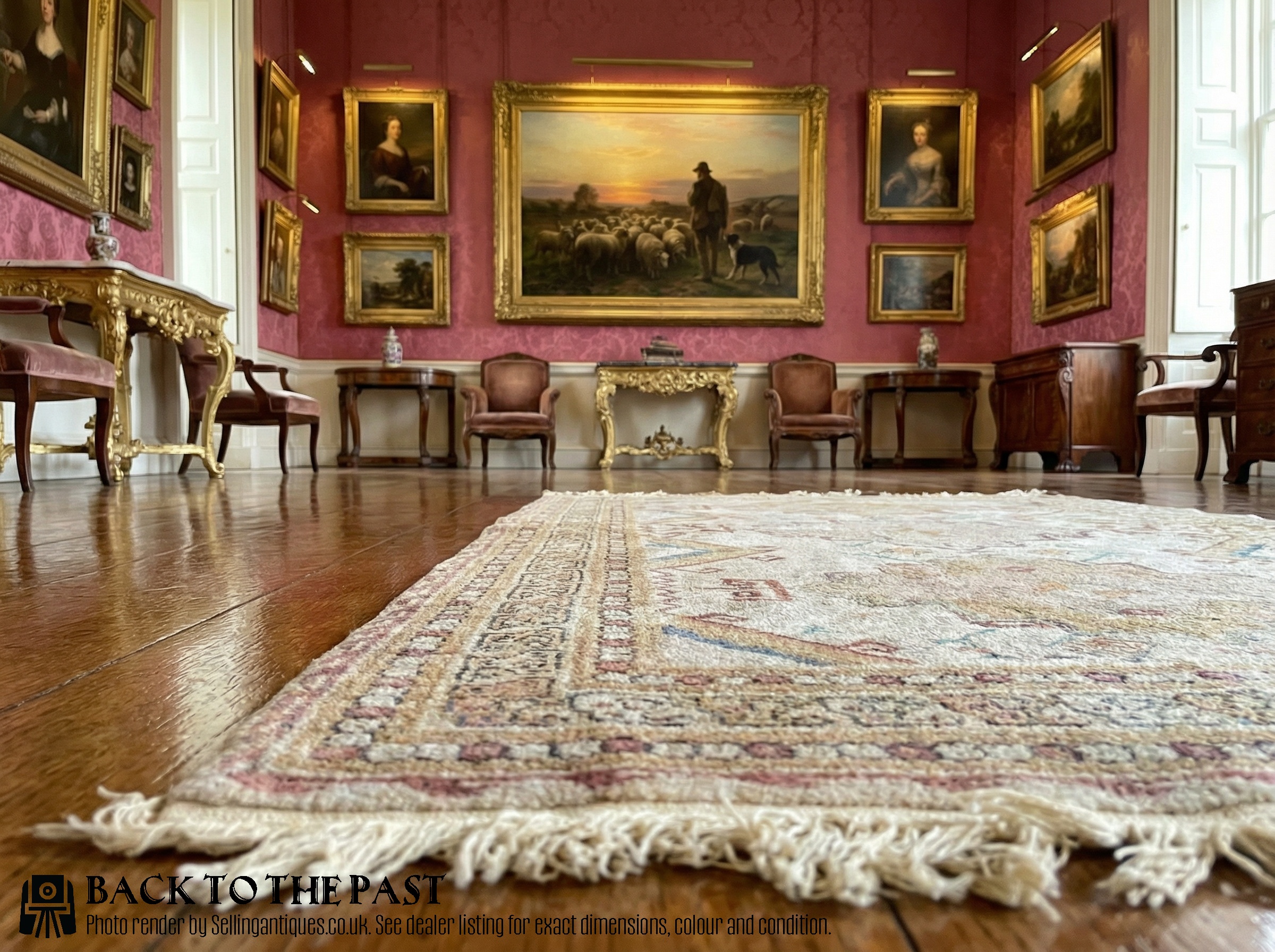
Vintage Turkish Oushak Rug
A vintage turkish oushak rug is a floor covering originating from Western Turkey, commonly encountered in large carpet formats alongside runners, square proportions and smaller mats. These pieces span the late nineteenth century through to the early twentieth century, carrying styles designated as Ottoman, Anatolian and Turkish Oushak.
Buyers seek these rugs for their expansive fields and subdued palettes, which ground high-ceilinged spaces without overwhelming the surrounding interior. The selection includes long narrow runners and room-sized carpets dating from eighteen eighty to nineteen twenty.
How they were made
These textiles are hand knotted utilising wool and cotton foundations, with certain examples incorporating angora wool for added texture in the pile. The traditional construction relies on natural fibres spun by hand before knotting onto sturdy warps.
Weavers in Western Turkey employed regional dyeing methods to achieve the pale blues, beiges and faded tones characteristic of the period. The structural integrity depends on tight knotting across cotton or wool foundations that stabilise the large carpet formats.
Materials recorded in current inventory include traditional wool, cotton foundations and soft angora wool.
What varies in quality
Quality rests upon the fineness of the knotting and the clarity of the design across the field, which separates standard room-sized carpets from exceptional decorative works. Finer examples maintain structural balance across expansive dimensions while displaying harmonious colour distribution.
The choice of materials also dictates the standard of the piece, with angora wool weaves and scarce green fields representing distinct tiers within the historical output. Uniformity in the pile and the integrity of the original borders define the upper echelon of these textiles.
The Vintage Turkish Oushak Rug Glossary
- Oushak
- A town in Western Turkey renowned historically for carpet production, giving its name to rugs characterised by large-scale floral motifs and soft palettes.
- Runner
- A long, narrow carpet format designed specifically for hallways, corridors or staircases, frequently found in pairs within this tradition.
- Kilim
- A flat-woven textile produced without a pile, distinct from the knotted pile carpets more commonly seen in this category.
- Ghiordes
- A regional style and knot type associated with Turkish rug production, often linked in attribution to specific nineteenth-century pieces.
- Angora wool
- A soft fibre derived from angora goats, utilised in select nineteenth-century weavings to create a distinct tactile quality in the pile.
Vintage Turkish Oushak Rug: Frequently Asked Questions
Where should I place an oushak runner?
These long narrow formats suit hallways, long corridors and gallery spaces where floorboards benefit from soft textural coverage.
Their proportions also allow them to sit effectively beside a bed or along narrow architectural passages.
How do I care for wool carpets?
Regular gentle vacuuming without a rotating brush protects the hand-knotted wool pile from unnecessary fibre loss and friction.
Professional cleaning tailored to antique textiles ensures the cotton foundations and natural dyes remain stable over time.
What defines a Ghiordes oushak?
This attribution connects the piece to specific regional weaving traditions and design characteristics originating in Western Turkey.
Such examples often display distinct structural traits and decorative motifs associated with earlier Anatolian aesthetics.
How do I date an antique carpet?
Dating relies on stylistic markers, material analysis, structural evidence and historical records from the late nineteenth and early twentieth centuries.
Comparisons with documented pieces from the Victorian era help establish the approximate decade of production.