
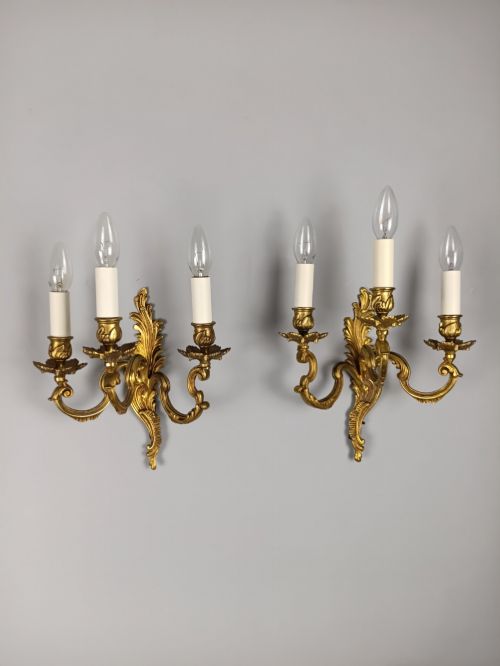
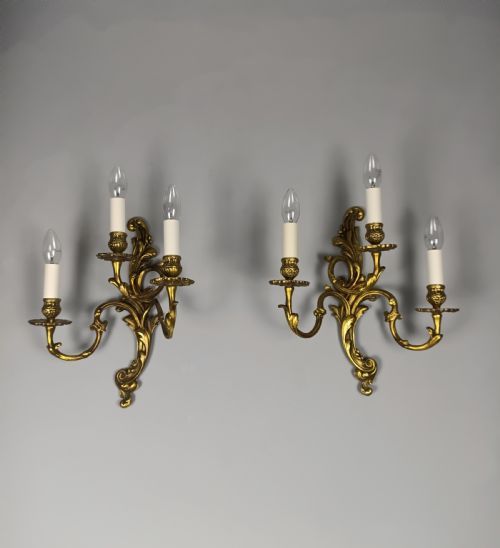
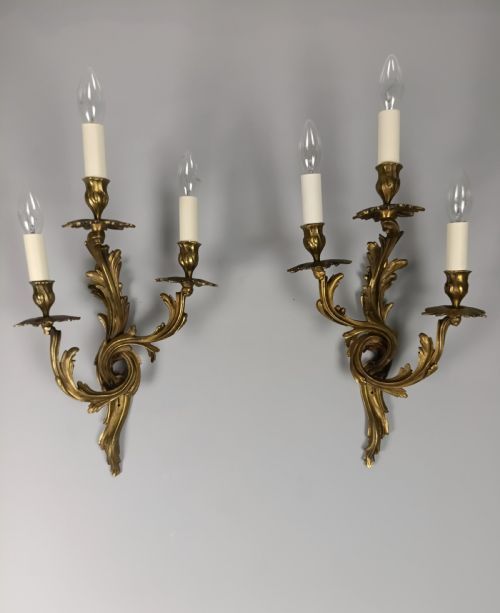
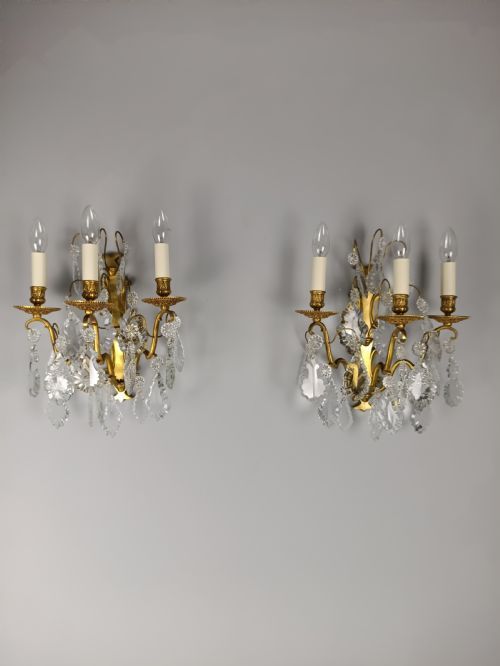
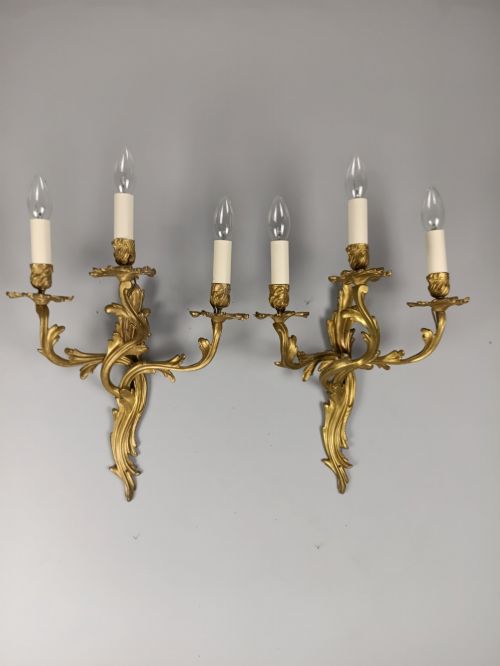


Vintage Triple Light Sconces
These vintage triple light sconces illuminate a room with three distinct branches, offering the classic warmth of period wall lighting.
Vintage Triple Light Sconces
When searching for vintage triple light sconces, buyers encounter wall-mounted lighting fixtures featuring three distinct arms or branches designed to hold multiple bulbs or candles. These pieces emerge predominantly from the nineteenth and early twentieth centuries, spanning periods from the eighteen-eighties through the nineteen-thirties.
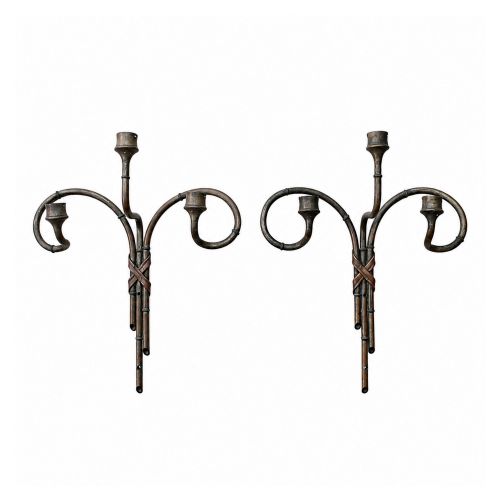
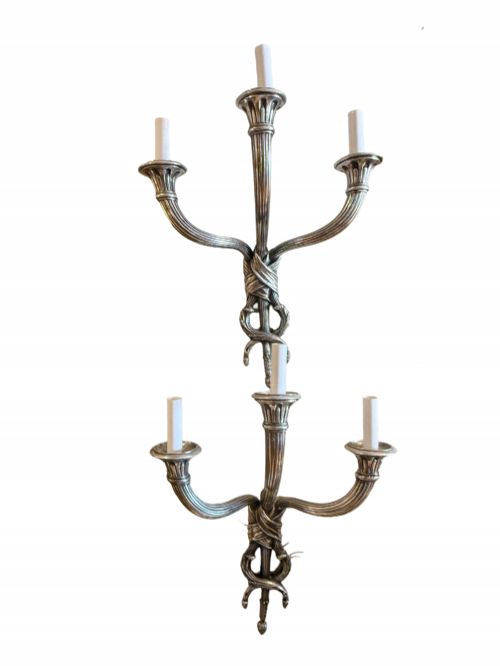
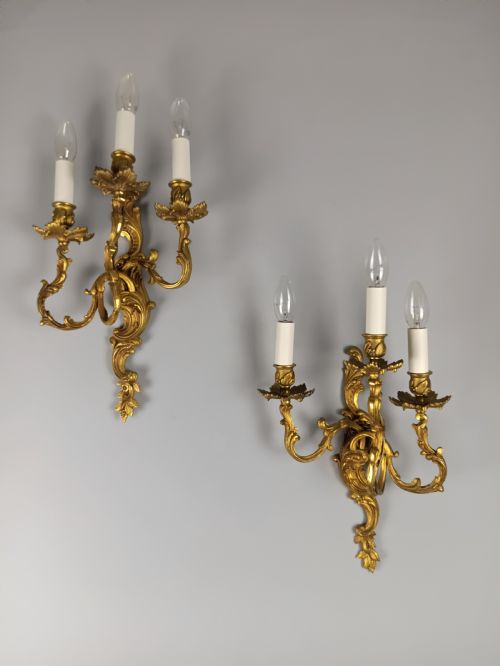
Stylistic influences range widely across these decades, taking shape in French Rococo, Baroque, and Neoclassical designs, alongside Florentine giltwood and Victorian Sheffield plated pieces. Early twentieth-century examples also incorporate bamboo motifs and Japonisme aesthetics alongside traditional brass and bronze work.
Materials and construction methods
Construction relies heavily on metals such as brass, bronze, and copper-based alloys, frequently treated with gilding, ormolu, or silvering to achieve a lustrous metallic finish. Founders cast these metal components into ornate scrollwork, foliage, and Rococo curves before applying surface patination.
Wiring and electrification updates appear frequently on these fixtures to meet modern installation standards, adapting older gasolier and candle-carrying designs for contemporary electrical circuits.
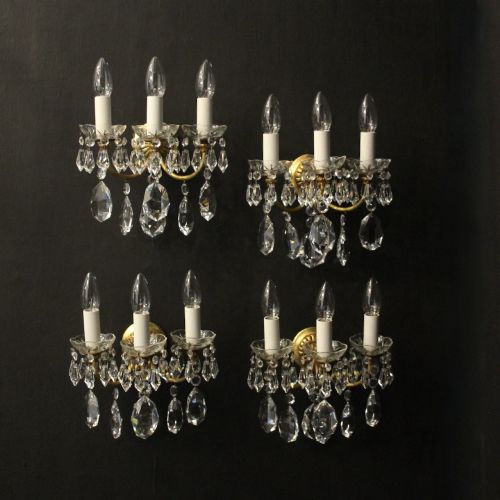
Materials across these listings concentrate heavily on brass, bronze, and gilded finishes paired with crystal and carved giltwood.
Assessing quality in multi-arm wall lighting
Quality reveals itself primarily in the crispness of the metal casting and the depth of the hand-chased detail on the bronze and brass arms. Superior examples exhibit finely articulated acanthus leaves, scrolls, and symmetrical balance across all three branches.
The integrity of the materials also dictates the standard of the piece, distinguishing heavy, solid cast bronzes and hand-carved giltwood from lighter pressed metal alternatives. Crystal components demonstrate greater clarity and substantial cutting when originating from higher-tier workshops.
The Vintage Triple Light Sconces Glossary
- Gilded Bronze
- Bronze metal coated with a thin layer of gold or gold leaf to produce a rich, durable metallic sheen.
- Ormolu
- A technique involving the application of finely ground, high-carat gold to a bronze object, common in French decorative arts.
- Giltwood
- Wood, typically carved timber, that has been coated with gold leaf or gold paint for decorative effect.
- Candelabra
- A branched candlestick or lamp holding multiple lights, often adapted for wall mounting in period interiors.
- Japonisme
- A nineteenth-century artistic style reflecting the influence of Japanese art, seen here in bamboo-themed wall fixtures.
Vintage Triple Light Sconces: Frequently Asked Questions
How do I install vintage sconces?
Most wired wall lights require mounting to a standard electrical junction box in the wall. Many period pieces arrive rewired and ready for direct installation by an electrician.
Ensuring the wall structure can support the weight of heavier bronze or giltwood fixtures is essential during the mounting process.
Are these fixtures suitable for modern wiring?
Numerous antique wall lights undergo rewiring to meet current safety standards and local electrical codes. This allows older fixtures to function safely with modern wall switches.
Checking the listing details confirms whether a particular sconce has been recently updated for contemporary use.
Do these sconces come in pairs?
Many wall lights in this category are offered as matching pairs or larger sets, which suits the traditional placement flanking a fireplace or doorway. Single sconces also appear for narrower wall spaces or asymmetric arrangements.
Reviewing the individual item descriptions clarifies whether the pieces are sold individually or as a matched set.
What periods do these sconces represent?
The available lighting spans from the late nineteenth century through the interwar period of the nineteen-thirties. Victorian, Edwardian, and nineteen-twenties aesthetics form the core of the timeline.
Stylistic cues such as Rococo curves or Florentine giltwood help indicate the design era of each piece.