






Vintage Trinket Jar
These small vessels sit upon dressing tables and desks to hold precious keepsakes.
Vintage Trinket Jar
A vintage trinket jar serves to hold small personal items, rings, and pins on a dressing table. When you search for this phrase, you find containers made in varied forms including powder boxes, vanity jars, and tea caddies. The examples on this page span from the Georgian period through the Edwardian era and into the Art Deco years of the twentieth century.
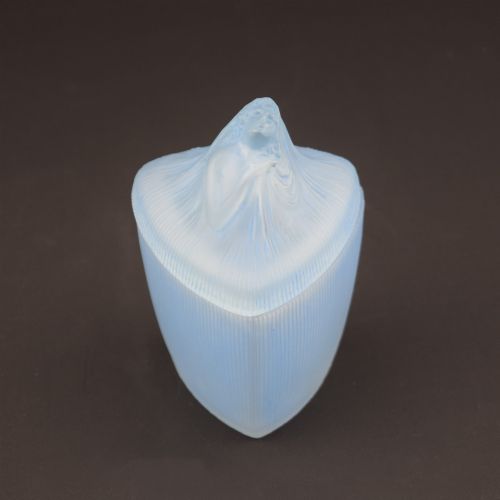
The version you are most likely to meet here is an Art Deco piece from the 1930s, often combining ceramics or cut glass with a fitted lid. Many of these take the form of powder bowls topped with porcelain half doll figures depicting flapper girls. Alongside these, glass and silver lidded pots from Birmingham makers appear frequently in the selection.
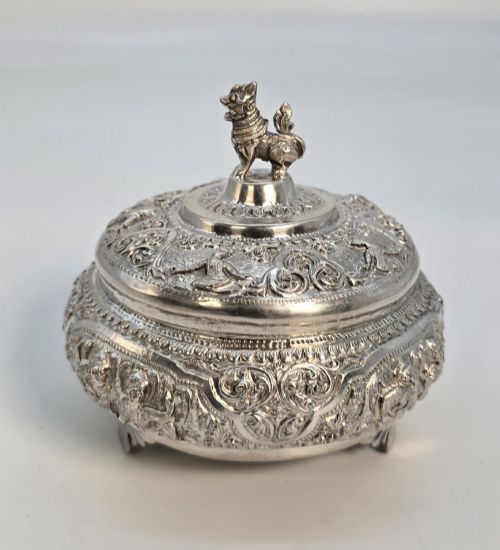
Originating across Europe and beyond, these objects reflect distinct regional styles from German porcelain factories to French ceramic studios and Anglo-Indian workshops. Pieces range from simple turned mahogany boxes to intricate silver-mounted coloured glass vessels. Each format serves the practical purpose of containment while displaying the decorative tastes of its decade.
Materials and construction
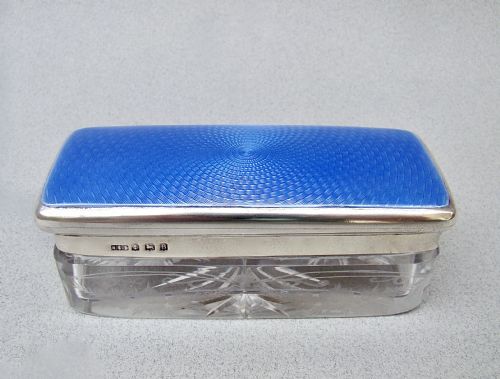
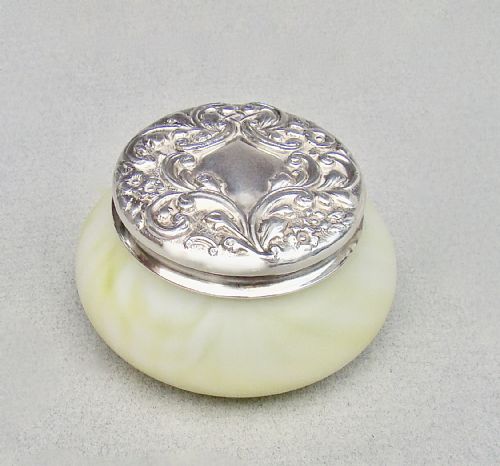
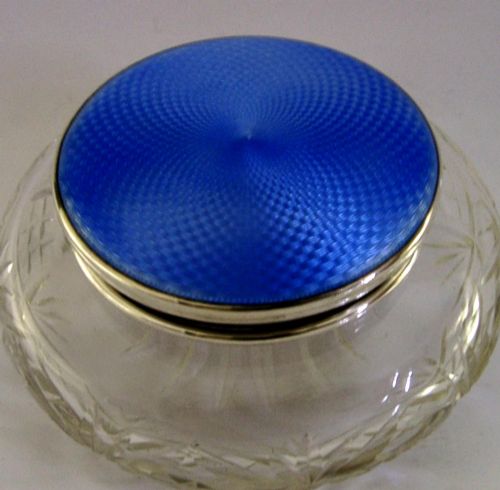
Makers combined heavy cut glass and satin glass with sterling silver mounts, securing hinged or lift-off lids to crystal bodies. Glass vessels frequently received faceting, overlay treatments, or hand-painted enamel decoration across the surface.
Pottery and porcelain examples utilised moulding and casting techniques before receiving hand-painted glazes, particularly in French and German workshops. Figural lids often paired ceramic upper halves with lower bowls designed to hold cosmetic powders.
Metal components involved sterling silver, Sheffield plate, and regional silver alloys worked by silversmiths in Birmingham and overseas. Craftsmen applied translucent guilloche enamel over engine-turned silver bases to create patterned metallic colour.
Vintage Trinket Jar Retail Price Guide 2026
Typical asking prices for vintage trinket jar among the pieces listed under this phrase on Sellingantiques today, from the lower quarter to the upper quarter. They describe what is for sale here now, not the wider market.
Flapper girls peer up from beneath their porcelain skirts, guarding spare powder and rogue earrings with unwavering ceramic smiles.
The indicators of quality
Quality rests upon the crispness of the moulding in the glass and the precision of the silver hallmarks. Sharply cut facets on crystal and heavy gauge sterling silver mounts indicate a higher grade of production.
The artistry and preservation of the enamel work dictate the standing of a piece. Smooth, undamaged guilloche enamel without chipping separates finer vanity jars from standard examples.
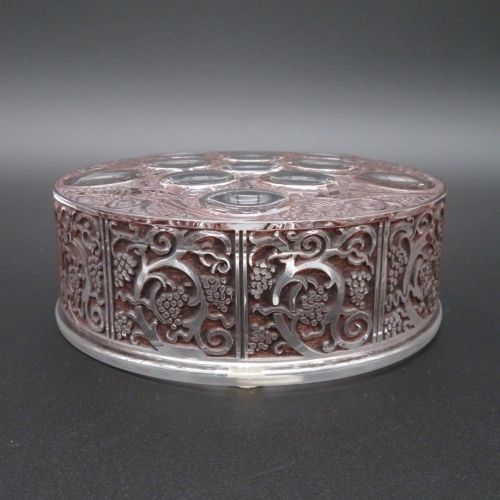
A. J. Pepper & Co·Henry Clifford Davis·A. Bromet & Co·Rene Lalique·Posen
The Vintage Trinket Jar Glossary
- Guilloche enamel
- A decorative technique where transparent enamel is laid over engine-turned metal. This creates a repeating geometric pattern beneath the translucent colour.
- Half doll
- A ceramic torso without legs, manufactured extensively in Germany and France. These figures served as decorative lids for powder bowls and trinket jars.
- Sterling silver
- An alloy consisting of silver and other metals, typically copper. British pieces feature assay office marks indicating the purity and year of creation.
- Sheffield plate
- An early method of fusing a thin sheet of silver to a thicker copper base. This technique preceded modern electroplating.
- Satin glass
- Glass treated with acid or vapour to produce a dull, frosted finish resembling satin. It gained popularity during the late nineteenth and early twentieth centuries.
Vintage Trinket Jar: Frequently Asked Questions
What were vintage trinket jars used for originally?
These vessels held small personal items such as rings, pins, and brooches on dressing tables and boudoirs. Many were specifically designed as powder bowls and cosmetic jars for daily grooming routines.
Over time, their uses expanded to include desktop storage for keepsakes and small valuables. Wealthy households utilised specialised containers like tea caddies alongside vanity table sets.
How can I date a silver lidded glass jar?
British silver mounts carry hallmarks stamped directly into the metal by official assay offices such as Birmingham. These marks include date letters that identify the exact year of manufacture.
Stylistic cues like Art Deco geometric patterns or Edwardian floral motifs also help narrow down the production decade. Combining hallmark decoding with the prevailing design style provides an accurate date.
How do I care for antique glass and enamel pieces?
Keep these items away from direct sunlight to prevent fading in coloured glass and enamel surfaces. Dust them gently with a soft, dry cloth rather than using liquid immersion cleaners.
Silver mounts benefit from occasional light polishing with a specialised cloth, avoiding contact with glass or enamel sections. Proper placement on stable surfaces protects fragile ceramic half dolls and thin crystal edges.
Are these jars safe to use for cosmetics today?
Most buyers choose to display these vintage jars as decorative objects rather than utilising them for modern cosmetics. Older powders and lidded containers may retain historical residues that are no longer hygienic for skin contact.
Using them for dry items like cotton wool or modern jewellery preserves their condition. Treating them as display pieces protects delicate interior glazes and fragile enamel surfaces from wear.