

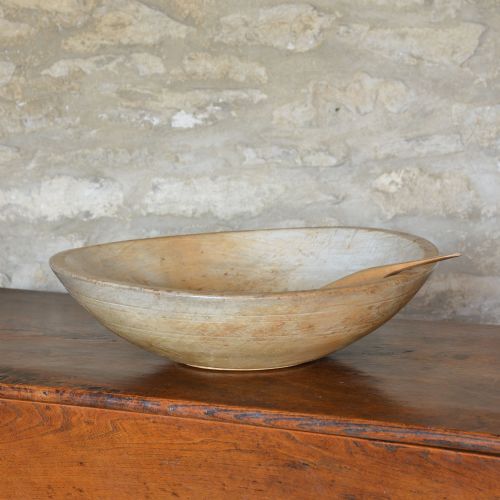
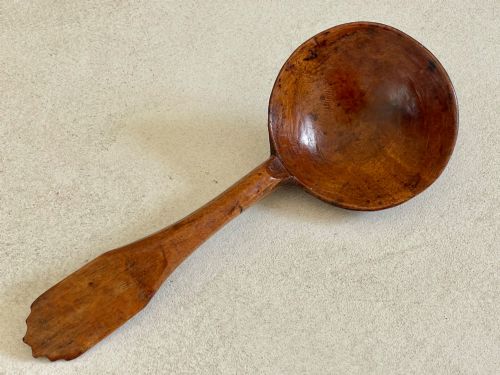


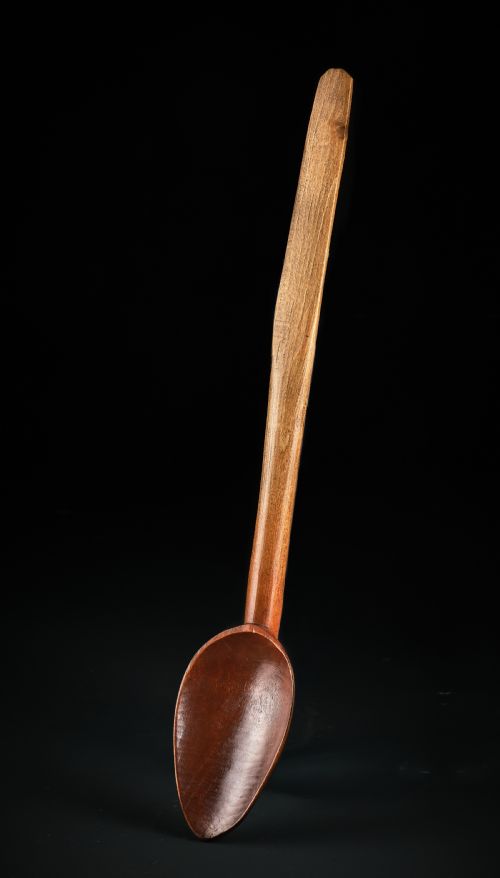


Vintage Treen Spoon
A vintage treen spoon brings tactile warmth and domestic history to a modern table, carved from native hardwoods by hands that shaped everyday life centuries ago.
Vintage Treen Spoon
A vintage treen spoon represents functional wooden domestic objects shaped by rural makers across Britain, Scandinavia, and continental Europe. These utensils range from simple dairy scoops and condiment ladles to decorative lovespoons and snuff spoons intended for personal use.
The pieces available here lean heavily into country vernacular and folk art traditions, with Welsh and Scandinavian examples appearing frequently. Collectors encounter utilitarian forms alongside intricately carved presentation pieces from the eighteenth and nineteenth centuries.
Sycamore, fruitwood, and beechwood dominate the selection, reflecting the accessible timbers favoured by historical turners and carvers. Each spoon carries the subtle tool marks and organic wear of its working life.
Materials and methods
Maker's rely on native hardwoods such as sycamore, fruitwood, and beech, chosen for their dense grain and stability under repeated washing and handling. Turning on a pole lathe or hand carving with gouges and knives formed the primary construction methods for these domestic implements.
Specialised items occasionally incorporate contrasting elements, such as silver mounts combined with exotic materials like coquilla nut on punch ladles. Surface finishes developed naturally through decades of use with oils and fats, complemented by occasional intentional engraving.
Vintage Treen Spoon Retail Price Guide 2026
Typical asking prices for vintage treen spoon among the pieces listed under this phrase on Sellingantiques today, from the lower quarter to the upper quarter. They describe what is for sale here now, not the wider market.
Listings feature items spanning the eighteenth, nineteenth, and early twentieth centuries, constructed primarily from sycamore, fruitwood, and beech.
Assessing quality
Superior quality in these items shows in the crispness of the original carving and the balanced weight of the handle relative to the bowl. Finer examples retain their intended proportions without excessive wear altering the original silhouette.
The depth of the surface patina and the smoothness achieved through handling distinguish better preserved specimens. Untouched surfaces with deep, warm tones command greater appreciation than dry or over-cleaned timber.
The Vintage Treen Spoon Glossary
- Treen
- Small handmade wooden objects for domestic use. This term derives from the old English word for tree.
- Folk art
- Utilitarian or decorative items made by self-taught rural artisans. These pieces often reflect regional cultural traditions.
- Lovespoon
- An intricately carved wooden spoon presented as a token of affection. Welsh makers developed this tradition to a high art form.
- Coquilla nut
- The hard, dark brown seed of a South American palm. Carvers utilised this material for small luxury containers and ladle handles.
Vintage Treen Spoon: Frequently Asked Questions
What is vintage treen?
Vintage treen encompasses small functional wooden objects created for the home before the mass adoption of plastics and metalware. The term covers everything from kitchen utensils to personal accessories.
These items were shaped by hand using traditional woodworking techniques, resulting in pieces that combine utility with organic sculptural form.
How were wooden spoons used historically?
Wooden spoons served daily duties in the dairy, kitchen, and dining room for stirring, serving, and eating. Softer woods like sycamore prevented scratching on earthenware and ceramic vessels.
Specialist spoons also fulfilled ceremonial roles, such as lovespoons given during courtship or commemorative christening gifts.
How do I care for antique treen?
Keep wooden items away from direct heat sources, strong sunlight, and sudden humidity changes to prevent the timber from splitting. Gentle cleaning with a damp cloth suffices for maintenance.
Occasional application of food-safe mineral oil or beeswax helps preserve the moisture and natural sheen of the wood.
How can I tell the age of a wooden spoon?
Dating relies on identifying tool marks, timber choices, regional carving styles, and the depth of the surface patina. Hand-forged saw marks and primitive lathe turning indicate earlier manufacture.
Comparing the form and wear patterns against documented examples from specific regional traditions aids in placing the piece within a century.