





Vintage Tray on Legs
A vintage tray on legs offers portable utility, combining a removable serving surface with a sturdy base for drinks or display.
Vintage Tray on Legs
When buyers search for a vintage tray on legs, they find versatile furnishings designed to serve food, hold drinks, or function as compact occasional tables. These items typically comprise a raised, flat tray top paired with a folding or fixed stand, merging the practicality of a serving tray with the stability of a small table.
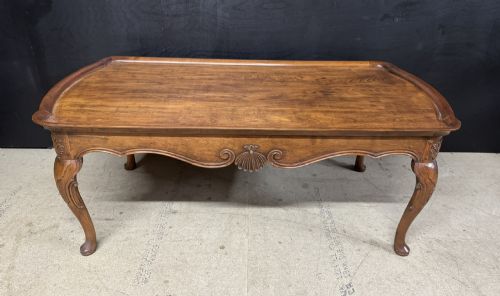
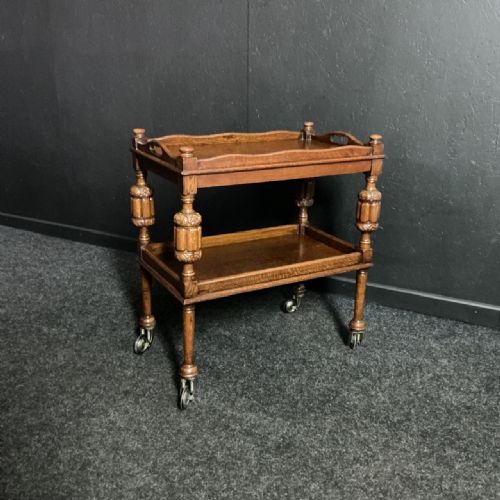
The pieces on this page span several distinct periods, most notably the nineteenth and early twentieth centuries, alongside revivals of earlier styles. Oak, mahogany, and walnut appear frequently, often taking the form of Butler's trays, silver tables, or coffee tables.
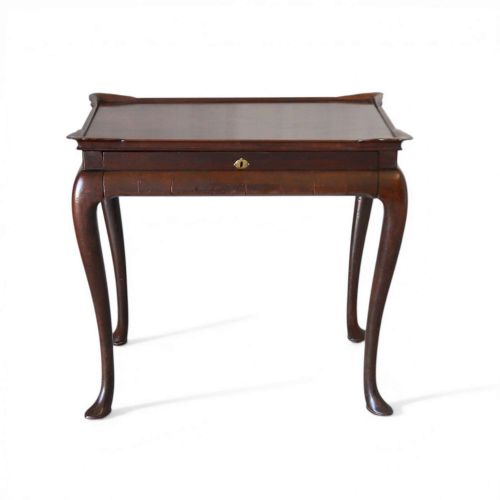
Buyers are most likely to encounter Edwardian and 1920s examples constructed from mahogany or burr walnut. These functional items range from simple folding coaching tables to ornate silver display tables with cabriole legs.
Materials and construction methods
Cabinetmakers utilised dense hardwoods such as mahogany, oak, and walnut to construct both the tray surfaces and the supporting stands. Burr walnut and satinwood veneers added decorative grain patterns to the top surfaces of finer tables.
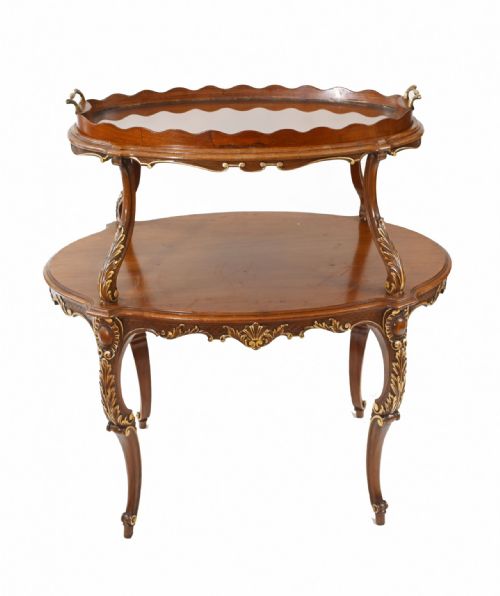
Decorative techniques recorded in the inventory include marquetry inlay, painted finishes, and ormolu mounts. Joinery methods varied from rigid mortise and tenon frames for fixed occasional tables to hinged folding mechanisms on portable butler and coaching trays.
Vintage Tray on Legs Retail Price Guide 2026
Typical asking prices for vintage tray on legs among the pieces listed under this phrase on Sellingantiques today, from the lower quarter to the upper quarter. They describe what is for sale here now, not the wider market.
The inventory spans the nineteenth century, Edwardian era, and the 1920s and 1930s.
What determines quality
The grade of timber and the complexity of the surface decoration dictate the overall standard of a tray table. Dense, figured hardwoods and intricate marquetry or hand-painted details separate standard utility items from high-status reception pieces.
Construction rigidity and the precision of folding mechanisms also differentiate examples. Well-engineered hinges, solid wood framing, and stable leg junctions ensure a piece performs its dual function as both tray and table reliably over time.
Whytock and Reid
The Vintage Tray on Legs Glossary
- Butler's tray
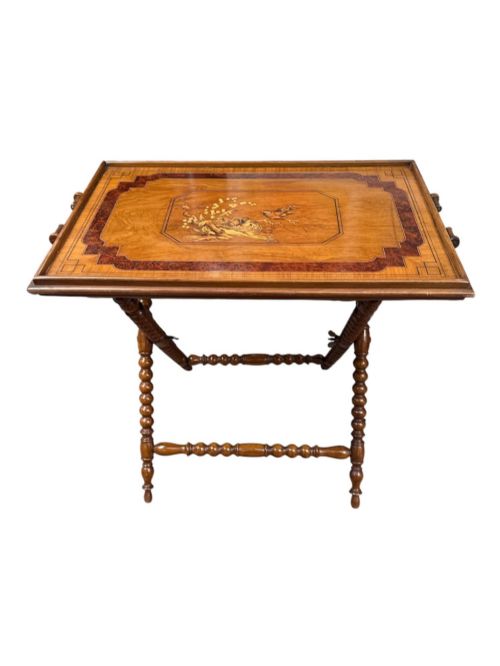
- A removable wooden tray with raised sides, often featuring cut-out carrying handles, designed to rest upon a folding or fixed wooden stand.
- Silver table
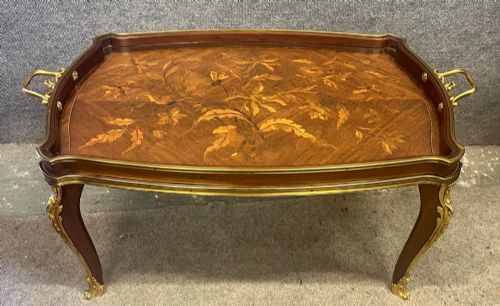
- An occasional table with a raised gallery or tray top, traditionally used for displaying silver tea services during the eighteenth and nineteenth centuries.
- Marquetry
- An ornamental technique of applying decorative veneers in wood and other materials to form geometric patterns or pictorial scenes.
- Cabriole leg
- A furniture leg that curves outward at the knee and tapers inward toward the foot, inspired by animal limbs and common in revival styles.
- Etagere
- A piece of furniture consisting of a set of open shelves or tiers for displaying small objects or serving afternoon tea.
Vintage Tray on Legs: Frequently Asked Questions
What is a butler's tray?
A butler's tray is a portable wooden tray with raised edges, originally used by staff to carry items from the kitchen to the dining room. The tray lifts off its separate folding or fixed stand.
Today, these versatile pieces serve as low coffee tables or convenient side tables in living spaces, maintaining their dual functionality.
How are silver tables used?
Silver tables feature a raised rim or gallery around the top edge to keep tea services and display items secure. They functioned historically as fashionable serving surfaces for afternoon tea.
In modern rooms, they work well as display surfaces for decorative objects or as compact occasional tables beside seating.
Are the trays fixed or removable?
Many traditional designs feature a completely lift-off tray resting on a folding stand, allowing the surface to double as a serving tray. Other variations incorporate fixed tops built directly into the table frame.
Checking the listing details helps confirm whether a particular model includes a detachable tray or a rigid top.
Which woods are most common?
Mahogany, oak, and walnut appear most frequently across these tables, often showcasing rich natural grain patterns. Burr walnut and satinwood were also employed for decorative veneer work on refined examples.
These durable timbers ensured the tables could withstand the daily demands of serving food and drinks.