



Vintage Transferware Jug
These vintage transferware jug examples bring printed pictorial scenes into everyday rooms, offering both robust earthenware utility and striking nineteenth-century decoration.
Vintage Transferware Jug
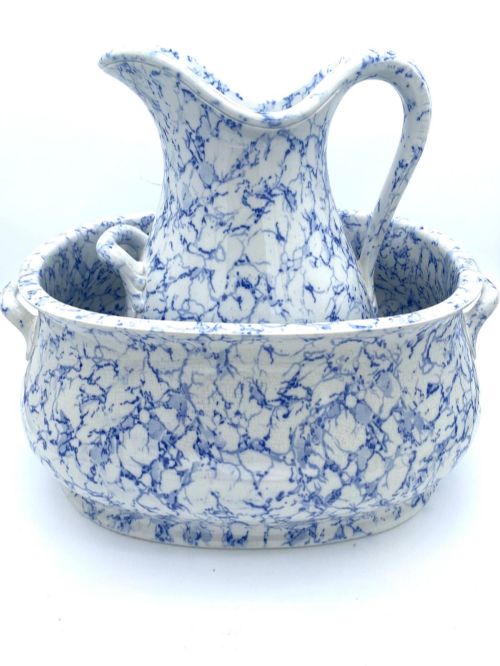
A vintage transferware jug combines ceramic production with mechanical pattern printing, creating pieces decorated with complex blue, pink, magenta or purple transfer motifs. These items span the Georgian, Victorian and Edwardian periods, stretching from early pearlware bodies up to later bathroom sets and washware.
Buyers meet various forms ranging from small mask head jugs and named commemorative Sunderland lustre pieces to large water jugs and full washstand sets. The selection includes domestic earthenware alongside specific hotel hotel ice water jugs and impressive Minton sanitary pieces.
Origins heavily feature Staffordshire potteries alongside Caughley Coalport and Minton works, showing stylistic shifts from transitional eighteenth-century patterns through to Arts and Crafts designs.
Materials and production
Makers shaped these earthenware and pearlware bodies before applying underglaze prints using copper plates to transfer ink onto the ceramic surface. Artisans then added transparent glaze to seal the design during firing.
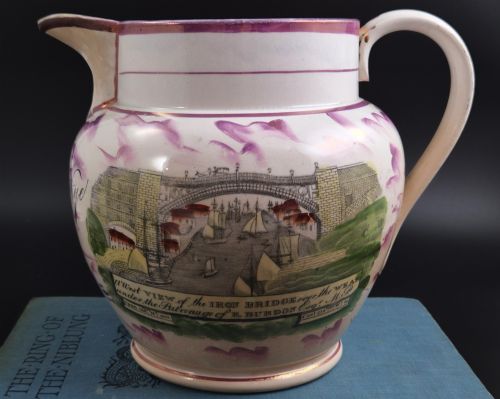
Certain vessels received additional hand-finishing, incorporating enamel highlights, gold leaf detailing or lustre glazes to catch the light around printed scenes.
Vintage Transferware Jug Retail Price Guide 2026
Typical asking prices for vintage transferware jug among the pieces listed under this phrase on Sellingantiques today, from the lower quarter to the upper quarter. They describe what is for sale here now, not the wider market.
Some nineteenth-century drinkers enjoyed their spirits accompanied by a bridge scene printed in pink lustre on the side of the family jug.
Distinguishing quality
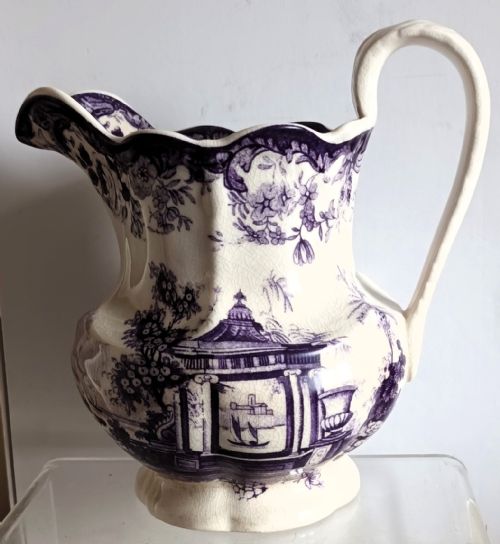
The clarity of the printed transfer line separates finer vessels from blurred examples, depending on the wear of the original copper plate and the skill of the transfer printer. Crisply rendered details on complex patterns indicate superior workshop output.
Secondary decorative elements such as applied lustre washes, enamel touches or gold leaf additions alter the visual depth of a piece. The presence of specific named inscriptions, commemorative dates or attributed designs elevates the standing of individual jugs.
Minton·Caughley Coalport
The Vintage Transferware Jug Glossary
- Transferware
- Ceramic pottery decorated by pressing a paper design printed from an engraved copper plate onto the unglazed or bisque surface. This technique allowed factories to mass-produce detailed pictorial scenes efficiently.
- Pearlware
- A refined earthenware developed by Josiah Wedgwood featuring a bluish-tinted glaze that pooled in recesses to mimic Chinese porcelain. It forms the body of many early nineteenth-century jugs.
- Lustre glaze
- A metallic glaze application that produces an iridescent sheen over the ceramic surface, often seen in pink or copper tones on nineteenth-century pieces. It reacts with kiln heat to create a reflective finish.
- Mask head jug
- A ceramic vessel featuring a modelled human or creature face incorporated into the spout or rim design. These pieces often date from the transitional period around eighteen hundred.
- Earthenware
- Porous pottery fired at lower temperatures than stoneware or porcelain, requiring an impermeable glaze to hold liquids. It serves as the primary material for most domestic jugs.
Vintage Transferware Jug: Frequently Asked Questions
What is a transferware jug?
A transferware jug is a ceramic container decorated using a printed tissue paper method transferred from an engraved copper plate. These vessels display repeating patterns, historical events or landscape scenes under a protective glaze.
They emerged as a popular household item during the Georgian and Victorian eras, combining decorative visual art with functional daily utility for water and other liquids.
How do I date these jugs?
Dating relies on examining the ceramic body, such as distinguishing early pearlware from later nineteenth-century earthenware, alongside the colour palette and decorative style. Clues like impressed maker marks, registered design numbers or named commemorative inscriptions also help narrow the timeframe.
Stylistic shifts from Georgian floral prints to Victorian aesthetic movements and Arts and Crafts designs provide further chronological markers.
Were these jugs used daily?
Many of these pieces served practical functions in bedrooms, dining rooms and hotel rooms for pouring water, holding ice or completing washstand basin sets. Larger examples formed part of full bathroom washware suites.
Others functioned as commemorative or presentation items, such as named Sunderland pieces created to mark specific events or people.
How do I clean an antique jug?
Cleaning requires gentle hand washing in lukewarm water with mild soap, avoiding harsh scrubbing brushes or abrasive pads that can damage old glaze or gold leaf. Care prevents moisture from entering any historic hairline cracks within the earthenware body.
Displaying pieces away from direct sunlight protects any enamel highlights and lustre glazes from fading over time.