

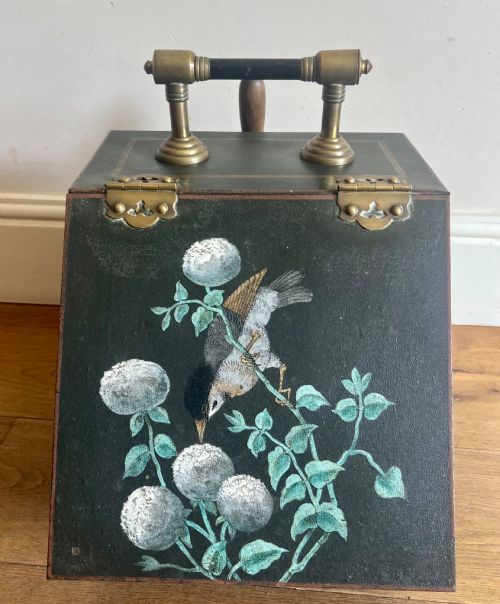


Vintage Toleware Box
These painted metal boxes are a vintage toleware box, bringing practical utility and hand-painted charm to any room.
Vintage Toleware Box
A vintage toleware box encompasses functional household objects fashioned from sheet iron or tin, painted and lacquered for decorative effect. The selection spans utilitarian storage items from the nineteenth century and nineteen hundred, including coal scuttles, spice boxes, and document tins.
Buyers frequently encounter nineteenth-century country house pieces, military hat boxes, and solicitor document tins alongside Georgian and Regency items. These containers served specific domestic and professional roles, from holding tobacco and spices to housing military headwear and legal papers.
Forms range from simple waste paper bins and kitchen buckets to lacquered boxes with trays and brass-rimmed grocery hoppers. Each item displays the characteristic painted finish applied to durable sheet iron or tin, often enhanced with gold leaf accents.
How they were made
Craftsmen built these containers using sheet iron or tin, forming rigid metal bodies designed to withstand heavy domestic or professional use. Artisans then applied multiple layers of lacquer and paint to seal the metal and create a smooth ground for decoration.
Decoration typically involved hand painting botanical or geometric motifs, sometimes augmented with delicate applications of gold leaf. Edges and rims frequently incorporated brass fittings or wire framing to reinforce the structure and add a polished finish.
Vintage Toleware Box Retail Price Guide 2026
Typical asking prices for vintage toleware box among the pieces listed under this phrase on Sellingantiques today, from the lower quarter to the upper quarter. They describe what is for sale here now, not the wider market.
Materials recorded in current listings include sheet iron, tin, brass, paint, wood, and gold leaf across the nineteenth century and nineteen hundred.
What varies in quality
Quality rests in the precision of the metal forming and the artistry of the painted surface rather than mere age. Pieces featuring intricate hand-painted decoration and well-preserved lacquered finishes stand apart from plain utilitarian containers.
The integration of secondary materials such as brass rims, inset bottle holders, and complete matching trays elevates a piece's standing. Refined Regency and Georgian examples display superior proportions and decorative detail compared to workaday nineteenth-century kitchen buckets.
The Vintage Toleware Box Glossary
- Toleware
- Painted and lacquered metalware, typically manufactured on a base of sheet iron or tin. The technique originates from the French term for painted sheet metal.
- Regency
- A style period dating from the early nineteenth century characterised by classical restraint and elegant proportions. Pieces from this era often feature refined decorative painting.
- Sheet iron
- A malleable metal plate material used as the structural foundation for many durable boxes and containers. It provides strength before the application of paint and lacquer.
- Lacquer
- A clear or coloured protective coating applied over painted metal surfaces to create a glossy finish. This layer helps protect the underlying artwork from wear.
Vintage Toleware Box: Frequently Asked Questions
How were they used originally?
Original uses ranged widely depending on the specific form, including storing tobacco, spices, legal documents, and military hats.
Larger vessels functioned as coal scuttles and kitchen buckets, while smaller boxes served domestic storage and desktop organisation.
How do I care for toleware?
Maintenance requires keeping the pieces dry and dusting them gently with a soft cloth to protect the painted and lacquered surfaces.
Avoid abrasive cleaners and excessive moisture, which can damage the historic paint layers and underlying metal.
How do I date these items?
Dating relies on stylistic clues, construction methods, and the specific form of the object, connecting them to Georgian, Regency, or Victorian periods.
Comparing the style of the hand painting and hardware details helps place a piece within the nineteenth century or around nineteen hundred.