



Vintage Tobacco Chest
These vintage tobacco chest pieces are robust containers for cigars and tobacco, offering collectors tactile wooden craftsmanship and period character.
Vintage Tobacco Chest
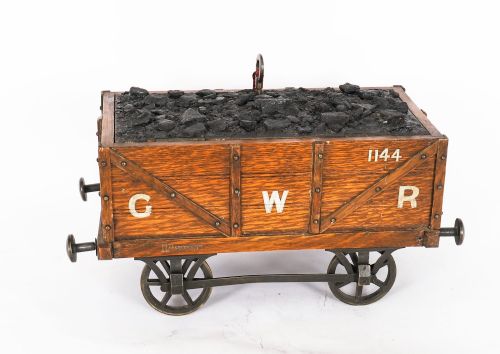
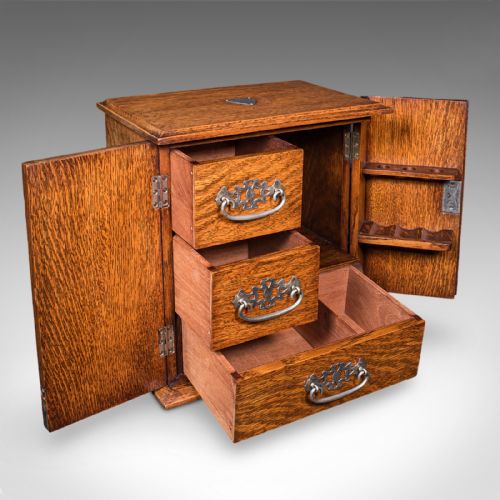
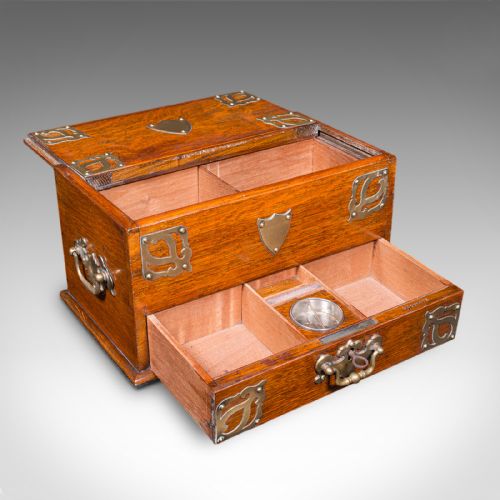
A vintage tobacco chest serves as a dedicated container for cigars, cigarettes, and smoking accessories, drawing together diverse forms like humidors, smoking cabinets, and caskets. Buyers searching for a vintage tobacco chest will encounter items ranging from compact wooden humidor boxes to larger smoking cabinets and novelty railway-themed pieces.
The materials and styles span multiple eras, with Edwardian and Victorian pieces dominating the selection alongside Arts and Crafts and Middle Eastern designs. Golden oak and burr walnut appear frequently as the primary woods for these storage vessels.
Functional variations include tambour doors, locking mechanisms, and fitted compartments designed to hold smoking paraphernalia securely. These containers bridge domestic utility with period decorative arts, reflecting the social habits of nineteenth and early twentieth-century households.
How they were made
Carpenters utilised solid oak, burr walnut, and hardwood to construct the main bodies of these chests, often selecting figured grains for visual prominence. These wooden structures frequently incorporate metal hinges, brass handles, and occasional silver mounts for reinforcement and decoration.
Specialised variations employ iron and copper elements, particularly within novelty railway coal wagon designs or Arts and Crafts period boxes. Interior fittings often include leather lining and partitioned compartments tailored for cigars and smoking accessories.
Vintage Tobacco Chest Retail Price Guide 2026
Typical asking prices for vintage tobacco chest among the pieces listed under this phrase on Sellingantiques today, from the lower quarter to the upper quarter. They describe what is for sale here now, not the wider market.
Some Victorian smokers clearly loved locomotives enough to store their cigars inside miniature rolling coal wagons.
What varies in quality
The selection of timber dictates the visual merit of each piece, where figured burr walnut or substantial golden oak exhibits superior grain patterning compared to plain secondary woods. Cabinet-making proficiency determines the tightness of joints and the smooth operation of tambour doors or locking lids.
Hardware execution separates standard utility boxes from finer examples, noting the weight of cast brass mounts, fitted silver details, and integrated locking mechanisms. The complexity of form, such as novelty railway locomotives or heavily decorated Middle Eastern surfaces, influences the overall character of the piece.
The Vintage Tobacco Chest Glossary
- Humidor
- A moisture-controlled box designed specifically for storing cigars in optimal condition. These containers often feature tight-fitting wooden lids and lined interiors.
- Tambour
- A flexible shutter door formed of narrow wooden slats attached to a canvas backing. This mechanism slides smoothly along curved grooves to enclose cabinet shelves.
- Burr walnut
- A wood veneer taken from the gnarled growth of a walnut tree, prized for its swirling, intricate grain patterns. It frequently graces the exterior of nineteenth-century luxury boxes.
- Arts and Crafts
- A design movement of the late nineteenth and early twentieth centuries emphasising handcraftsmanship and simple forms. Objects from this period often display honest construction and hammered metal details.
Vintage Tobacco Chest: Frequently Asked Questions
How were humidors used?
Humidors functioned as secure storage units that protected dried leaf tobacco and cigars from losing their moisture and flavour. Owners kept them in studies, club lounges, and drawing rooms.
Many featured built-in locks to safeguard expensive cigars and smoking gear from general household access.
How do I date a chest?
Dating relies on examining the timber species, construction methods, hardware style, and period characteristics. Edwardian and Victorian examples often display distinct brass fittings and wood choices.
Stylistic cues such as Arts and Crafts copper work or railway novelty themes also help narrow down the production era.
Are these chests lined?
Many of these containers feature fitted wooden interiors, and some incorporate leather or specialised compartments to separate different cigar sizes. The interior layout depends on whether the piece is a simple box or a larger smoking cabinet.
Original linings reflect the specific storage purpose intended by the maker.