



Vintage Tile Top Table
These vintage tile top table examples combine ceramic surfaces with sturdy wooden frames, offering practical utility and distinctive decorative character for daily use.
Vintage Tile Top Table
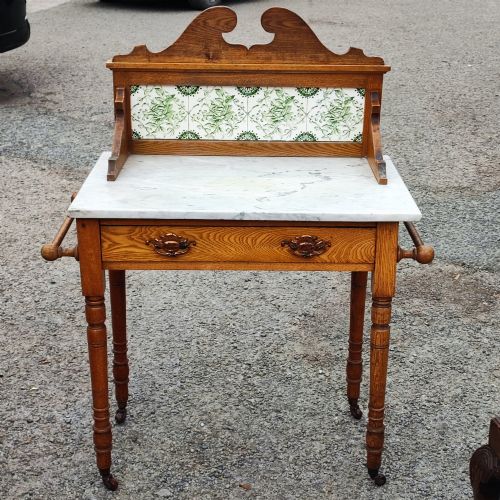
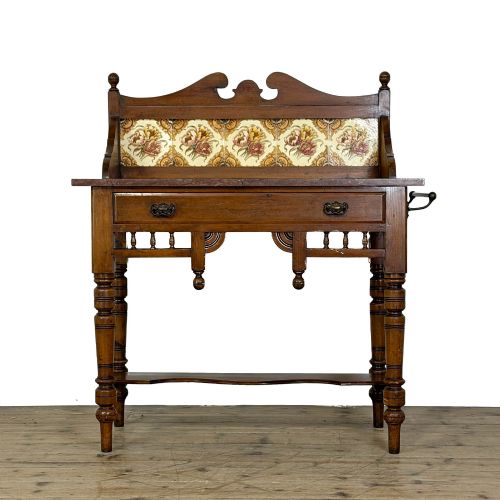
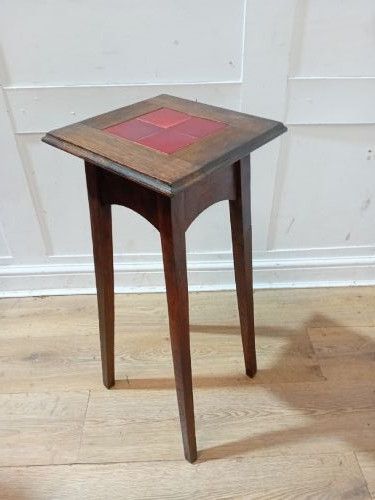
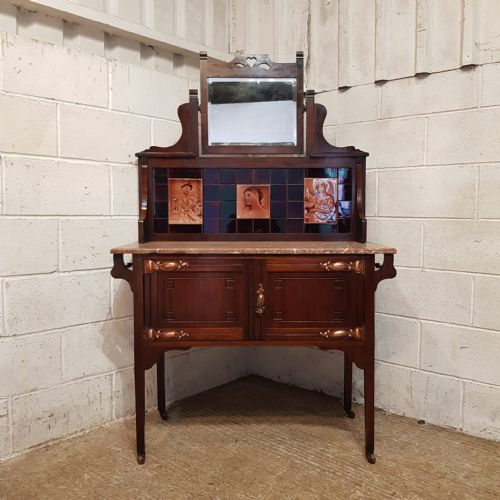
A vintage tile top table brings together timber frames and glazed ceramic surfaces, frequently appearing across Edwardian, Arts and Crafts, and Art Nouveau styles. The selection here ranges from compact side tables and coffee tables to washstands and plant stands produced from the late nineteenth century through to the interwar period.
Buyers will encounter various forms, including oak framed coffee tables and side tables fitted with decorative tiles, alongside larger bedroom furniture suites and washstands incorporating ceramic inserts or marble tops. Materials span oak, mahogany, painted pine, and metal, reflecting both domestic British craftsmanship and continental influences such as Mediterranean revival cafe pieces.
The objects serve multiple functions, acting as functional coffee tables, occasional stands, or decorative focal points in a room. Their construction relies heavily on traditional joinery methods paired with durable ceramic surfaces designed to resist heat and moisture.
Materials and construction
Frames are constructed primarily from solid hardwoods like oak and mahogany, alongside painted pine and occasional metal elements. These timbers provide the structural skeleton required to support heavy inset ceramic tiles or marble slabs.
The upper surfaces incorporate glazed ceramic tiles, often featuring geometric or floral motifs characteristic of the Arts and Crafts and Art Nouveau movements. These tiles are typically set flush into the wooden frame, secured with mortar or traditional bedding materials to ensure stability.
Vintage Tile Top Table Retail Price Guide 2026
Typical asking prices for vintage tile top table among the pieces listed under this phrase on Sellingantiques today, from the lower quarter to the upper quarter. They describe what is for sale here now, not the wider market.
Listings feature oak, mahogany, and painted pine frames paired with ceramic tiles or marble across Edwardian, Arts and Crafts, and Art Nouveau styles.
Assessing the standard
Quality rests in the integration between the timber frame and the ceramic or marble insert, where tighter joints and flush alignment indicate superior carpentry. The artistic execution of the tile glazes and the richness of the grain in woods such as oak and mahogany also separate standard utility pieces from finer decorative examples.
The integrity of the structural joinery dictates durability, with well-preserved frames showing minimal movement or timber degradation over decades of use. Additionally, the condition of the glazed surface, free from deep chipping or extensive hairline cracking across the tiles, preserves the visual impact of the design.
The Vintage Tile Top Table Glossary
- Arts and Crafts
- A design movement emphasising handcraftsmanship, simple forms, and medieval or folk decoration. This style frequently utilises exposed joinery and natural materials.
- Art Nouveau
- An international style of art and architecture characterised by intricate linear designs and flowing curves inspired by natural forms. It appears prominently on ceramic tiles and woodwork from the turn of the twentieth century.
- Edwardian
- Pertaining to the reign of King Edward VII, noted for lighter furniture designs and a departure from heavier Victorian aesthetics. Pieces from this period often incorporate refined timber frames.
- Jardiniere stand
- A tall, decorative stand designed specifically to hold indoor plants or flower pots. These items often feature tiled or marble tops to resist water damage from watering.
Vintage Tile Top Table: Frequently Asked Questions
What is a vintage tile top table used for?
These pieces function primarily as occasional tables, coffee tables, or plant stands within living spaces. Their durable ceramic surfaces make them practical for holding drinks and plants.
They also serve as decorative accents that showcase specific periods of design, such as the Arts and Crafts movement or the Edwardian era.
How do I date a tile top table?
Dating relies on identifying stylistic markers in the woodwork and the ceramic tiles, such as Art Nouveau motifs or Edwardian framing techniques. Construction methods and timber choices also offer clues regarding the decade of manufacture.
Evidence points to production ranging from the late nineteenth century through the 1930s, encompassing various regional workshops.
Are these tables water resistant?
The ceramic or marble sections provide a practical, wipe-clean surface that resists moisture from glasses or plant pots. This design choice originally suited them for use as washstands or jardiniere stands.
However, the surrounding wooden frames still require standard care to prevent water marks or timber damage from standing liquid.
What woods were commonly used?
Makers frequently utilised solid oak and mahogany for framing these tables, providing the necessary strength to support heavy ceramic inserts. Painted pine also appears in certain utilitarian forms.
The choice of timber typically aligns with the prevailing style of the period, from dark Edwardian hardwoods to quarter-sawn oak favoured by Arts and Crafts artisans.