

Vintage Tiered Stand
A vintage tiered stand brings multiple levels of display and surface space to a room.
Vintage Tiered Stand
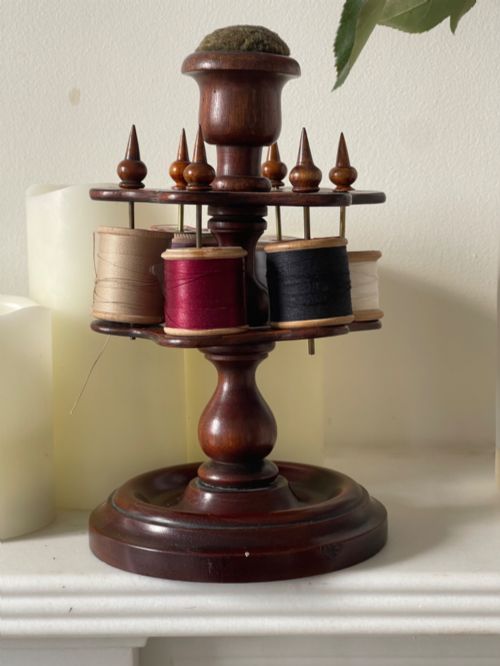
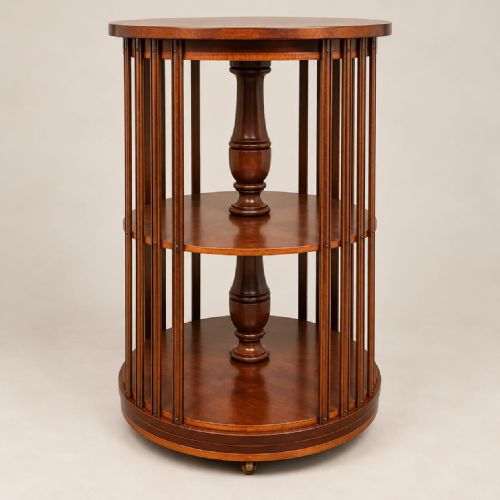
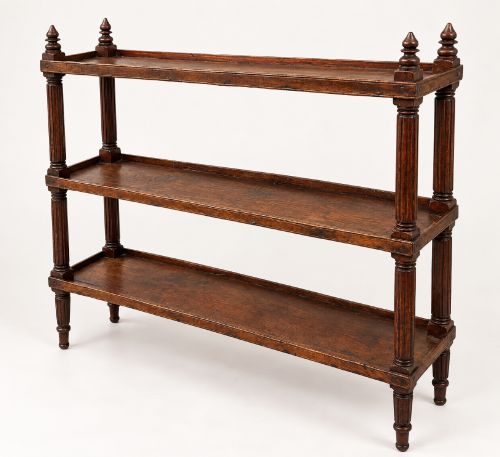
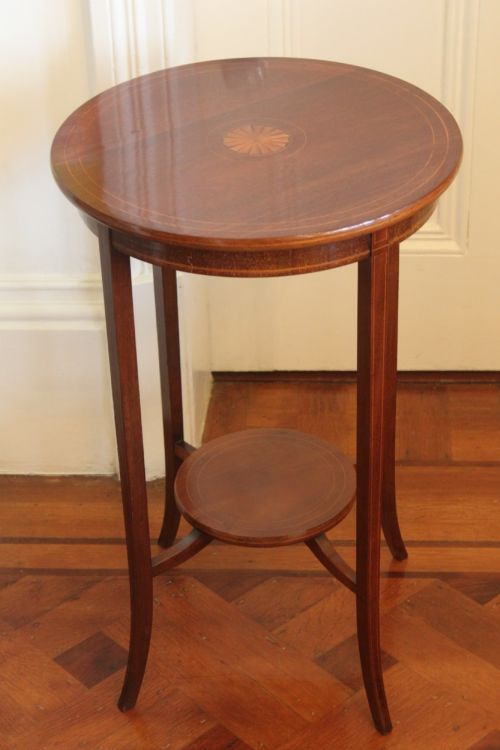
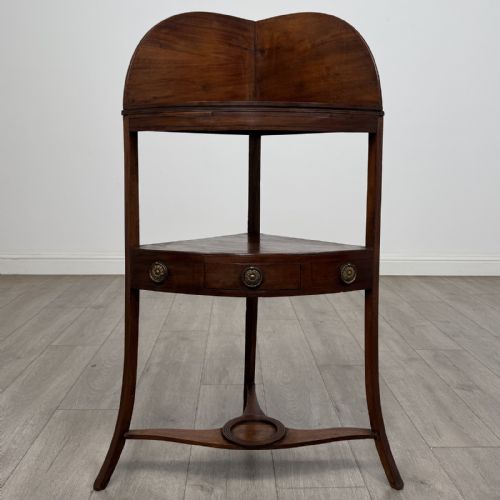
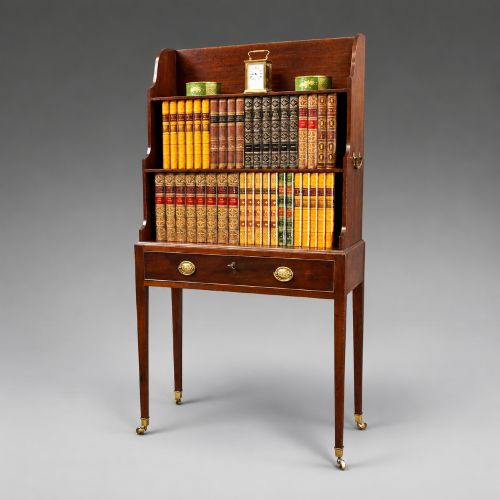
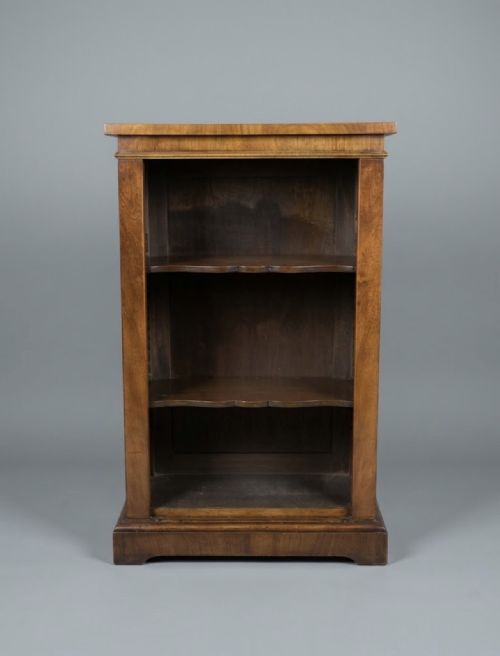
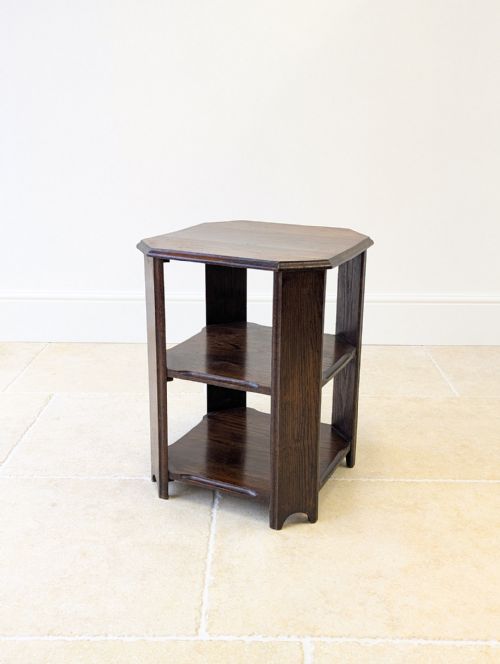
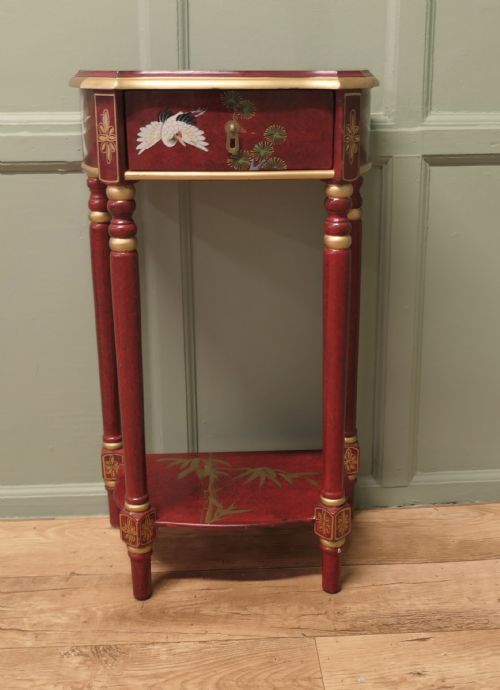
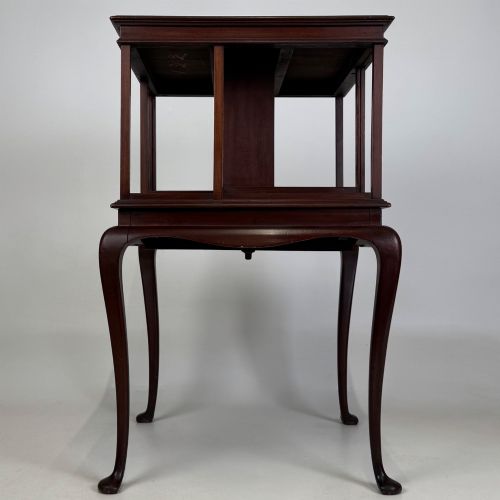
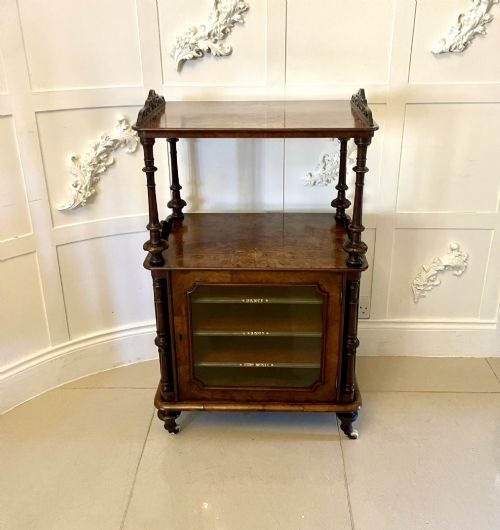
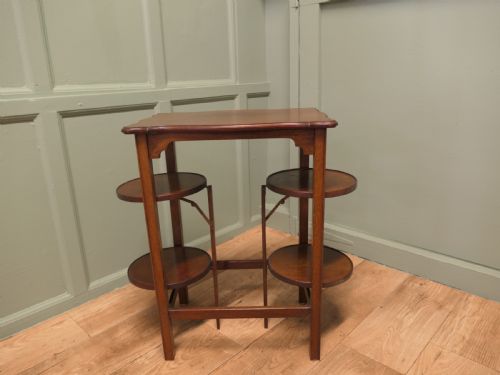
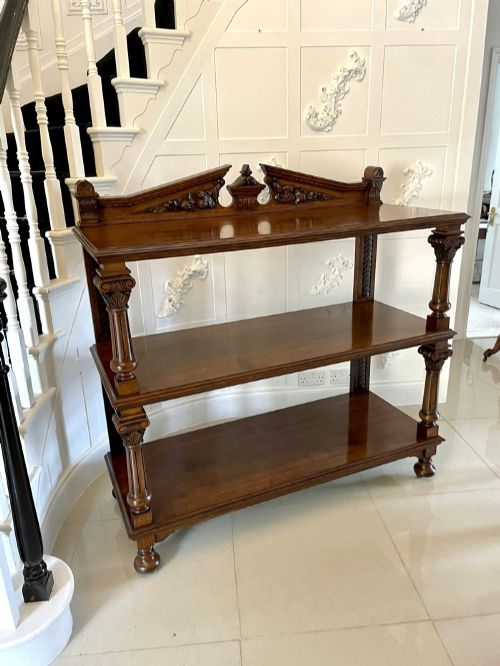
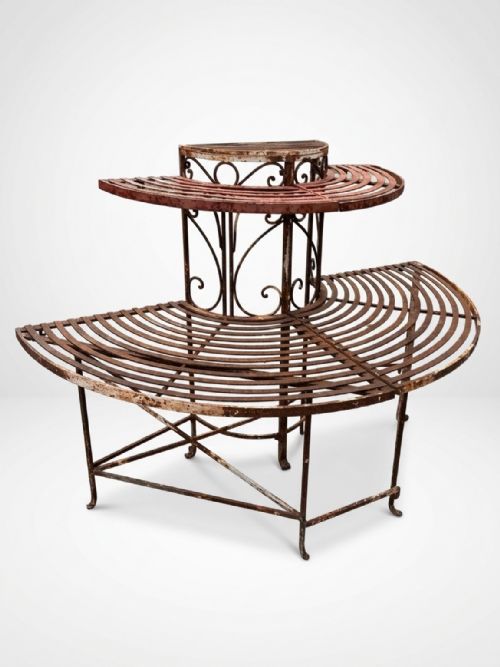
When you search for a vintage tiered stand, you encounter a variety of multi-layered furniture pieces designed to hold books, plants, or decorative items across several levels. The selection spans distinct forms, including what-nots, etageres, dumbwaiters, and revolving bookcases, with Edwardian and Victorian examples appearing most frequently.
These pieces utilise vertical space efficiently, offering multiple shelves or tiers supported by turned columns, slender pillars, or carved supports. The evidence shows formats ranging from corner what-nots with pierced fretwork to four-tier mahogany bookcases and double cake stands.
Origins stretch from the Georgian and Regency periods through the nineteenth century into the Edwardian era and the 1930s. Mahogany and oak dominate the material record, accompanied by walnut, burr walnut, rosewood, and occasional applications of red lacquer.
How they were made
Cabinet makers built these tiered pieces predominantly in solid timbers such as mahogany and oak, frequently employing Burr walnut and rosewood for decorative impact on visible surfaces. Construction relied on traditional joinery methods to support multiple stacked platforms without losing structural stability.
Design details recorded in the titles include carved woodwork, barley twist supports, slatted sides, raised galleries, and inlaid mahogany. Brass fittings appear on pieces like etageres, while specific items incorporate turned uprights and cabriole legs to anchor the vertical tiers.
Vintage Tiered Stand Retail Price Guide 2026
Typical asking prices for vintage tiered stand among the pieces listed under this phrase on Sellingantiques today, from the lower quarter to the upper quarter. They describe what is for sale here now, not the wider market.
Listings demonstrate that oak and mahogany are the primary timbers utilised across Edwardian and Victorian tiered stands.
What varies in quality
The distinction between standard examples and superior pieces rests on the choice of timber and the precision of the joinery connecting the tiers. Furniture utilising burr walnut or figured mahogany with careful inlay demonstrates a higher degree of initial craftsmanship than plain utilitarian variants.
Detailing such as pierced fretwork, carved ornamentation, and well-turned barley twist supports elevate the visual weight of a piece. The structural integrity of the uprights and the firmness of each shelf determine how well a multi-tiered stand handles daily use over the centuries.
The Vintage Tiered Stand Glossary
- Whatnot
- An open set of shelves for displaying small objects or books, typically standing on slender supports. These pieces developed in the nineteenth century to utilise vertical room.
- Etagere
- A piece of furniture consisting of a number of open shelves for displaying ornaments. They often appear in rosewood or painted mahogany with brass details.
- Dumbwaiter
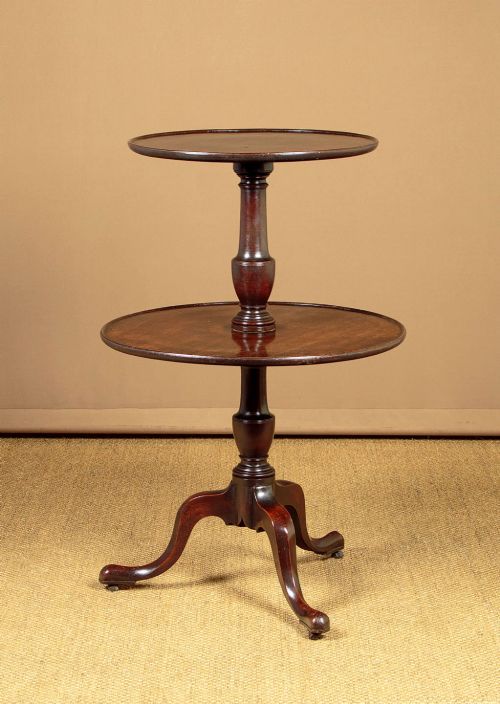
- A multi-tiered freestanding piece traditionally used for serving food or holding tableware. Georgian and Victorian examples feature graduating circular trays on a central column.
- Revolving bookcase
- A compact shelving unit mounted on a rotating pivot base. Edwardian versions frequently utilise oak or mahogany with slatted sides.
- Barley twist
- A type of turning shaped like a spiral rope, commonly found on the vertical supports of Victorian stands and what-nots.
Vintage Tiered Stand: Frequently Asked Questions
What is a whatnot?
A whatnot is an open piece of furniture featuring multiple tiers supported by uprights or columns. It was designed to hold ornaments, books, or collections in nineteenth-century interiors.
These pieces range from corner units with fretwork to tall mahogany stacks, providing visible storage across several levels.
Where do you put a tiered stand?
A tiered stand fits well in corners, beside seating, or along hallways where floor space is limited. Their vertical design maximises display capacity without demanding a large footprint.
Victorian and Edwardian models serve effectively as lamp tables, plant stands, or occasional surfaces in living areas.
How do I date an oak tiered stand?
Dating relies on stylistic markers, construction methods, and timber choice recorded across the periods. Edwardian oak pieces often feature slatted sides or raised galleries, while earlier nineteenth-century examples utilise heavier turned supports.
Arts and Crafts variants from around 1900 display simpler, honest construction reflecting the design philosophies of that movement.
What is the difference between an etagere and a bookcase?
An etagere is primarily built for display, featuring open shelves on all sides for decorative items or small objects. Bookcases constructed with tiers focus more on holding volumes, though open forms overlap in function.
Materials also distinguish them, with etageres frequently incorporating rosewood, brass, or painted finishes.