

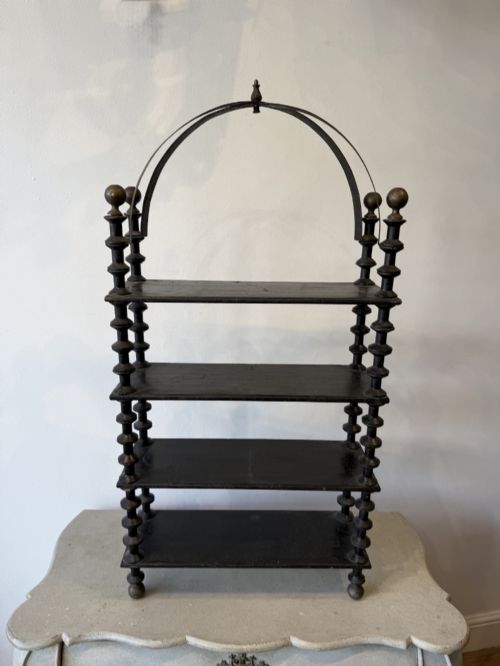
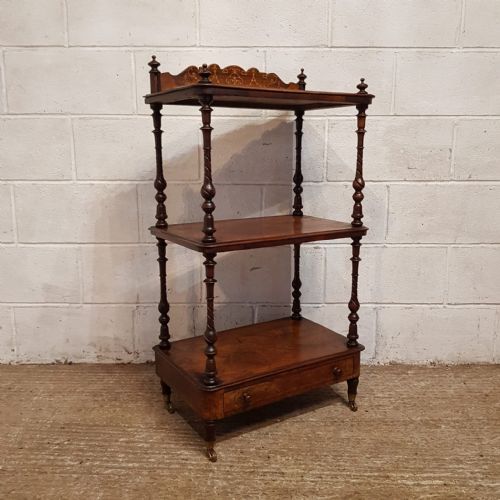
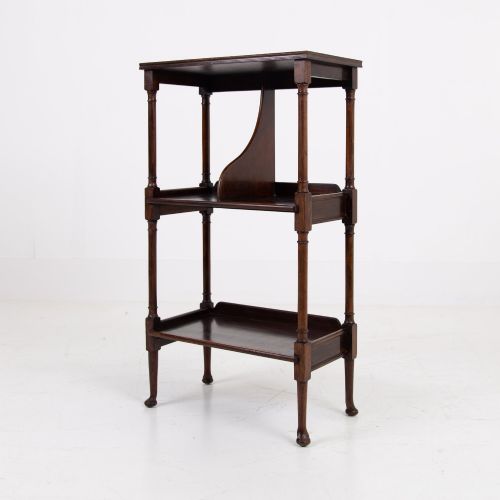


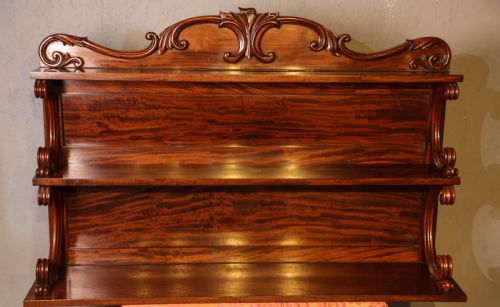

Vintage Tiered Display Rack
These vintage tiered display rack options bring multi-level display to interiors through nineteenth-century and later designs.
Vintage Tiered Display Rack
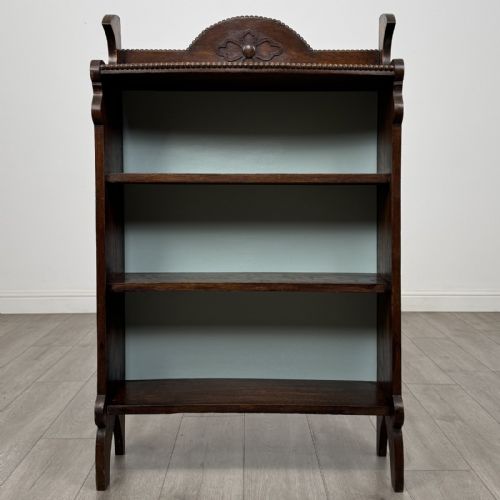
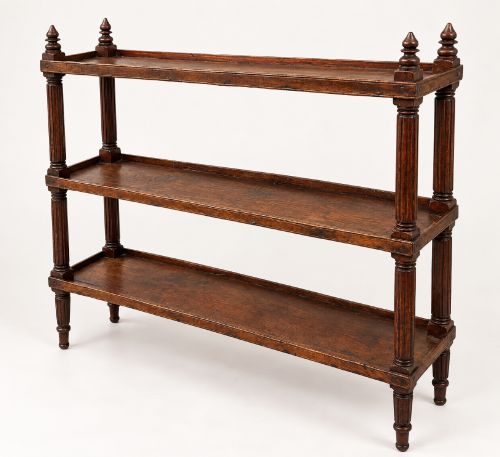
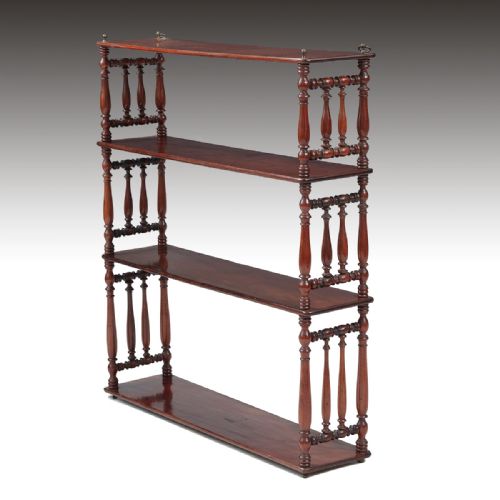
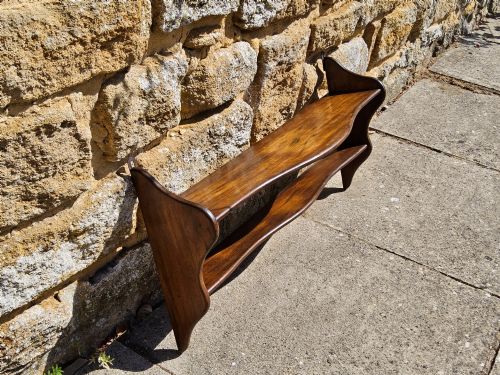
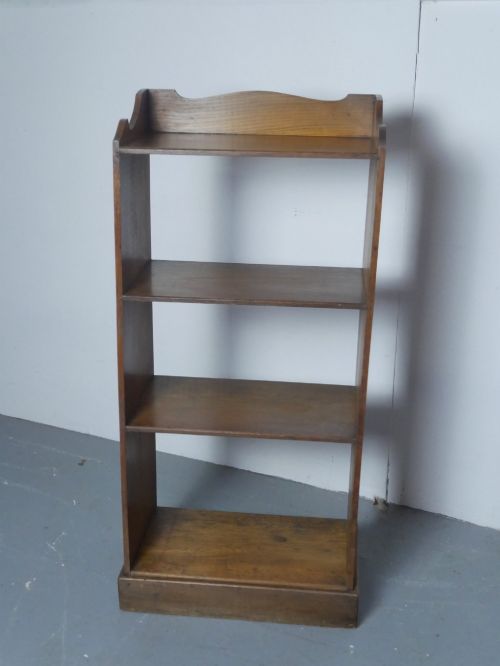
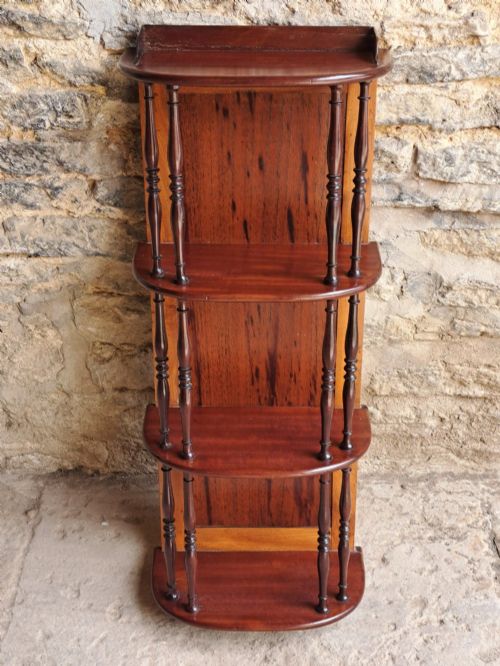
A vintage tiered display rack gathers multiple platforms into a single vertical structure, functioning as a wall shelf, whatnot, or etagere. These items organise books, plants, and decorative objects efficiently within compact floor or wall footprints.
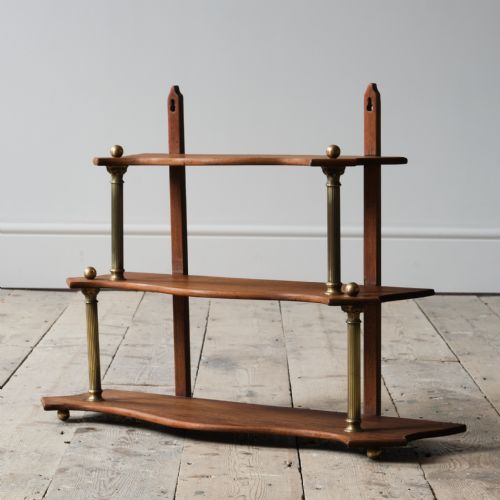
The selection here draws primarily from nineteenth-century and Victorian origins, alongside Regency, Edwardian, and later twentieth-century examples. Common forms range from mahogany wall-hanging shelves and multi-tiered floor whatnots to specialised shop fittings and cake stands.
Mahogany, walnut, and oak dominate the timber choices, frequently paired with brass supports, iron frames, or burr veneer surfaces. Buyers encounter everything from portable bookshelves and book troughs to French bobbin shelves and shop display stands.
How they were made
Cabinetmakers utilised dense hardwoods such as mahogany, walnut, oak, and cherry wood to construct load-bearing shelves and upright supports. Burr walnut veneers and ebonised wood provided decorative contrast on finer Victorian and Regency pieces.
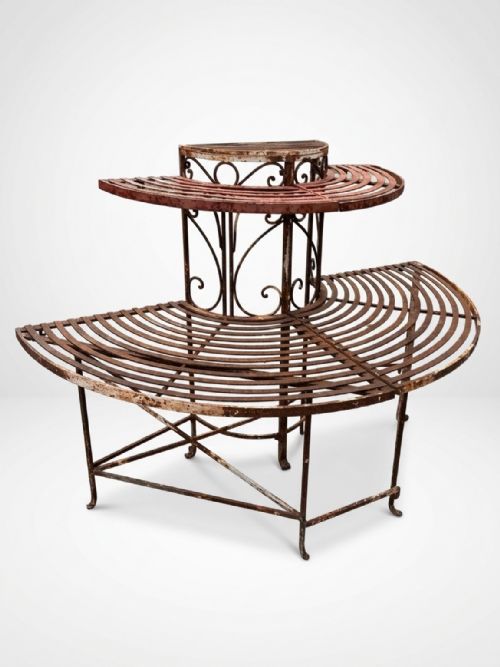
Metal elements such as brass galleries, iron frames, and bronze fittings added structural stability and decorative accenting to display stands and shop counters. Joinery methods relied on traditional housing joints, dovetails, and fretwork panels to maintain rigidity across multiple tiers.
Vintage Tiered Display Rack Retail Price Guide 2026
Typical asking prices for vintage tiered display rack among the pieces listed under this phrase on Sellingantiques today, from the lower quarter to the upper quarter. They describe what is for sale here now, not the wider market.
A solitary gun rack sits quietly among the book troughs and cake stands, proving nineteenth-century display took surprising turns.
What varies in quality
The distinction between standard utility items and superior examples lies in the selection of timber figures, such as burr walnut or figured mahogany, and the crispness of fretwork carving. Refined pieces exhibit balanced proportions, delicate turning, and integrated brass detailing rather than purely functional joints.
Structural integrity across multiple tiers separates better pieces from lesser ones, as loaded shelves demand precise joinery to prevent sagging. Original fixings, matched timber grains, and untouched patina elevate the standing of a shelf or whatnot.
The Vintage Tiered Display Rack Glossary
- Whatnot
- A piece of furniture consisting of several open shelves for displaying small objects. They became particularly popular during the Victorian period for parlours and drawing rooms.
- Etagere
- A piece of furniture with a set of open shelves for displaying ornaments. This French term often applies to decorative multi-tiered stands.
- Waterfall bookcase
- A set of open shelves where each tier steps back progressively from bottom to top. This creates a profile resembling cascading water.
- Book trough
- A small desktop or tabletop rack designed to hold a selection of books upright. They often feature decorative ends or folding mechanisms.
- Burr walnut
- Wood taken from a walnut tree growth featuring swirling grain patterns. Cabinetmakers sliced this wood into veneers for high-status furniture.
Vintage Tiered Display Rack: Frequently Asked Questions
How do I support a heavy book collection on an antique shelf?
Distribute heavier volumes on the lower tiers where the structure meets the wall or floor fixings more securely. Reserve the upper levels for lighter paperbacks or decorative objects.
Verify that wall-hanging brackets or screws anchor directly into solid masonry or wooden studs rather than plaster alone. This prevents strain on historical joints.
Where should I place a tiered display rack in a modern room?
Wall-mounted versions suit narrow hallways, kitchens, or above sideboards where floor space is limited. Floor-standing whatnots fit well in corners or empty alcoves to display collections.
Keep wooden tiers away from direct radiator heat and strong sunlight to prevent timber warping and veneer cracking.
How do I tell a Regency shelf from a Victorian one?
Regency pieces often display restrained classical lines, brass gallery rails, and rich mahogany grains inspired by ancient Greek and Roman forms. They tend to feel lighter and more architectural.
Victorian examples frequently introduce darker woods, heavier proportions, burr walnut veneers, and elaborate fretwork or bobbin-turned supports reflecting varied revival styles.
Can these racks support potted plants?
Pot stands and specific metal-framed display stands were originally designed to hold damp pots and garden elements. Wooden shelves require protective saucers to prevent water rings.
Check that the timber finish resists moisture before placing living plants directly onto antique veneered surfaces.