





Vintage Tier Dessert Stand
A vintage tier dessert stand brings tiered elegance to a room, offering practical surface space across multiple levels in mahogany, brass, and glass.
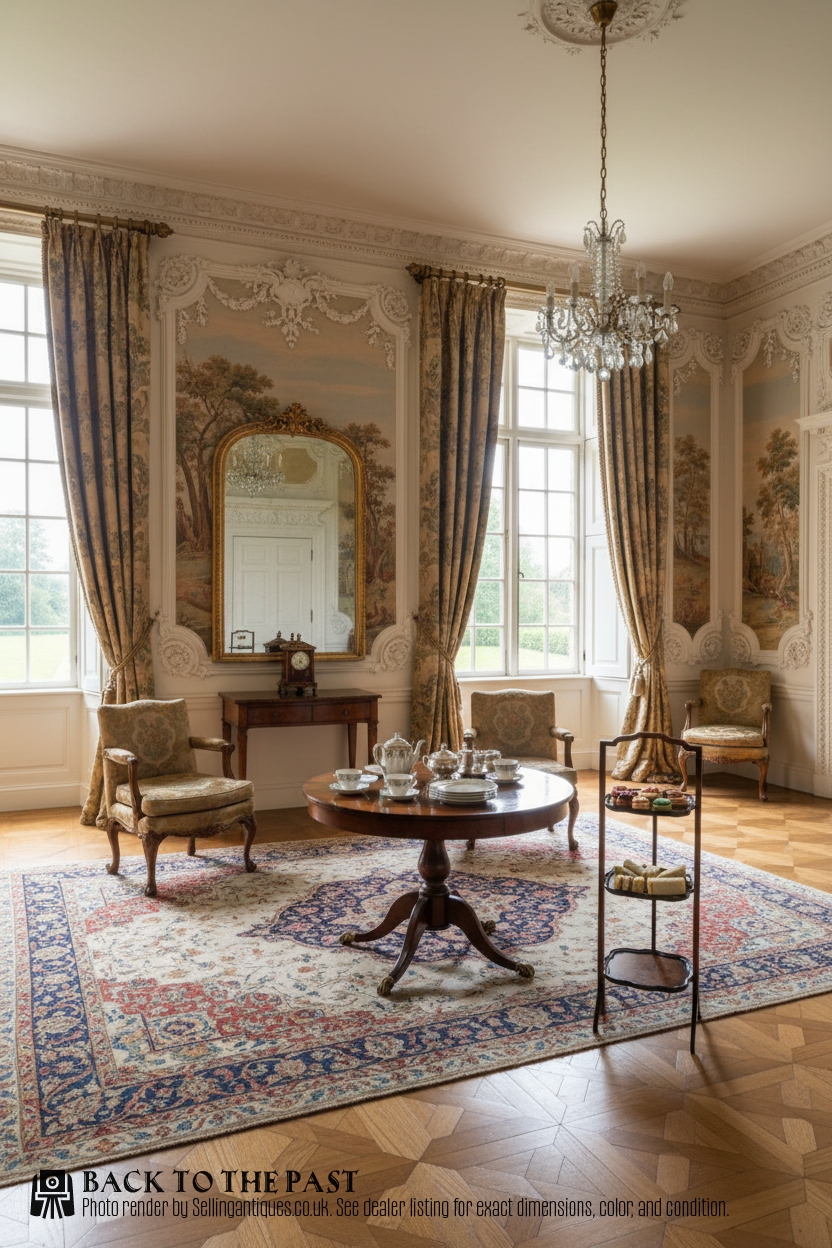
Vintage Tier Dessert Stand
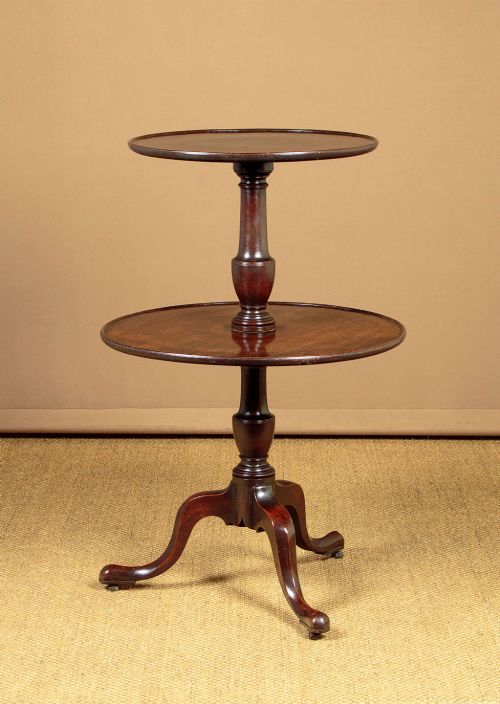
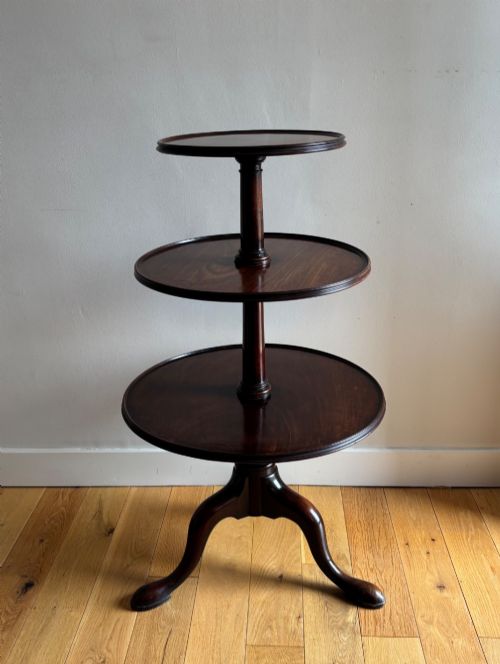
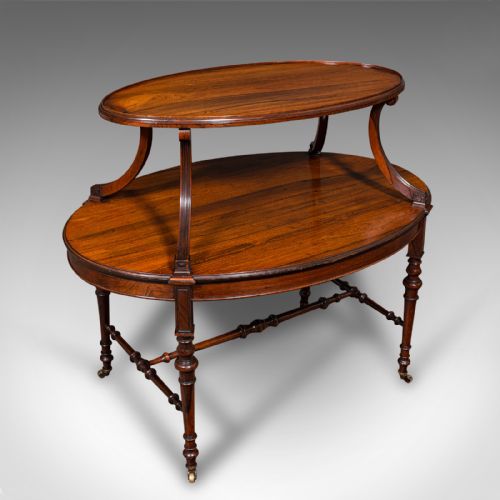
When you search for a vintage tier dessert stand, you encounter pieces that historically served as dumb waiters, cake stands, and tiered display tables. These items provide multiple levels for presentation, originating from periods such as the 18th century, Regency, Victorian, and Edwardian eras.
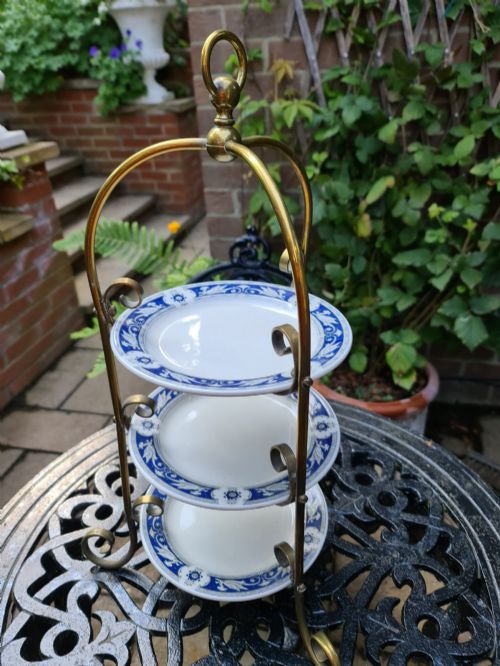
The most common examples on this page are mahogany dumb waiters and tiered cake stands. These wooden and metal stands range from folding designs to revolving serving tables used historically in dining rooms.
Makers and craftsmen constructed these stands primarily as functional furniture, adapting them over successive centuries from Georgian dining aids to Edwardian cake stands and polished brass display pieces.
How they were made
Makers utilised solid timbers like mahogany, rosewood, and walnut, frequently applying burr walnut veneer to highlight the natural grain of the wood. Brass fittings and polished glass plates also appear, combining metalwork and glazing techniques in later 20th-century variations.
Joinery techniques include folding mechanisms for multi-tiered cake stands and sturdy central pedestals for dumb waiters. Craftsmen turned the wooden columns on lathes and shaped the circular tiers by hand to ensure stability across multiple levels.
Vintage Tier Dessert Stand Retail Price Guide 2026
Typical asking prices for vintage tier dessert stand among the pieces listed under this phrase on Sellingantiques today, from the lower quarter to the upper quarter. They describe what is for sale here now, not the wider market.
Some folding stands quietly collapse if leaned upon too heavily, serving as a gentle reminder of Victorian theatricality.
What varies in quality
Quality depends upon the choice of timber and the precision of the turning on the central column. Superior examples feature dense mahogany or figured rosewood with crisp, clean mouldings on each tier.
Mechanical execution in folding stands separates standard items from finer works. Smooth operation of the hinges and secure locking mechanisms indicate superior workmanship in the original construction.
The Vintage Tier Dessert Stand Glossary
- Dumb waiter
- A tiered freestanding serving table designed to hold dishes or desserts without the aid of a servant. These items feature multiple rotating or fixed circular tiers.
- Tiered table
- Furniture constructed with two or more levels mounted vertically on a central support. This form maximises surface area within a compact floor footprint.
- Burr walnut veneer
- Thin slices of decorative walnut wood applied over a secondary timber base. This technique creates intricate, swirling patterns across the surface of the tiers.
- George III
- The stylistic period spanning the late 18th century characterised by classical proportions and fine mahogany craftsmanship. Pieces from this era often display restrained decorative carving.
Vintage Tier Dessert Stand: Frequently Asked Questions
What is a dumb waiter?
A dumb waiter is a multi-tiered freestanding table historically used in dining rooms to hold food, tableware, or desserts. These stands allowed diners to serve themselves without attendants present.
Over time, the form evolved into lighter cake stands and display tables suitable for parlour rooms and drawing rooms.
How do I date a tiered stand?
Dating relies on identifying the timber, turning style, and construction methods used in the central column and tiers. Georgian and Regency pieces typically employ solid mahogany with hand-turned details.
Later Victorian and Edwardian examples introduce folding frames, rosewood, and walnut veneers, while 1920s pieces incorporate polished brass and glass.
Were these stands used for desserts?
While many were termed dumb waiters or cake stands, their multiple tiers naturally accommodated sweet courses, fruit, and pastries during formal meals. The graduated levels allowed hosts to present various dishes within arm's reach.
Today, buyers repurpose these historical surfaces for modern dessert displays and general home decor.
How do I care for mahogany tiers?
Mahogany surfaces require gentle dusting with a soft cloth and occasional treatment with appropriate wood waxes to maintain the finish. Avoid placing timber stands in direct sunlight or near heat sources to prevent warping.
Glass and brass tiers benefit from mild glass cleaner and non-abrasive metal polish applied sparingly to the hardware.