

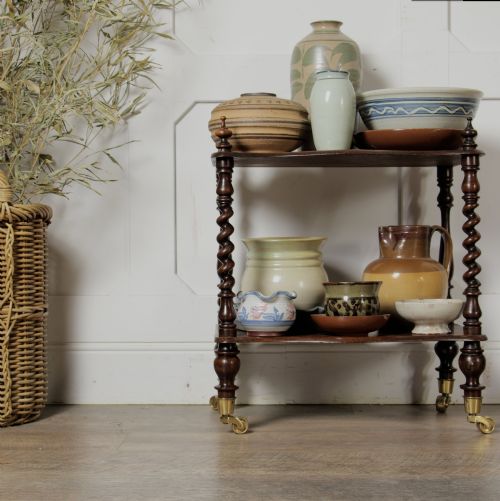


Victorian Tier Cake Stand
A victorian tier cake stand brings multi-tiered grace to tea service, offering stacked tiers of rich mahogany or walnut to display your cakes with period elegance.
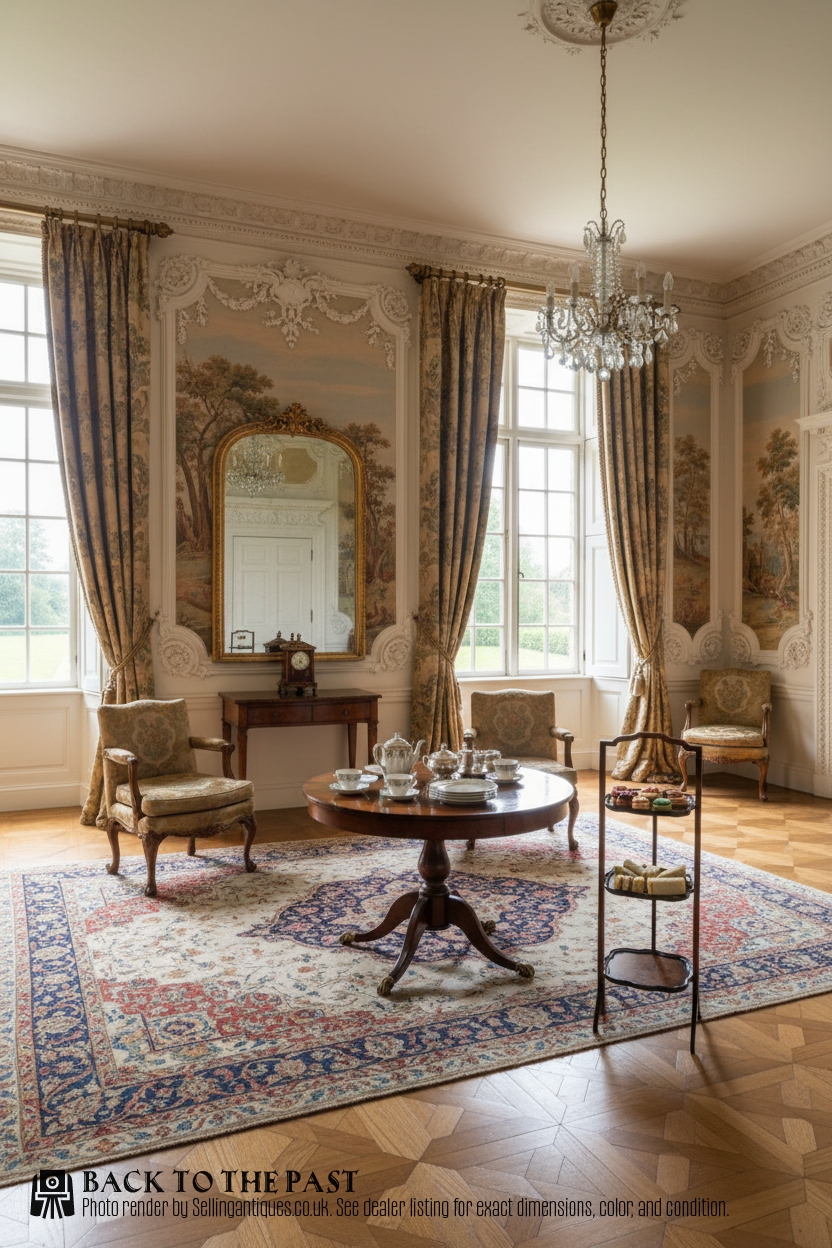
Victorian Tier Cake Stand
When you search for a victorian tier cake stand, you encounter multi-tiered display pieces ranging from traditional two-tier revolving dumb waiters to three-tier folding stands and four-tier standing cake stands. These items originate from periods spanning the Georgian era through Victorian times, the Edwardian period, and into the early twentieth century.
The versions most frequently met on this page include mahogany and walnut tier structures, sometimes featuring inlaid details, painted satinwood finishes, or barley twist supports. They function equally well as occasional tables, display shelves, and traditional dumb waiters for holding baked goods during tea.
Makers and craftsmen of these periods constructed them using sturdy timbers like rosewood and ebonised wood alongside mahogany, ensuring stability across tripod bases and folding frames. Each piece reflects the functional domestic requirements of nineteenth and early twentieth century households.
Materials and Construction
Makers relied heavily on solid and veneered mahogany, walnut, and rosewood for the structural tiers and central pedestals of these stands. Secondary timbers were chosen for strength, while brass fittings and felt accents occasionally supported the functional folding mechanisms and revolving tiers.
Joinery methods involved sturdy tripod pedestal bases and folding frame designs that allowed multi-tiered stands to collapse for storage. Surface treatments included painted details on satinwood and later decorated finishes applied to mahogany display shelves.
Victorian Tier Cake Stand Retail Price Guide 2026
Typical asking prices for victorian tier cake stand among the pieces listed under this phrase on Sellingantiques today, from the lower quarter to the upper quarter. They describe what is for sale here now, not the wider market.
Form variations on this page range from revolving dumb waiters and tripod pedestal tables to four-tier standing cake displays.
Assessing Quality and Craftsmanship
Quality in a tier cake stand rests upon the selection of timber, particularly the grain figuration in the mahogany, walnut, or rosewood used for the tiers. Finer examples display precise inlay work, balanced tripod pedestals, and smooth action in revolving dumb waiter mechanisms or folding joints.
The integration of decorative elements, such as barley twist uprights or delicate floral painted satinwood panels, separates standard utility pieces from higher-end parlor furniture. Original patination on the timber surface also dictates the visual desirability of each stand.
The Victorian Tier Cake Stand Glossary
- Dumb waiter
- A multi-tiered stand used for serving food or holding dishes without the need for a servant. These often feature revolving tiers on a central tripod pedestal.
- Etagere
- A piece of furniture consisting of a set of open shelves for displaying small objects or ornaments. They appear in multi-tiered formats across the Victorian period.
- Barley twist
- A carved wooden column shaped in a spiral twist resembling barley sugar. This decorative turning is frequently seen on nineteenth-century supports and stands.
- Tripod base
- A three-legged support structure providing stability for central pedestal tables and cake stands. It ensures the tiered levels remain balanced during use.
- Satinwood
- A durable, yellowish wood used for fine cabinet making and decorative veneers. It often serves as a canvas for painted floral motifs on Victorian stands.
Victorian Tier Cake Stand: Frequently Asked Questions
How were tier cake stands used?
These stands served domestic tea gatherings by holding cakes, pastries, and small dishes across multiple levels.
They also functioned as occasional tables, plant stands, and display shelves in Victorian parlours.
What woods were used for stands?
Cabinet makers primarily utilised mahogany, walnut, and rosewood for their strength and rich grain patterns.
Other materials included ebonised wood, satinwood, and brass hardware for folding or revolving mechanisms.
Are folding cake stands sturdy?
Folding models were engineered with pivoting wooden joints that allow the tiers to collapse flat when not in use.
When fully opened, the hinged arms lock into position to support plates and cakes securely.
How do I date a cake stand?
Dating relies on identifying timber choices, construction techniques, and stylistic markers such as barley twist turnings or painted satinwood.
Pieces span from Georgian and early Victorian eras through to Edwardian and later twentieth-century interpretations.