






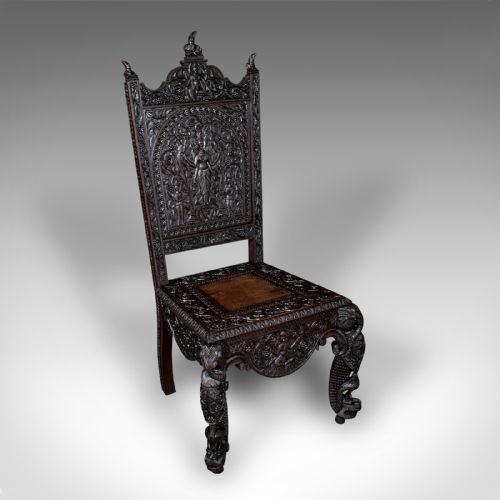

Vintage Throne Seat
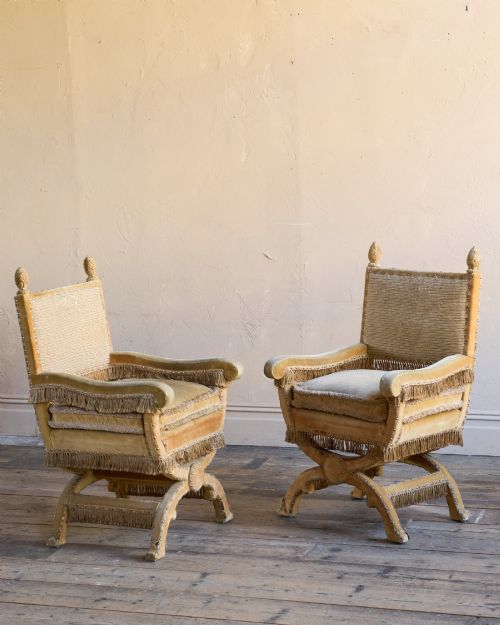
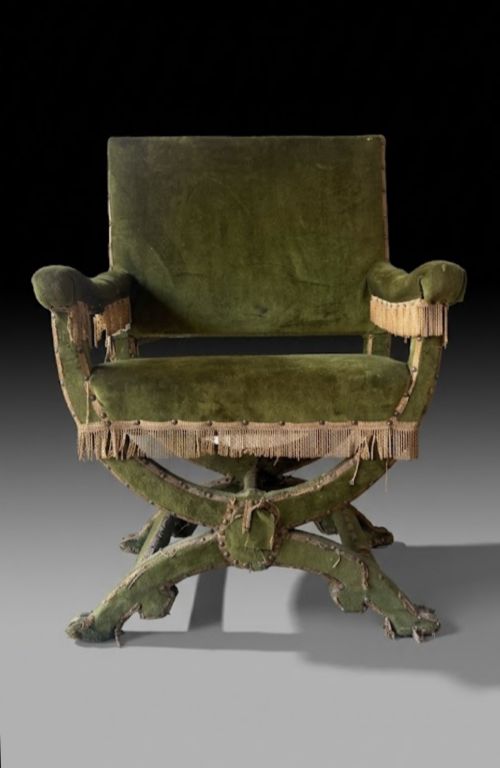
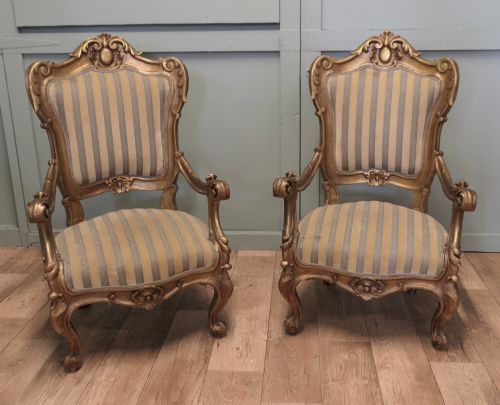
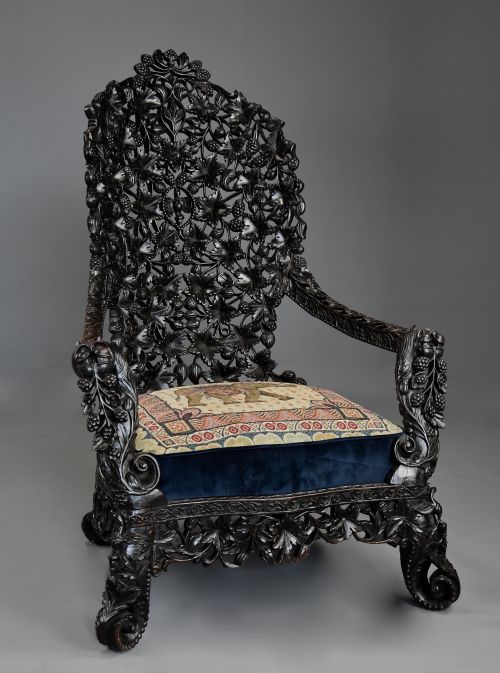
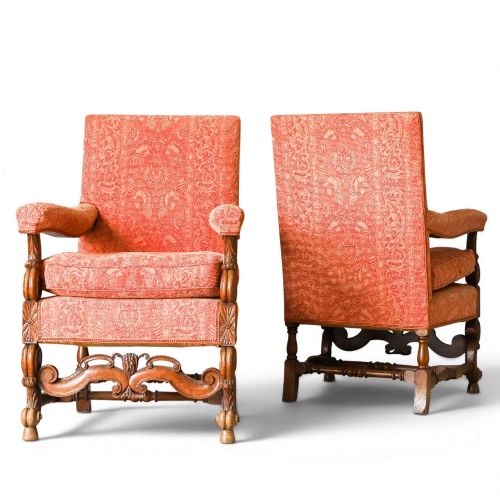
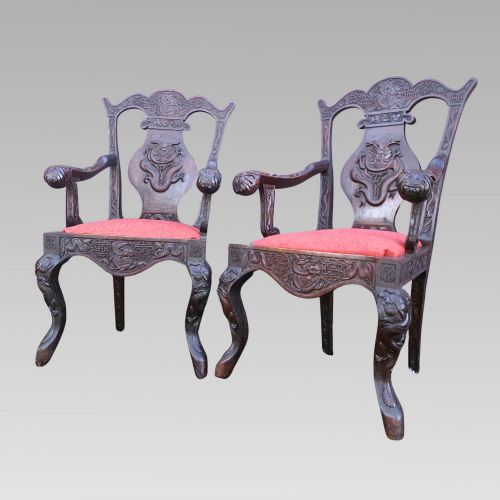
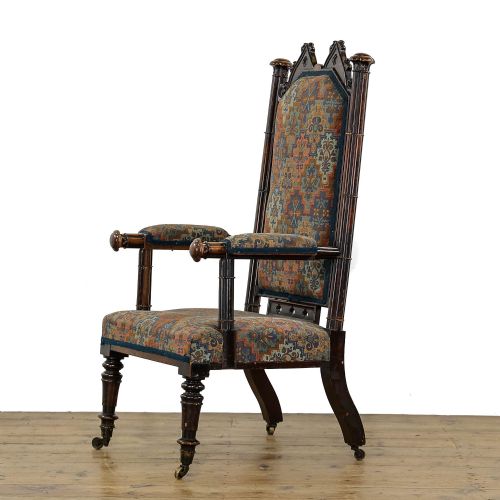
These vintage throne seat options are substantial armchairs of oak, teak and hardwood, built to command a room with historic presence.
Vintage Throne Seat
A vintage throne seat draws on historic revivals, bringing heavy timber frames and commanding armchairs into domestic spaces. The pieces appearing in this category span the nineteenth and twentieth centuries, encompassing Victorian, Edwardian, and earlier revival eras.
Most examples lean towards substantial forms such as the Carolean, Gothic, and Renaissance revivals, alongside pieces originating from Qing Dynasty China and the Indian subcontinent. You will regularly encounter armchairs and accent chairs fashioned from dark woods and fitted with carved panels or upholstered inserts.
Makers drew upon architectural motifs, resulting in tall backs, turned legs, and prominent armrests that echo the authority of traditional seating. These chairs serve primarily as focal points in studies, halls, and principal reception rooms.
Materials and construction methods
Construction relies heavily on dense timbers including oak, walnut, teak, and blackwood, selected for their structural integrity and ability to hold deep relief carving. Artisans joined these frames using traditional mortise and tenon techniques, ensuring durability across large armchairs.
Vintage Throne Seat Retail Price Guide 2026
Typical asking prices for vintage throne seat among the pieces listed under this phrase on Sellingantiques today, from the lower quarter to the upper quarter. They describe what is for sale here now, not the wider market.
Distinctions in quality and execution
The distinction between standard production and superior examples lies in the crispness and depth of the wood carving. Finer pieces display undercut relief and hand-finished details that retain their sharpness, whereas simpler items show softer, machine-assisted profiling.
Timber selection and structural proportion also separate categories, with premier items utilising dense, figured hardwoods and balanced framing that maintains rigidity. The integration of auxiliary materials like brass hardware and original leather or fabric panels further elevates the standing of a piece.
The Vintage Throne Seat Glossary
- Carolean revival
- A late nineteenth-century style imitating British furniture from the reign of Charles II, characterised by scrolls, crown motifs, and cane or upholstered panels. This aesthetic dominated many formal parlour seating designs.
- Gothic revival
- An architectural and decorative movement drawing on medieval forms, featuring pointed arches, tracery, and heavy proportions. Pieces in this style often present imposing silhouettes.
- Hardwood
- Timber derived from broad-leaved trees such as oak, teak, and walnut, valued for its density and durability. These woods formed the primary skeleton for heavy armchairs.
- Cane
- Woven rattan or plant material used for seat inserts and back panels, offering flexibility and breathability. It appears frequently in lighter or colonial-influenced seating variants.
Vintage Throne Seat: Frequently Asked Questions
Where should I place a heavy wooden armchair?
These commanding seats suit spaces with sufficient floor area, such as a large hallway, library, or study, where their height and mass do not overwhelm surrounding furnishings.
Positioning them away from direct heat sources helps protect the dry timber and any integrated leather or fabric panels from splitting or fading over time.
How do I distinguish Gothic revival from Renaissance revival styles?
Gothic revival pieces lean towards pointed arches, vertical lines, and medieval ecclesiastical motifs, creating a solemn and architectural silhouette. In contrast, Renaissance revival designs incorporate bolder classical elements, robust cartouches, and prominent scrollwork.
Examining the carved details on the crest rail and arm supports usually reveals the specific historic source inspiring the maker.
Are these seats comfortable for daily sitting?
Many of these pieces function primarily as statement furniture or hall seats, possessing upright wooden backs and firm proportions rather than deep cushioning. While some incorporate upholstered leather or fabric panels, their primary purpose historically was ceremonial or positional rather than lounging.
Using them with a tailored scatter cushion can adjust the seating depth and posture to suit regular use in a living room.
How do I care for antique timber frames?
Maintaining the wood involves dusting with a dry, soft cloth and occasionally applying a suitable wax to nourish the grain without building up a heavy residue. Avoiding placement near radiators or in direct sunlight preserves the finish and prevents the joints from drying out.
Leather and fabric inserts require gentle cleaning specific to their material type to maintain their condition alongside the surrounding woodwork.