
Vintage Three Tier Stand
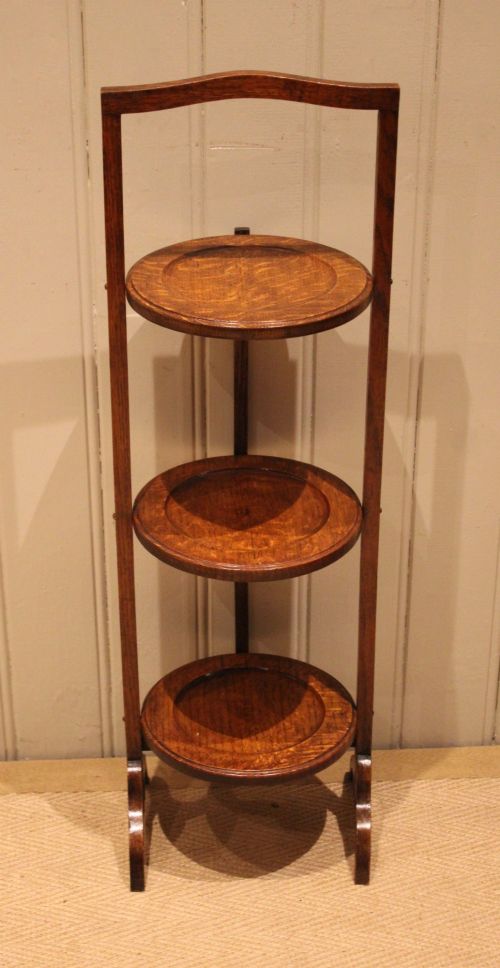
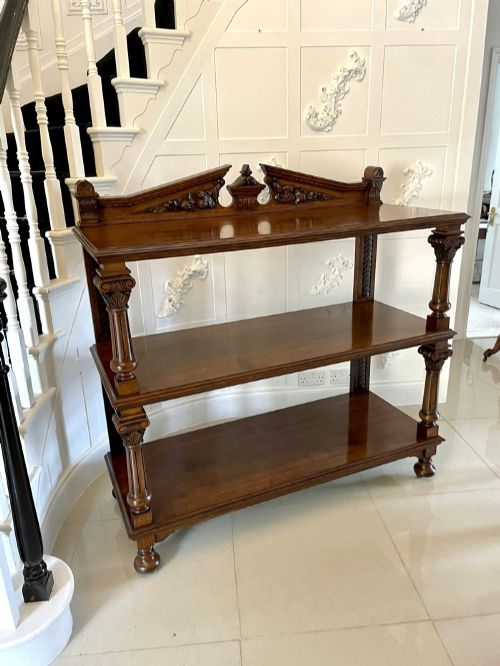
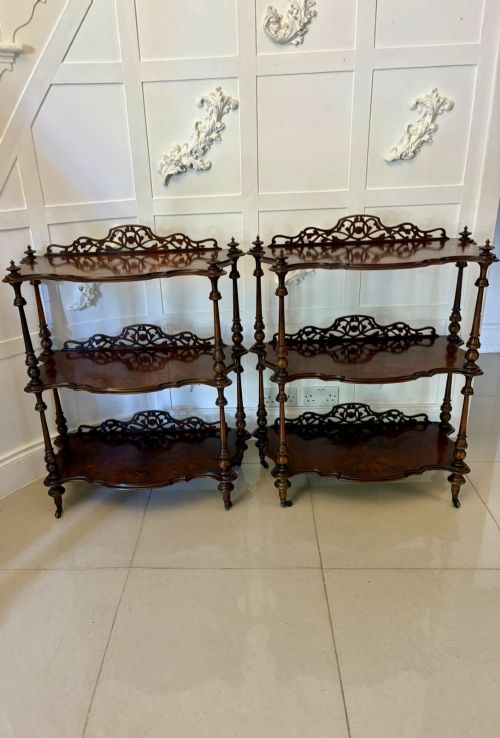
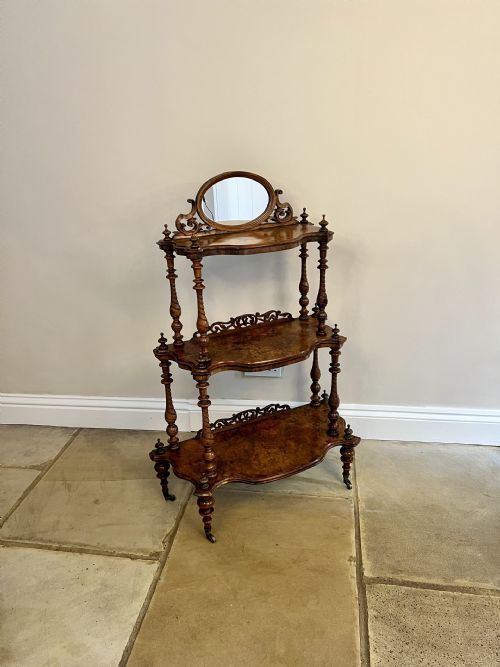
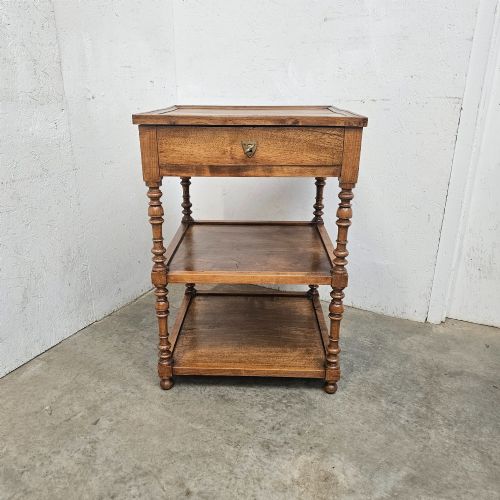
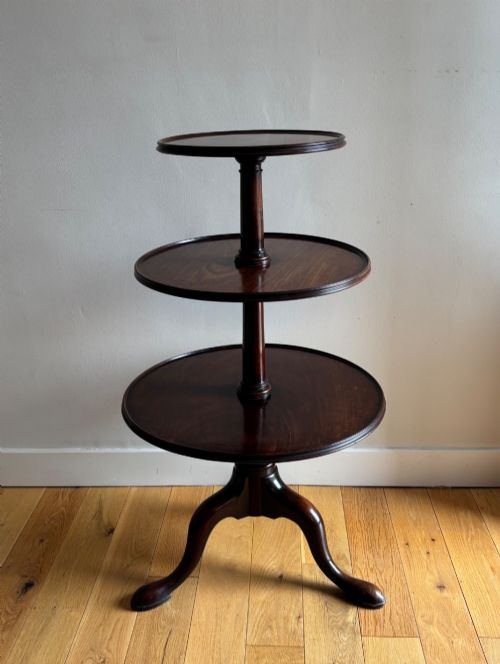
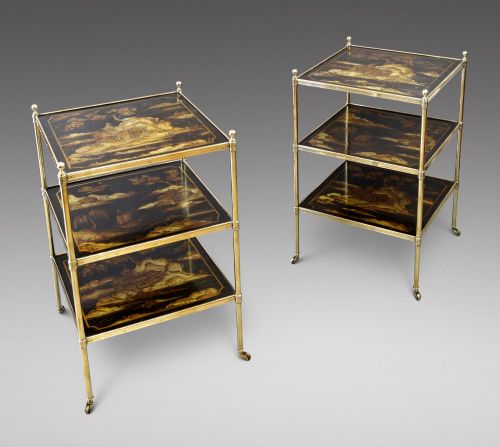
A vintage three tier stand brings layered display space to a room, spanning folding cake stands, burr walnut whatnots, and mahogany dumb waiters.
Vintage Three Tier Stand
A vintage three tier stand encompasses multiple tiers of shelving or surfaces designed for display and utility, frequently appearing as cake stands, whatnots, and etageres. These pieces emerge from periods including the Victorian and Edwardian eras, as well as the early twentieth century.
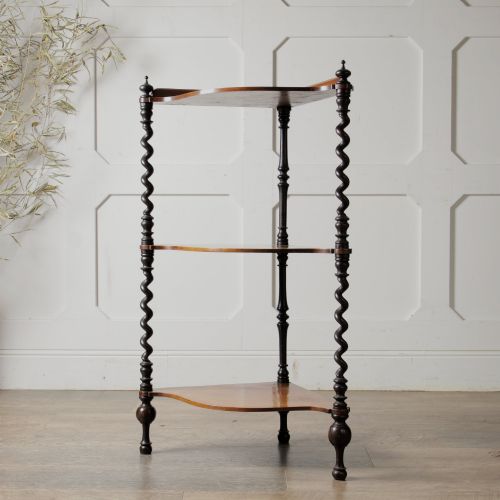
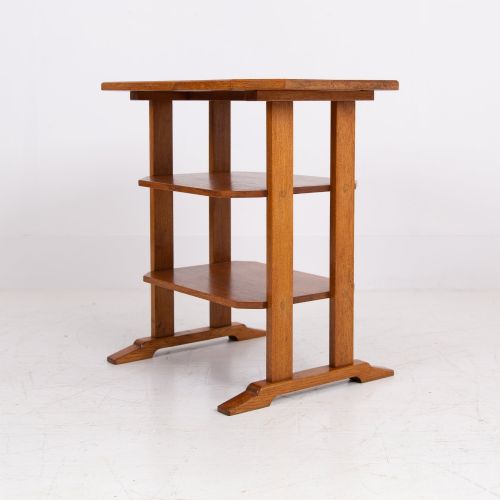
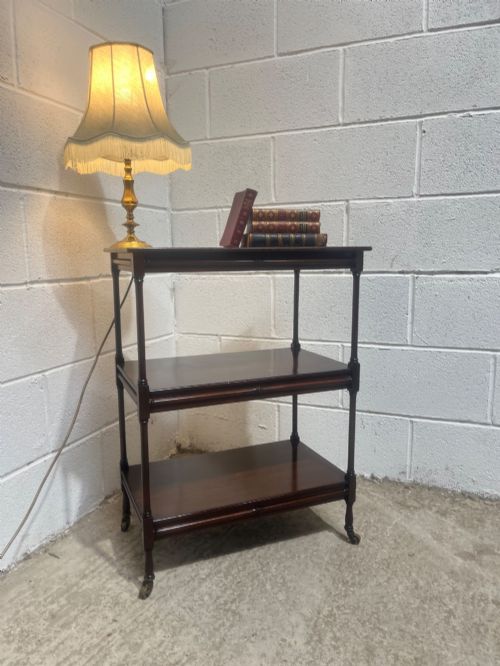
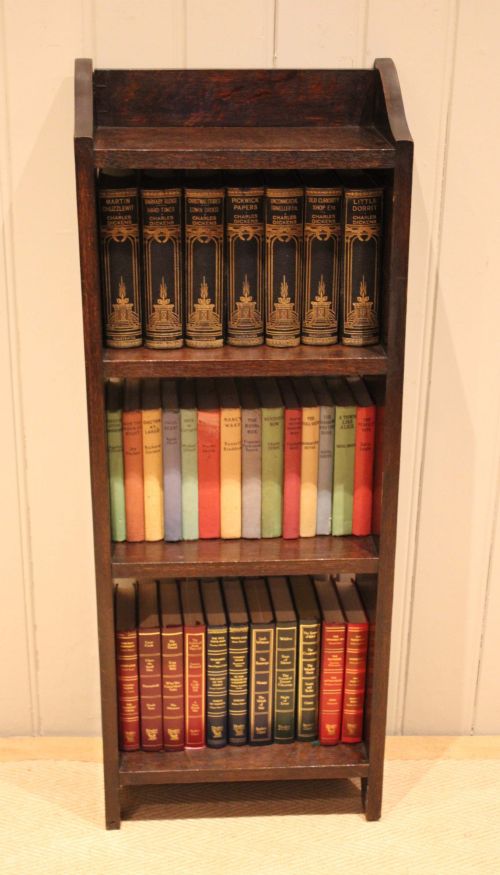
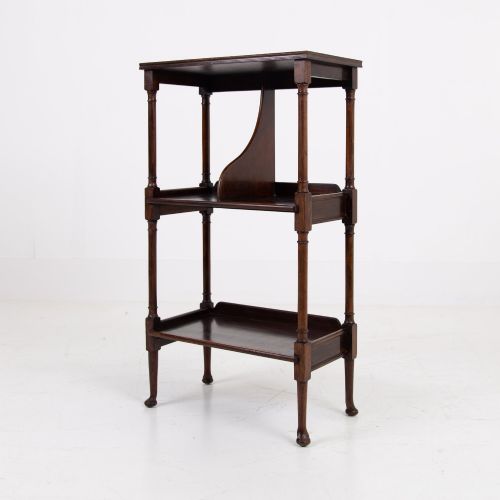
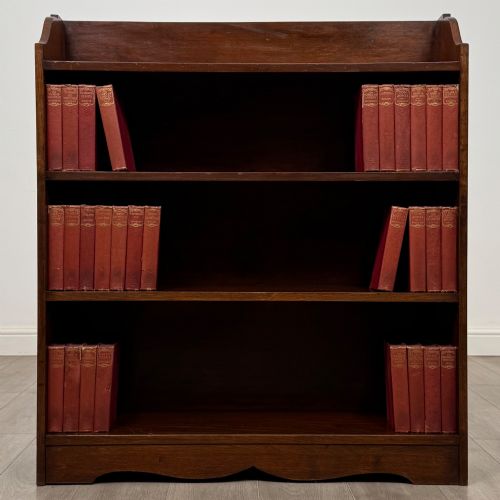
The most common versions met on this page are Edwardian oak folding cake stands and Victorian burr walnut whatnots. Buyers also encounter mahogany dumb waiters, brass etageres, and revolving bookcases offering tiered storage.
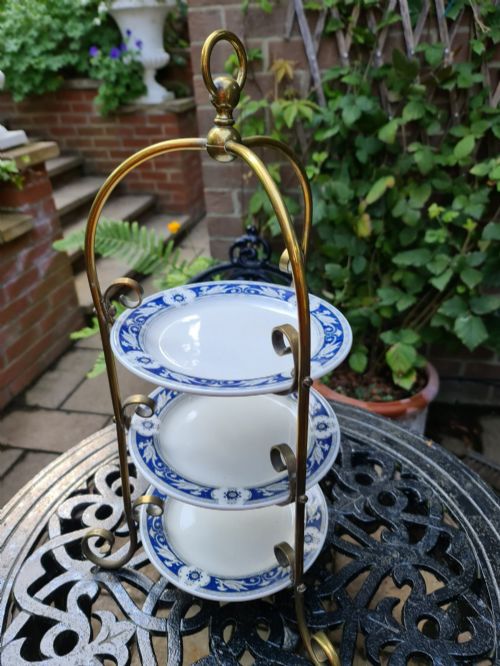
Forms range from portable folding tea stands to substantial corner whatnots and cast iron plant stands. Each type serves a distinct domestic purpose, from serving baked goods to displaying ornaments.
Materials and construction
Timber selection dictates the character of these tiers, with mahogany, walnut, burr walnut, and oak predominating alongside ebonised wood and rosewood. Cabinetmakers utilised solid woods for structural integrity and figured veneers for visual depth on display surfaces.
Support structures rely on turned legs, barley twist columns, brass fittings, and cast iron frames. Folding mechanisms on cake stands require precise joinery to ensure stability when open and compactness when closed.
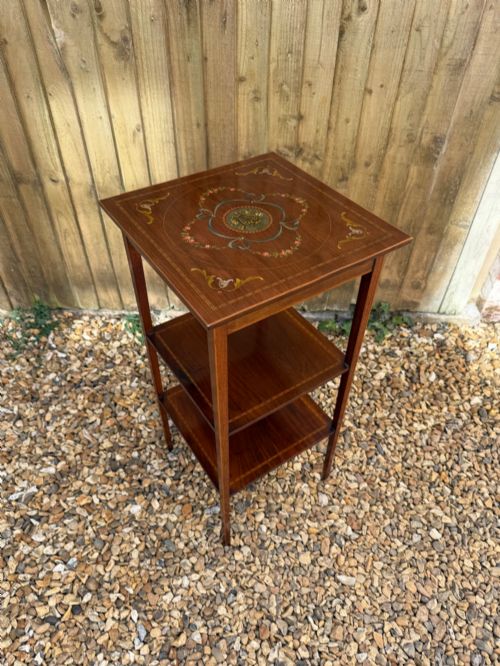
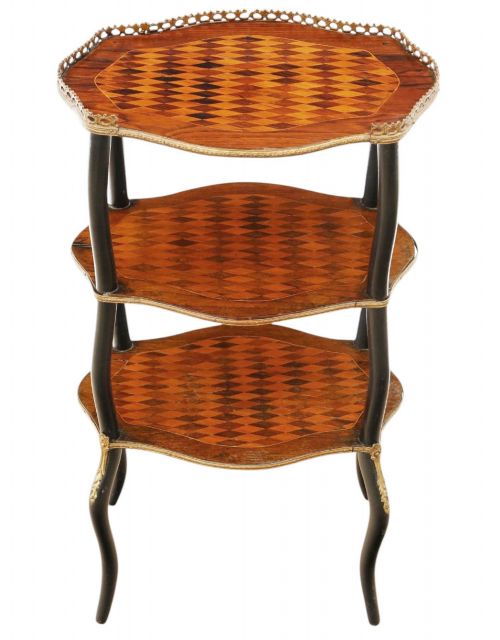
Surface ornamentation includes marquetry inlay, parquetry, ormolu mounts, and hand-carved details. Finishing techniques involve French polishing to highlight the grain and colour of the timber.
The selection includes pieces spanning the Georgian period, Victorian era, Edwardian years, and early twentieth century.
Assessing quality and finish
Quality rests upon the choice of timber veneers and the crispness of turned or carved elements. Superior examples display carefully matched burr walnut or fine mahogany grains across all three tiers rather than plain secondary woods.
Structural rigour separates everyday items from finer pieces, evident in how firmly the tiers hold their levels without wobble. Joints on folding stands and the turning of barley twist columns show the maker's hand.
Samson and Son London
The Vintage Three Tier Stand Glossary
- Whatnot
- A set of open shelves for displaying ornaments or books, developed in the nineteenth century. These multi-tiered pieces often feature turned uprights and decorative fretwork.
- Etagere
- A piece of furniture consisting of a set of open shelves for displaying small objects. French examples often incorporate marquetry and ormolu mounts.
- Dumb Waiter
- A tiered serving table used in dining rooms to hold dishes without requiring servants. Early examples feature revolving or fixed circular tiers on a central pillar.
- Barley Twist
- A type of furniture turning resembling a twisted rope or barley sugar stick. This decorative carving style appears frequently on Victorian and Edwardian supports.
- Parquetry
- Geometric mosaic woodwork used for surface decoration on tabletops and shelves. Craftsmen arrange small pieces of coloured wood to form patterns.
Vintage Three Tier Stand: Frequently Asked Questions
What is a three tier stand used for?
Historically, these tiered pieces served specific domestic functions such as holding afternoon tea cakes, displaying decorative ornaments, or keeping books within reach. Today they function equally well as plant stands, bedside tables, or corner display units in compact spaces.
The stepped structure allows owners to exhibit collections without cluttering floor space. Folding versions offer the flexibility to store the stand flat when not in use.
How do I tell Victorian from Edwardian stands?
Victorian pieces tend to feature darker, heavier timbers like burr walnut and rosewood, often accompanied by elaborate turnings, barley twists, or carved details. They project a sense of solid formality and rich grain contrast.
Edwardian stands frequently embrace lighter oak and mahogany, favouring cleaner lines, simpler folding mechanisms, and Sheraton Revival influences. The overall aesthetic shifts toward practical elegance and lighter interior spaces.
Are folding cake stands sturdy?
Well-made folding cake stands utilise clever scissor hinges and locking struts designed to secure the tiers horizontally when open. Quality examples from the Edwardian period remain surprisingly rigid and balanced.
When inspecting a folding mechanism, ensure the pivot points move smoothly without excessive lateral play. A properly aligned stand holds weight evenly across all three levels.
What maintenance do wood tiers need?
Burr walnut, mahogany, and oak surfaces benefit from occasional applications of quality beeswax to nourish the timber and protect the polish. Avoid placing them in direct sunlight or near heat sources to prevent veneer lifting.
Regular dusting with a soft, dry cloth preserves the finish. Spills should be wiped away immediately to prevent water marks on the polished wood.