


Vintage Terracotta Pot
These heavy earth vessels bring honest utility and warmth to gardens and rooms, built to weather decades outdoors.
Vintage Terracotta Pot
A vintage terracotta pot encompasses garden planters, olive jars, confit pots, and chimney pedestals originating from nineteenth-century England, France, and the wider Mediterranean. Buyers search for this phrase to find authentic vessels shaped from fired clay for practical agricultural or domestic use.
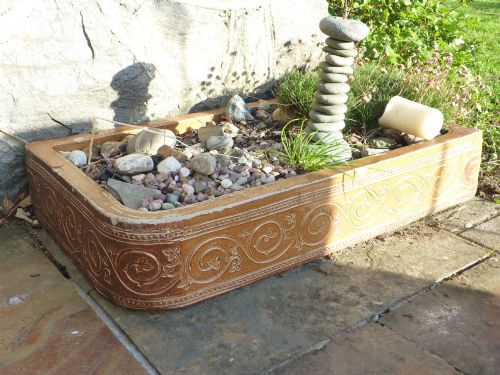
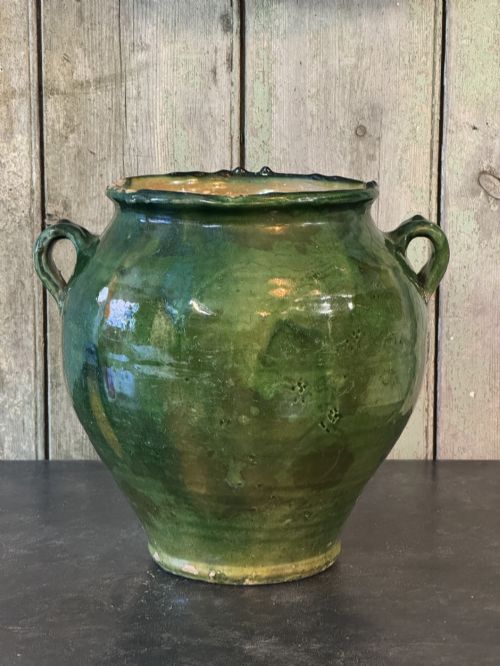
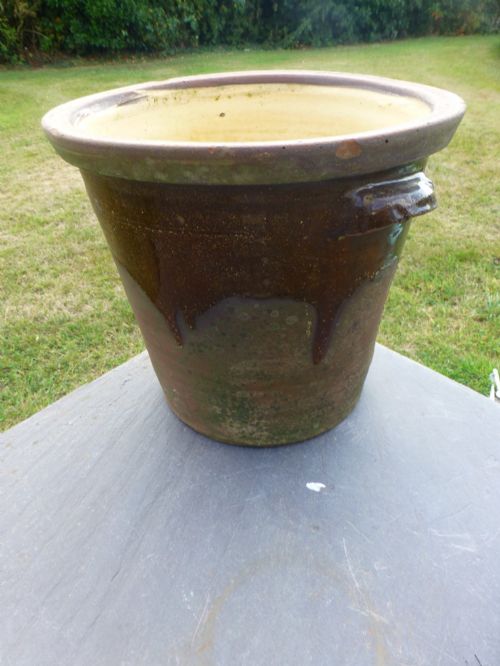
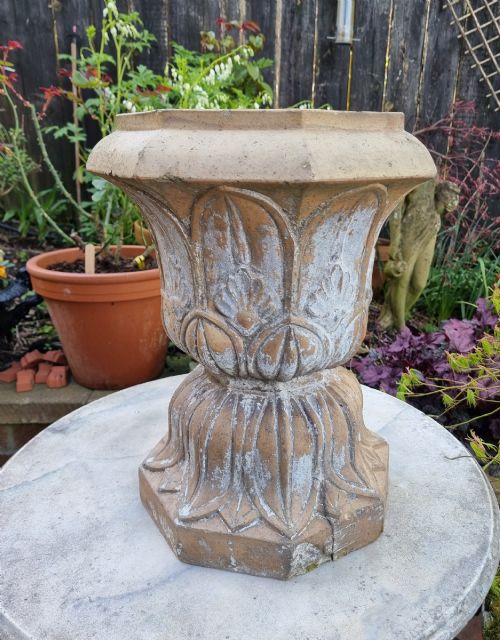
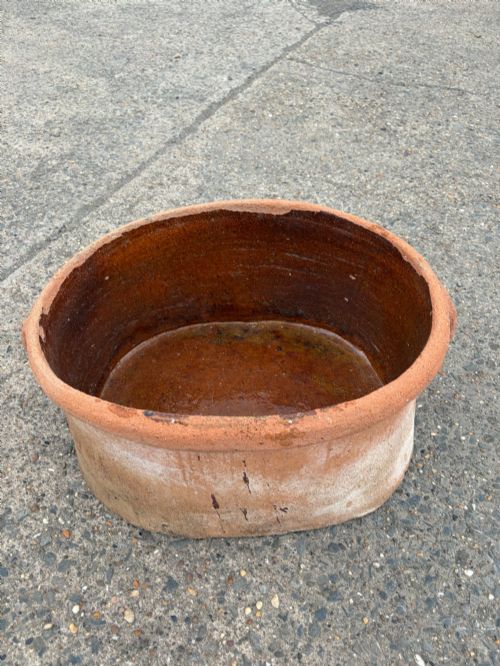
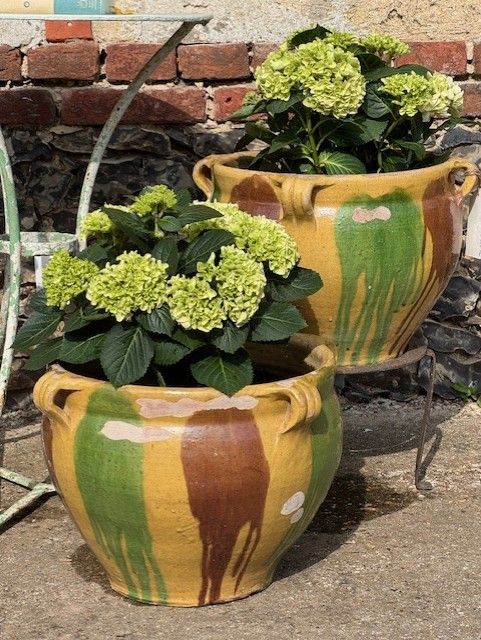
The variants appearing on this page span French provincial confit jars with green glazes, salt-glazed British planters, and grand Italian garden urns. These forms carry the marks of age, from weathered patinas to functional handles designed for oil, wine, or dairy storage.
Makers and regional styles shape these items, uniting utilitarian earthenware with decorative vessels suited for conservatories and patios. Each piece reflects the specific earth of its origin, ranging from porous red clay to denser stoneware bodies.
Materials and construction
Potters shaped these vessels from local clay and earthenware, throwing them on wheels or pressing them into moulds before firing them in kilns. The resulting porous bodies allowed moisture to breathe, making them ideal for horticulture and food storage.
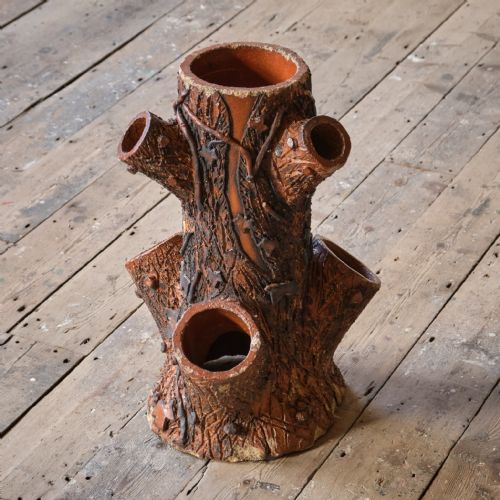
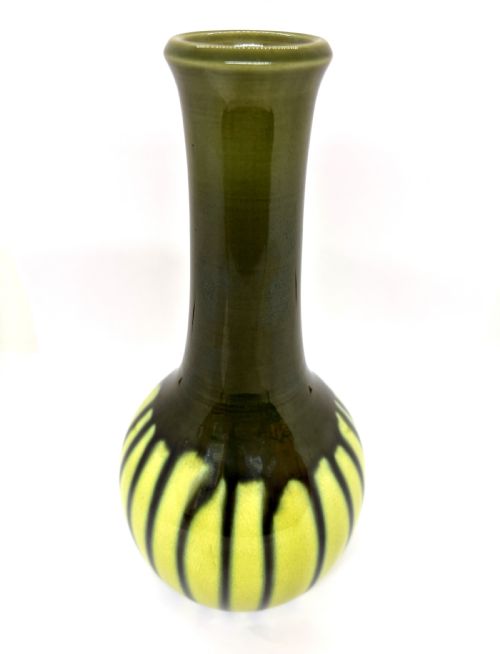
Many pieces received applied glazes, including lead-based greens, salt glazes, and drip glazes, which waterproofed the interior and altered the surface texture. Artisans also utilised faux bois techniques to mimic wood grain on garden planters.
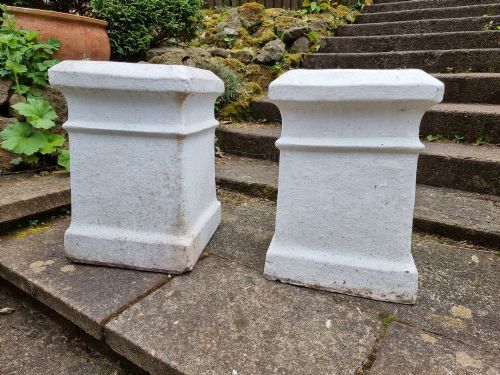
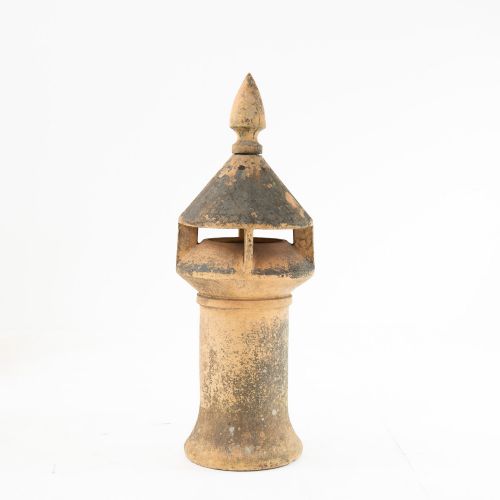
Listings feature nineteenth-century French confit pots, British chimney pot pedestals, and salt-glazed stoneware vessels spanning multiple decades.
Assessing quality in earthenware
Quality rests in the balance of the throw, the crispness of moulded details like handles and faux bois bark, and the depth of the glaze. A superior pot shows purposeful weight and harmonious proportions rather than clumsy mass.
The integrity of the fired body and the character of the natural weathering dictate the appeal of a specimen. Surface patinas accumulated through decades of exposure distinguish a distinguished garden ornament from a routine vessel.
Guichard Carriès·C. R. Stevens·Burmantoft's Pottery·Compton Pottery
The Vintage Terracotta Pot Glossary
- Confit pot
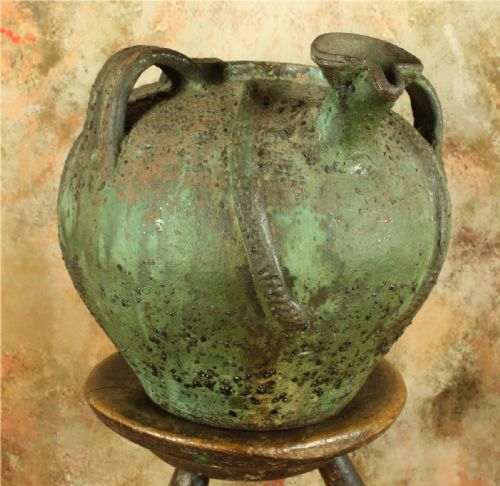
- A French earthenware jar featuring handles, traditionally utilised for preserving meat or storing fat and oil. Most examples display a partially glazed body.
- Faux bois
- A decorative technique where artisans mould or carve ceramic surfaces to imitate the texture of natural wood. This style appeared frequently on nineteenth-century strawberry planters.
- Rhuberb forcer
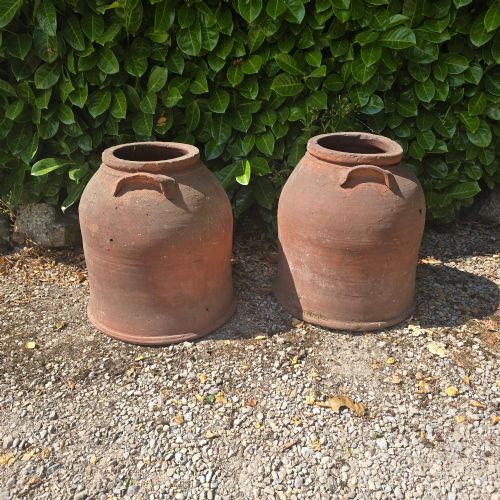
- A heavy ceramic vessel placed over rhubarb crowns to exclude light and accelerate growth. These tall, lidded cylinders are prized as garden ornaments today.
- Salt glaze
- A glassy, pebbled texture formed by throwing common salt into the kiln during high-temperature firing. This chemical reaction creates a durable, weather-resistant finish on stoneware.
Vintage Terracotta Pot: Frequently Asked Questions
Can I leave these pots outside in winter?
Most denser terracotta and salt-glazed stoneware tolerate frost if drainage holes remain clear and pots sit off the ground on feet. Porous earthenware without glaze absorbs moisture that expands upon freezing, leading to cracking.
Moving vulnerable confit jars and unglazed vessels indoors during severe freezes protects the clay body from structural damage.
How do I clean an old garden pot?
Gentle washing with warm water and a soft brush removes dirt and loose debris while preserving the accumulated lichen and moss. Avoid harsh chemical cleaners and pressure washers that strip away historic patinas.
Allowing the surface biology to remain intact maintains the authentic appearance expected from decades outdoors.
What were olive jars used for?
Olive jars served as bulk transport and storage containers for oil, wine, and salted provisions across the Mediterranean. Their heavy walls and deep bellies kept contents cool in warm climates.
Today, their generous proportions and multiple handles make them striking focal points for patios and interior spaces.
How do I date a nineteenth-century pot?
Dating relies on tool marks, glaze chemistry, and regional potting traditions rather than strict hallmarks, which rarely appear on utilitarian ware. Hand-thrown throwing rings and irregular wall thicknesses often point to earlier production periods.
Comparing potting styles with documented examples from known regional potteries narrows down the decade of manufacture.