



Vintage Telescope on Stand
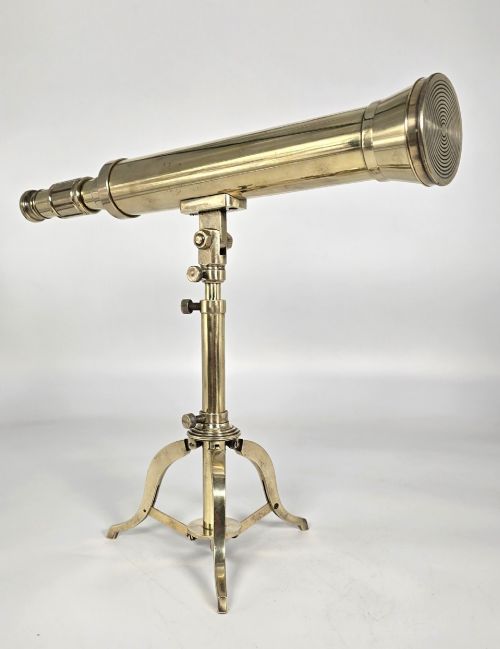
These vintage telescope on stand pieces bring precise brass optics and hardwood mounts together to focus distant views across your room.
Vintage Telescope on Stand
A vintage telescope on stand combines optical instruments with dedicated support furniture, spanning periods from the eighteenth century through to the mid-twentieth century. When searching for a vintage telescope on stand, buyers encounter floor-standing and table-mounted brass apparatus designed for terrestrial and marine observation.
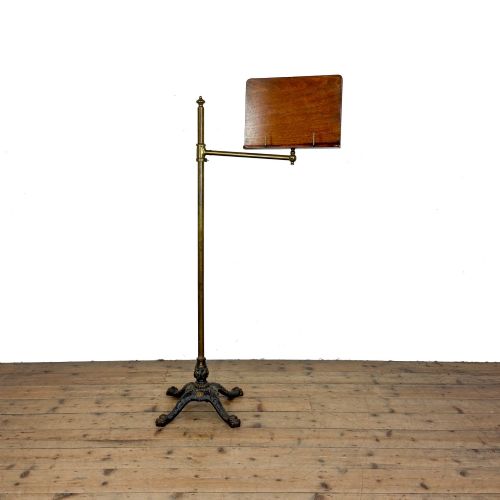
The selections on this page feature scientific instruments and scientific and maritime instruments alongside related reading stands and library equipment. Makers from London and Sheffield produced single draw and multi-draw terrestrial tubes mounted on folding tripods and wooden bases.
Victorian and Georgian examples dominate the offerings, running from early nineteenth century library telescopes to mid-nineteenth century cased instruments. Makers such as Ross, Gilbert, Clarkson, Steward, Chadburn Brothers, Matthew Berge, and G. Adams represent the historical breadth of these scientific works.
How they were made
Makers shaped these instruments primarily from polished brass, glass optics, and dense hardwoods like mahogany. Brass tubes house glass lenses, while folding tripod stands and support bases utilise wood, cast iron, and leather accents.
Construction techniques involve turning and casting metals to create sliding draw tubes and stable mounting collars. Wood is joined and polished to support heavy optical barrels whilst maintaining balance on three-legged stands.
Vintage Telescope on Stand Retail Price Guide 2026
Typical asking prices for vintage telescope on stand among the pieces listed under this phrase on Sellingantiques today, from the lower quarter to the upper quarter. They describe what is for sale here now, not the wider market.
Listings feature Victorian, Edwardian, and Georgian periods alongside mid-nineteenth century production dates.
What varies in quality
Quality rests upon the crispness of the original maker signature, the retention of original lenses, and the stability of the mounting stand. Signed barrels by notable opticians carry distinct engraving that separates standard production from superior workshop output.
The integrity of the brass finish and the smoothness of the draw mechanisms determine the enduring mechanical success of the instrument. Stands that retain their original folding brass tripods or cased mountings preserve the complete context of the scientific piece.
Ross of London·W. and T. Gilbert·Clarkson·Steward of London·Chadburn Brothers of Sheffield·Matthew Berge·G. Adams
The Vintage Telescope on Stand Glossary
- Terrestrial telescope
- An optical instrument designed for viewing land objects rather than astronomical bodies, producing an upright image through internal erecting lenses. These tubes form the core of many library and marine assemblies.
- Draw
- A sliding section of the optical tube that extends to adjust the focal length of the telescope. Instruments are commonly described by the number of draws they possess, such as single draw or four draw configurations.
- Theodolite
- A precision scientific instrument used for measuring horizontal and vertical angles in surveying and navigation. These devices share the brass and mounting characteristics of high-grade optical tubes.
- Tripod stand
- A three-legged support structure designed to hold a telescope or instrument steady during observation. Folding brass variants allow the entire assembly to collapse for transport.
Vintage Telescope on Stand: Frequently Asked Questions
How do I use a vintage telescope on stand?
Extend the sliding brass draws gently while supporting the main barrel to achieve initial focus. Adjust the elevation and rotation on the stand to steady your view on distant terrestrial targets.
Ensure the mounting screws on the tripod are secure before releasing your grip on the instrument. Store the telescope in a dry interior space to protect the brass and glass surfaces.
What is the difference between library and marine telescopes?
Library telescopes were built for stationary indoor use on tables or dedicated stands, often featuring wood-wrapped barrels and refined brass mountings. Marine telescopes utilised durable single draw or multi-draw configurations designed for rough handling at sea.
Both types utilise glass lenses and brass tubes, but library instruments prioritize decorative wood finishes suited to domestic rooms. Marine versions focus on weather resistance and quick deployment from wooden cases.
How can I identify the maker of my telescope?
Look for engraved signatures and location details near the eyepiece end of the main brass draw tube. Makers frequently stamped their company name and city onto the final draw section.
Matching the engraved text against known nineteenth-century workshop records reveals the original maker and production era. Unsigned tubes often rely on construction style and brass casting details for attribution.
How do I care for antique brass optics?
Dust the brass surfaces regularly with a soft, dry cloth to prevent the accumulation of atmospheric grit. Avoid abrasive metal polishes that can remove historical patination and engraved signatures.
Clean the glass lenses only with specialised optical paper to protect fragile historic coatings. Keep the instrument away from direct heat sources and damp environments to preserve the wood and leather components.