



Vintage Teapot Sugar Bowl
These vintage teapot sugar bowl sets bring formal hospitality into daily life, offering matched vessels in silver plate and ceramic.
Vintage Teapot Sugar Bowl
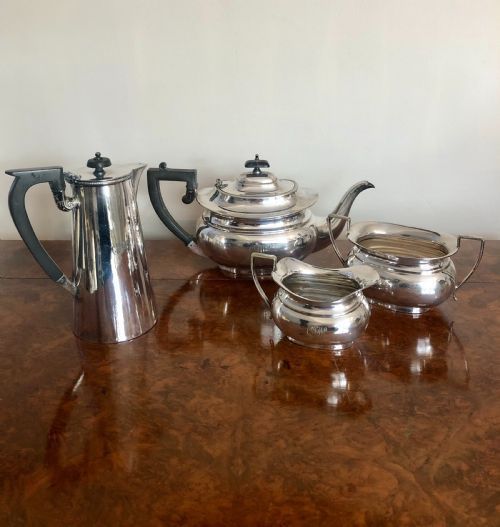
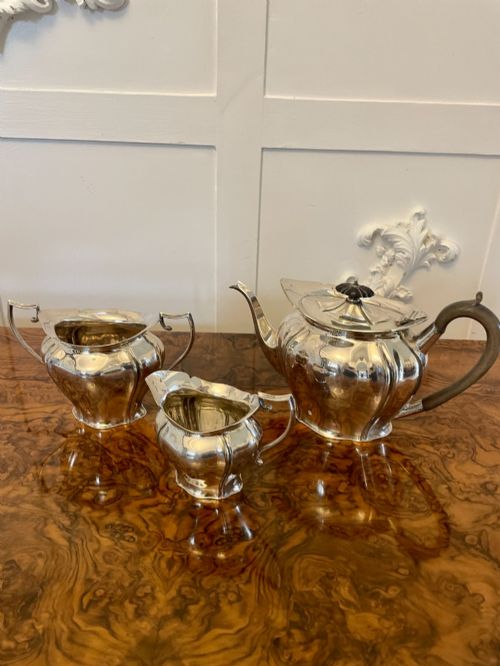
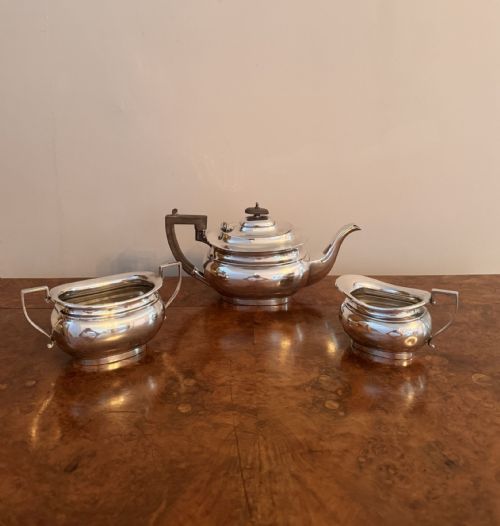
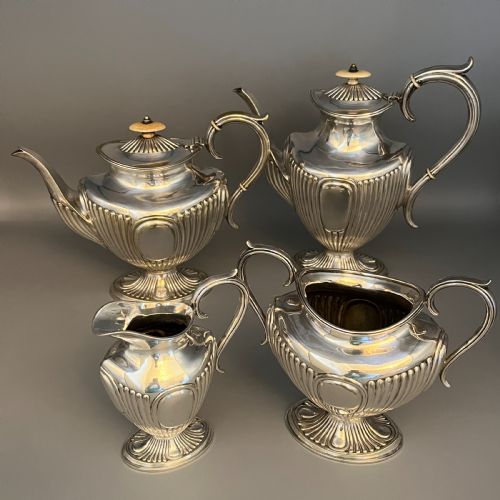
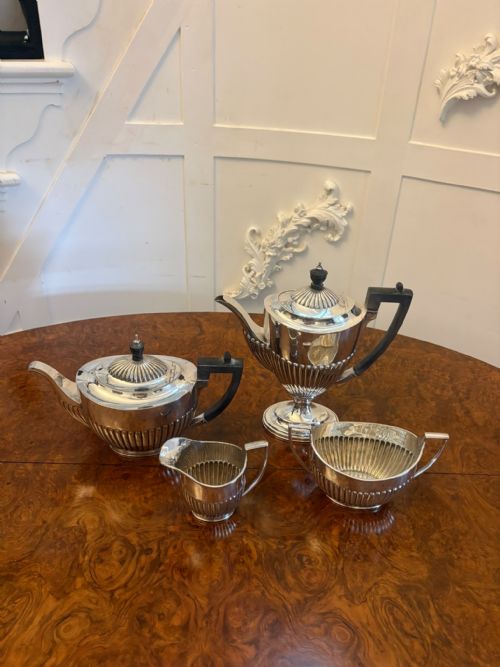
A vintage teapot sugar bowl set comprises matching or coordinated vessels designed for serving hot tea, frequently accompanied by creamers and coffee pots within larger services. These groups stem predominantly from the Edwardian period and the Art Deco era, with occasional Victorian examples appearing in silver plate and ceramic forms.
Buyers encounter sets ranging from compact three-piece bachelor teasets to comprehensive six-piece services that include trays and pourers. The grouping typically centres on the teapot and sugar bowl, providing the core elements necessary for traditional tea service.
What varies in quality
Quality rests in the crispness of applied ornament, the balance of the pot in the hand, and the structural integrity of hinged lids and handles. Substantial weight in silver-plated pieces indicates a thicker layer of deposition over the base metal.
The refinement of modelled details on ceramic surfaces and the precision of joinery on metal mounts separate standard production from superior workshop output. Complete sets showing uniform wear across every component demonstrate careful preservation over time.
Vintage Teapot Sugar Bowl Retail Price Guide 2026
Typical asking prices for vintage teapot sugar bowl among the pieces listed under this phrase on Sellingantiques today, from the lower quarter to the upper quarter. They describe what is for sale here now, not the wider market.
Object types span from three-piece bachelor teasets to six-piece tea and coffee services.
Walker and Hall·Armada Pewter·Goldsmiths and Silversmiths Co·Wedgwood
The Vintage Teapot Sugar Bowl Glossary
- Silver plate
- A thin layer of silver bonded to a base metal such as nickel silver or copper. This technique allowed manufacturers to produce durable tableware with the lustre of solid silver.
- Jasperware
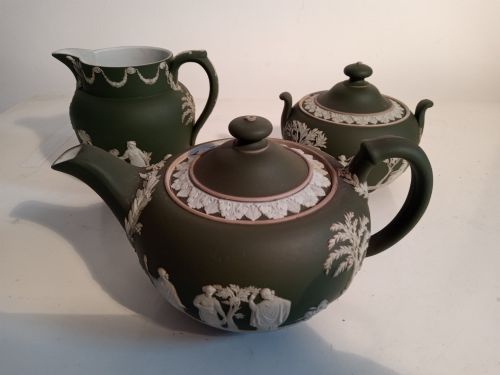
- A type of fine stoneware developed by Josiah Wedgwood, characterised by a matte surface and contrasting applied white reliefs. It appears frequently in olive green on historical tea pieces.
- Electroplated nickel silver
- An alloy of copper, nickel, and zinc coated with pure silver through an electrolytic process. It served as the primary foundation for Edwardian and Victorian hollowware.
- Bachelor teaset
- A scaled-down tea service intended for one or two drinkers, comprising a compact teapot, sugar bowl, and creamer. These smaller sets suited private sitting rooms and individual use.
- Ebonised wood
- Timber treated to resemble ebony, utilised for insulating handles and knobs on metal teapots. The dark finish contrasts with silver-plated bodies.
Vintage Teapot Sugar Bowl: Frequently Asked Questions
What pieces belong in a tea set?
A standard set includes a teapot and a sugar bowl, frequently accompanied by a creamer for milk. Larger services expand to incorporate coffee pots, waste bowls, and serving trays.
Matching pieces share decorative motifs, materials, and maker marks that confirm they were produced as a unified service.
How do I date a silver set?
Dating relies on maker marks, style characteristics, and manufacturing methods recorded on the base of each vessel. Edwardian sets often display neoclassical revival details, while 1930s pieces favour geometric lines.
Silver plate quality marks and registry numbers provide further chronological markers for English manufacturing periods.
Can I use these for daily tea?
Silver-plated and ceramic tea services function well for serving hot beverages when handled with appropriate care. Hand washing preserves the plating and ceramic glazes against aggressive detergents.
Checking handle insulation and lid hinges ensures safe pouring during regular use.
What is a bachelor teaset?
A bachelor teaset is a reduced-scale service designed for single-person use rather than large gatherings. These compact sets contain the essential teapot, sugar bowl, and creamer in a smaller format.
They appeared in both ceramic and silver-plated forms throughout the Victorian and Edwardian eras.