


Vintage Taxidermy Wall Mount
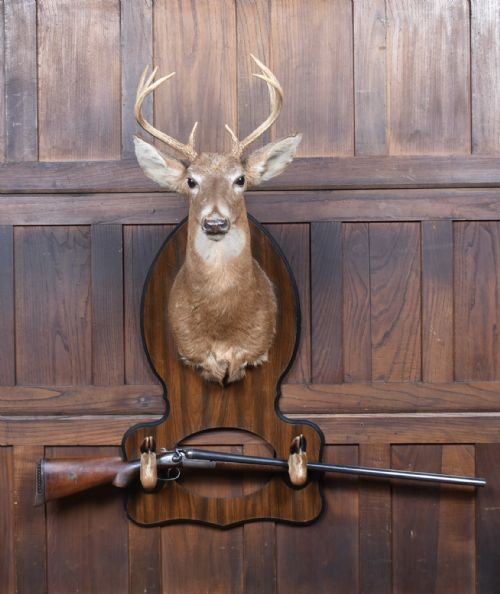
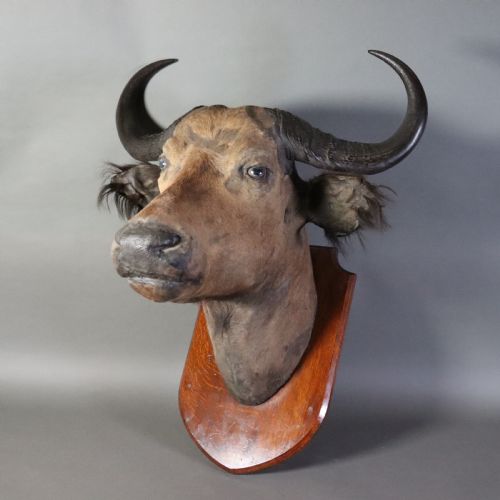
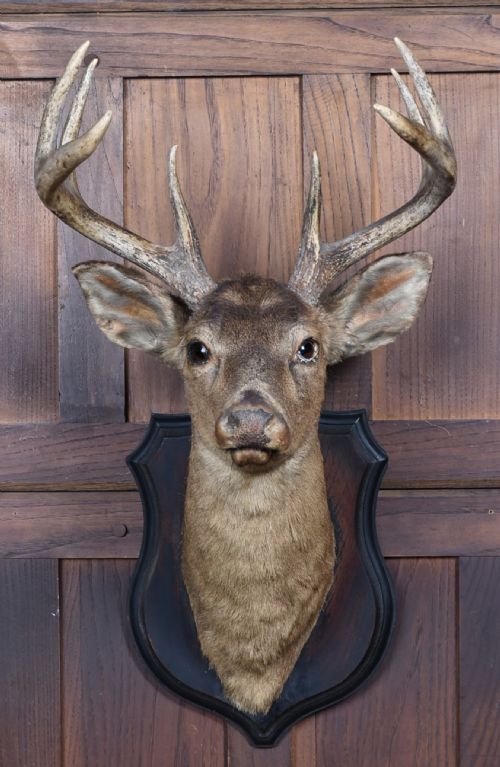
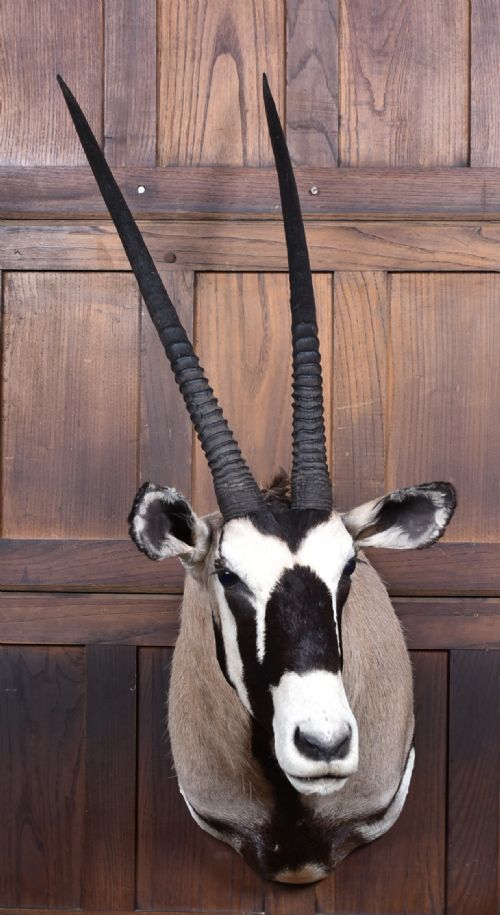
These vintage taxidermy wall mount pieces bring natural history and hunting lodge character into a room with striking presence.
Vintage Taxidermy Wall Mount
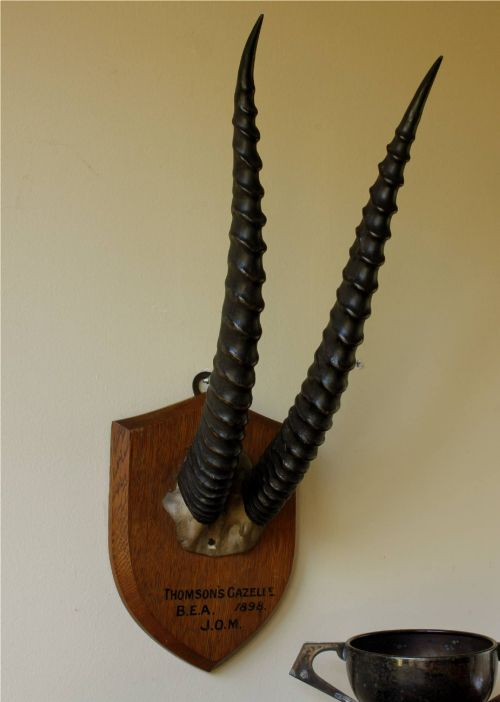
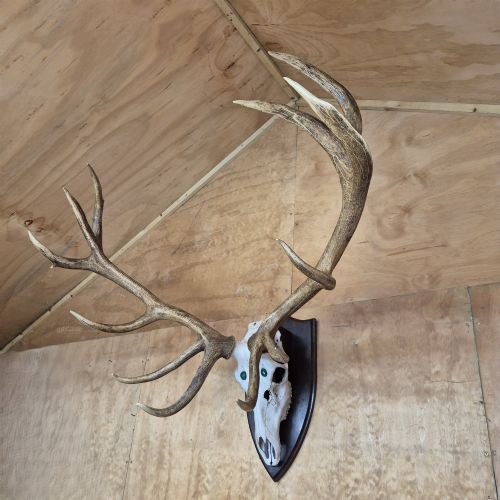
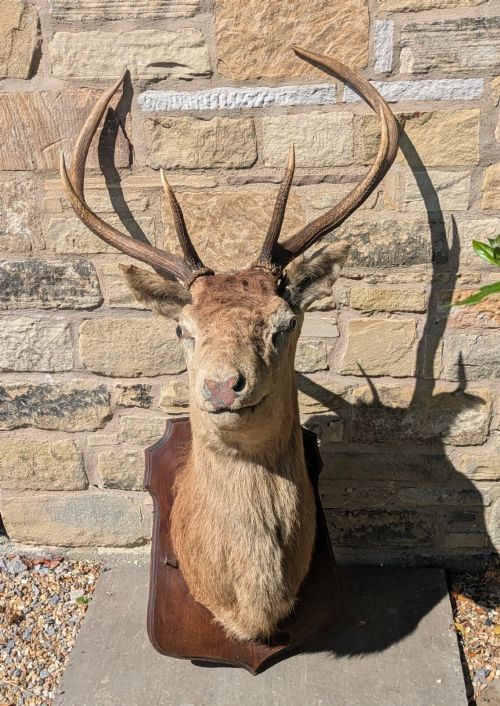
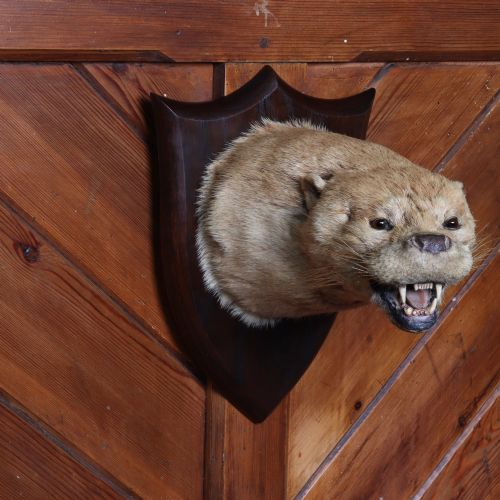
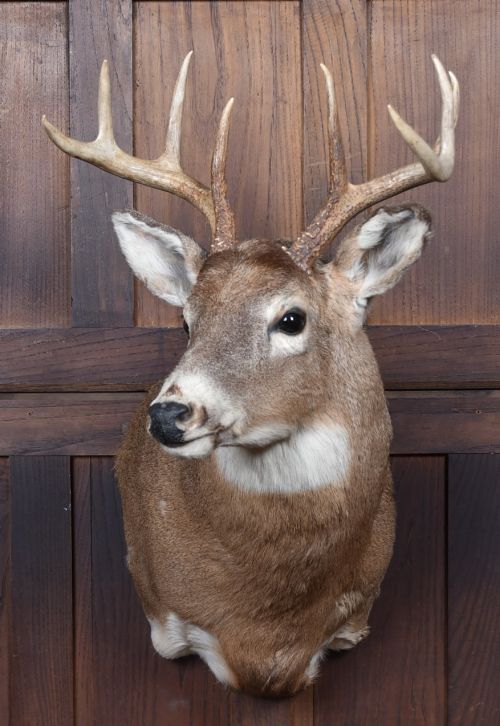
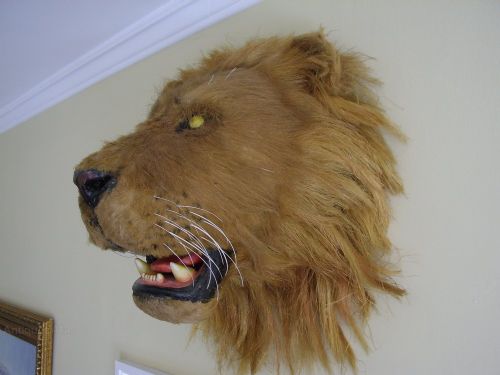
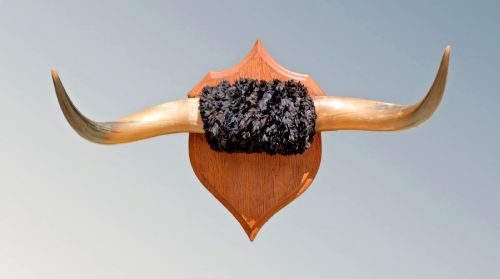
A vintage taxidermy wall mount brings preserved fauna and animal trophies into domestic interiors, spanning various species from deer and gazelle to aquatic forms and birds. Buyers seeking a vintage taxidermy wall mount encounter examples stretching from the nineteenth century through the Edwardian period and into the mid-twentieth century. The selection ranges from imposing stags' heads and antelope trophies to individual horns, masks, and painted folk art.
Most pieces combine preserved hide, bone, and horn with traditional wooden backing boards or carved shields for hanging. The aesthetic channels Victorian natural history enthusiasm alongside Highland lodge and Black Forest traditions. Whether securing a grand twelve-point red deer or a smaller mounted fox mask, these objects serve as distinct wall sculptures.
How they were made
Taxidermists mounted animal hides and pelts over sculpted forms, using bone, horn, and glass for eyes to achieve lifelike expressions. Master practitioners shaped the preserved materials to capture the natural posture of deer, antelopes, and foxes.
Mounting boards and shields relied on solid timber such as oak, often carved with foliage in the Black Forest or continental style. These wooden supports provided both structural stability and an ornate decorative frame for the trophy.
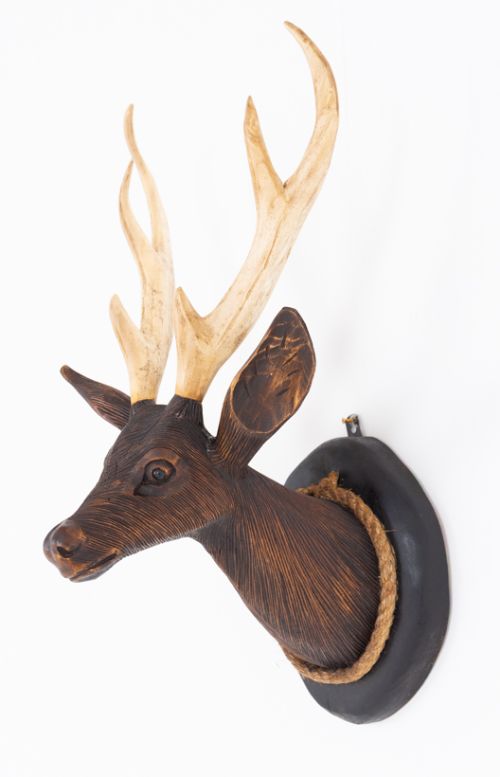
A painted folk art deer from the nineteenth century brings a charmingly naive expression to the traditional hunting lodge aesthetic.
What varies in quality
Quality rests on the anatomical accuracy of the preservation and the reputation of the workshop that produced the mount. Renowned establishments achieved superior realism in the glass eyes, facial modeling, and overall stance of the animal.
The craftsmanship of the wooden shield also dictates the overall standard, distinguishing simple timber planks from deeply carved oak panels. Superior taxidermy maintains the integrity of the hide and horns over decades without excessive loss or distortion.
Peter Spicer & Sons·Gerrard & Sons London·Edward Gerrard & Sons·J. Cooper & Sons·W.F. Homer London
The Vintage Taxidermy Wall Mount Glossary
- Taxidermy
- The art of preparing, stuffing, and mounting the skins of animals for display. This technique preserves the likeness of mammals, birds, and fish for scientific study or interior decoration.
- Mask
- The head and neck portion of an animal preserved as a trophy. These are frequently seen in mounted foxes and smaller game.
- Shield
- The wooden backing board shaped to display animal horns or heads upon a wall. Oak is a common timber utilised for these mounting supports.
- Black Forest style
- A carving tradition originating in central Europe known for highly detailed foliage and animal motifs. Pieces in this style often feature deeply carved timber supporting antlers or skulls.
Vintage Taxidermy Wall Mount: Frequently Asked Questions
How do I hang a heavy mount safely?
Heavy stags' heads and large antelope trophies require secure fixing directly into wall studs or masonry using heavy-duty brackets. The substantial weight of the oak shields and preserved bone demands robust hardware.
Ensure the mounting wire or rear fixing point on the wooden shield is checked for stability before hanging. Professional installation is advisable for the largest nineteenth-century specimens.
How should I clean vintage taxidermy?
Dust mounted animals gently using a soft brush or a cool hairdryer on the lowest setting to remove surface particles without damaging the hide. Avoid using water or chemical cleaners on the hair and skin.
Wooden shields can be wiped with a dry cloth and occasionally treated with appropriate wood maintenance products, taking care to avoid contact with the taxidermy hide.
Are these pieces from ethical sources?
The pieces available on this page originate from nineteenth and early twentieth-century collections, reflecting historical hunting practices and natural history enthusiasm of those eras. They represent antique artefacts and historical specimens rather than contemporary hunting trophies.
Collectors preserve these historical taxidermy mounts as examples of period craftsmanship and natural history artistry.
How do I identify a Spicer mount?
Trophies by Peter Spicer & Sons often bear trade labels, stamps, or specific stylistic markers associated with their Royal Leamington Spa workshop. Their fox masks and mammal heads are recognised by particularly lifelike expressions and careful modelling.
Documentation or stamps on the rear wooden shields frequently confirm the attribution to these prominent nineteenth and twentieth-century taxidermists.