



Vintage Tantalus
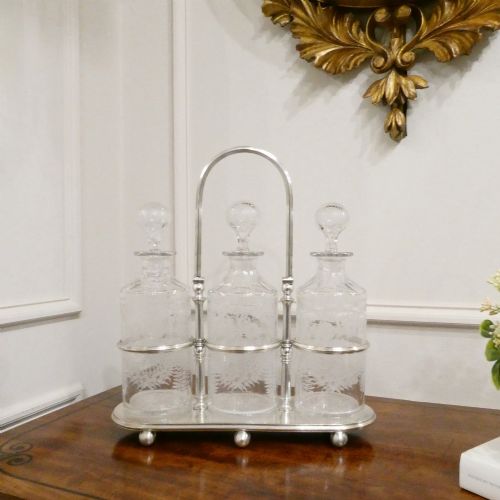
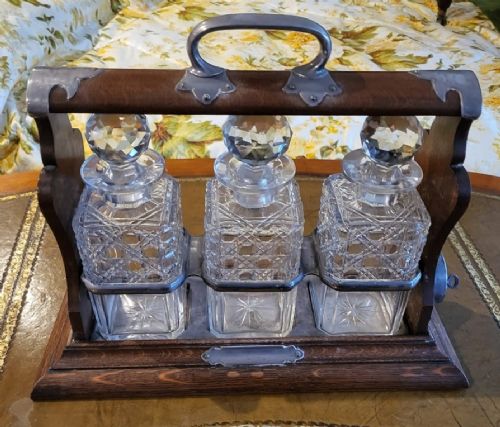
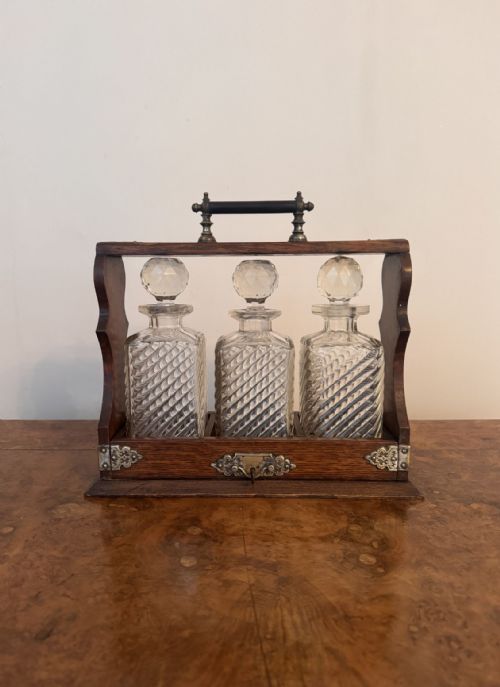
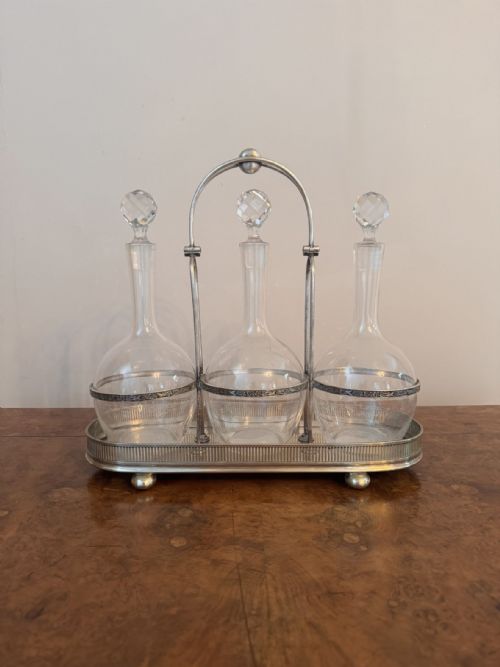
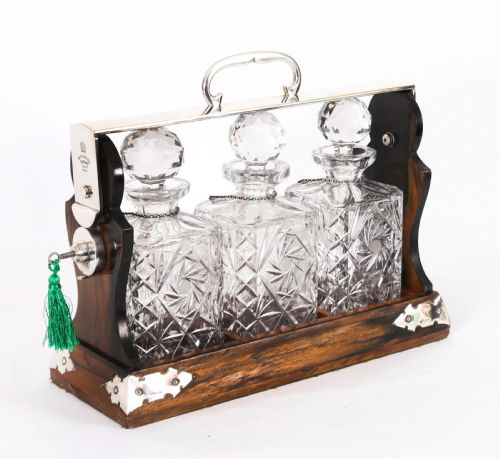
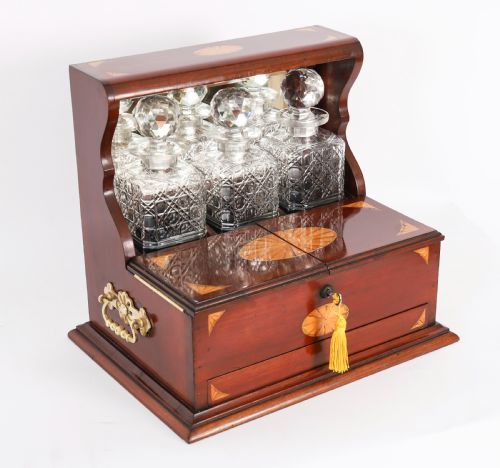
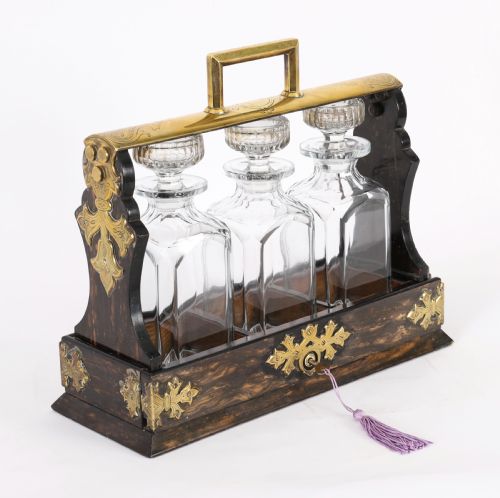
A vintage tantalus secures fine spirits behind a locked wooden or metal frame while displaying the crystal decanters within.
Vintage Tantalus
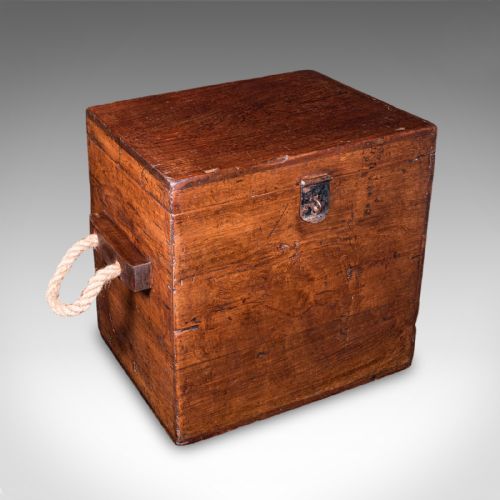
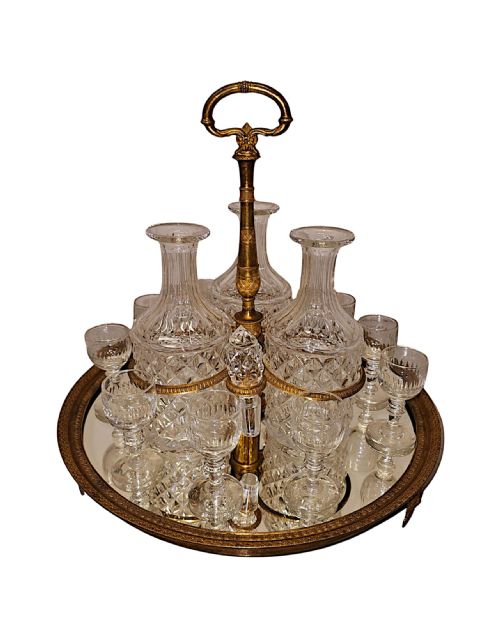
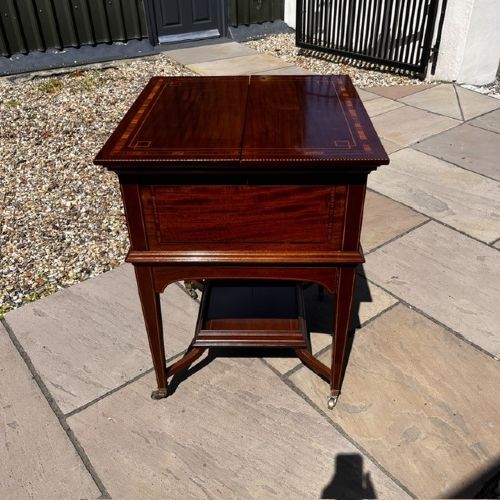
Beyond standard bottle frames, the selection includes complex games compendiums that combine the tantalus mechanism with storage for cards and chips, alongside French cave à liqueur boxes lined in velvet and fitted with glass decanters. These pieces span periods from the mid-nineteenth century through the Edwardian era and into Art Deco chrome designs.
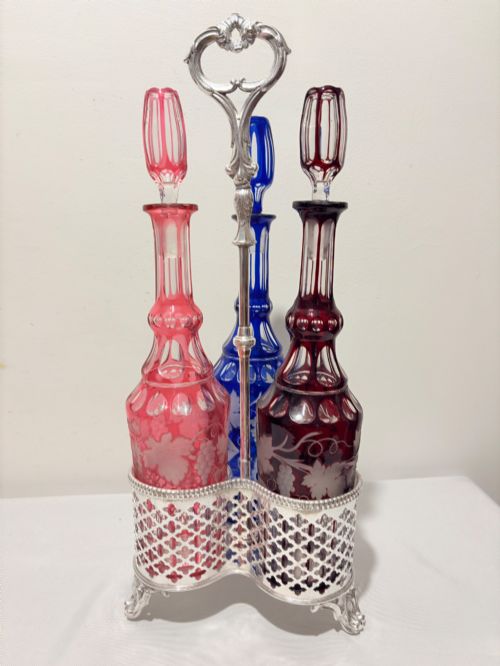
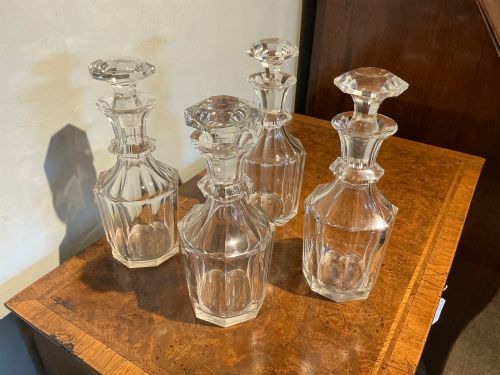
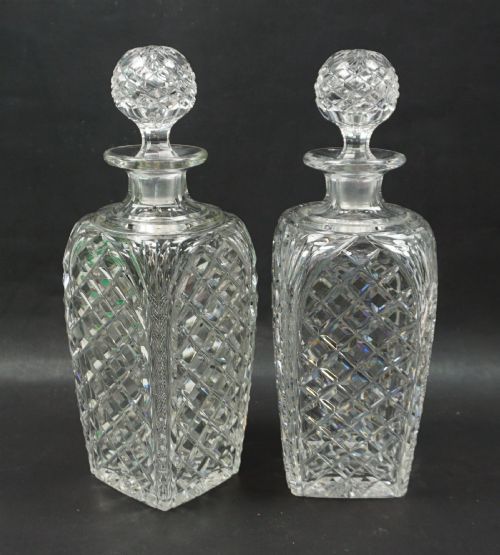
The layout typically holds two or three cut crystal or cut glass decanters, sometimes accompanied by matching tot pails or liqueur glasses. Simpler decanter stands and cruets appear alongside locking tantalus boxes, offering alternative ways to display barware from the Georgian period to the 1930s.
Materials and Construction
Cabinetmakers utilised dense timbers such as oak, coromandel, walnut, and mahogany, frequently enhancing the wooden frames with brass mounts, marquetry stringing, or satinwood inlay. The locking mechanism requires precise metalwork in brass or silver plate to secure the decanter stoppers when the handle is locked down.
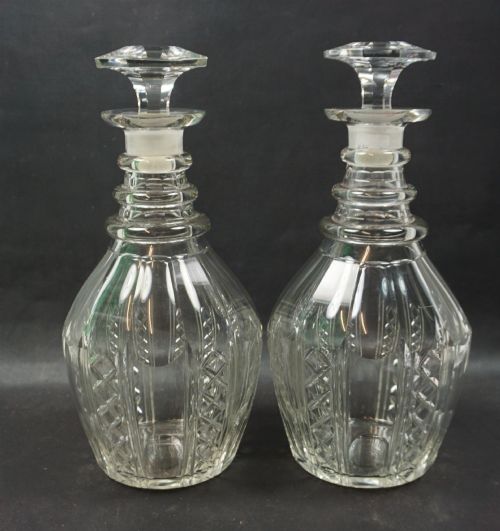
The glassware consists of heavy cut crystal, cut glass, or frosted crystal, shaped into square sections, barrels, or tapered decanters. Metal frames and stands rely on silver plate, old Sheffield plate, or chrome, with specialised makers employing secure hinges and locking bars.
Vintage Tantalus Retail Price Guide 2026
Typical asking prices for vintage tantalus among the pieces listed under this phrase on Sellingantiques today, from the lower quarter to the upper quarter. They describe what is for sale here now, not the wider market.
Listings for vintage tantalus items feature oak, walnut, mahogany, and coromandel timbers paired with cut crystal and silver plate.
Distinguishing Quality in Construction and Fittings
Quality rests upon the integrity of the locking mechanism and the original matching set of decanters. Superior pieces retain their working keys, undamaged silver plating on the brass mounts, and crystal bottles that match the exact contours of the frame.
Cabinetwork differentiates standard boxes from exceptional pieces, marked by tightly fitted games compendiums, fine marquetry, and exotic veneers such as coromandel. The clarity and depth of the cut crystal further separate routine decanter stands from masterwork tantalus sets.
Betjemann·Elkington·The Goldsmith Co·Jacques Adnet·Baccarat
The Vintage Tantalus Glossary
- Tantalus
- A locking beverage stand that holds decanters securely within a frame so that the stoppers cannot be removed without a key. This frustrating design inspired the name, drawn from the mythological figure of Tantalus.
- Cave à liqueur
- A French boxed set containing liqueur decanters and small glasses fitted into custom compartments. These boxes often feature ornate marquetry or ormolu mounts.
- Games compendium
- A multi-functional box combining a tantalus or decanter stand with integrated storage for playing cards, dice, and gaming boards. They represent elaborate entertaining accessories of the nineteenth century.
- Old Sheffield plate
- A composite metal made by fusing a thin sheet of silver to a thicker copper base before shaping. This technique appears on earlier stands and cruets.
- Tot pail
- A small bucket or container designed to hold measures of spirits or ice, frequently accompanying nineteenth-century barware sets.
Vintage Tantalus: Frequently Asked Questions
How does a vintage tantalus lock work?
A metal bar passes across the glass stoppers of the decanters and fastens into a locking mechanism at the side or top of the wooden frame. When the key is turned, the bar lifts or swings clear to release the bottles.
Most mechanisms require the decanters to sit precisely in their designated wells before the locking bar can engage.
Are original keys common on these pieces?
Original working keys remain uncommon because locks were frequently misplaced over decades of use. Many pieces require replacement keys fitted by a specialist.
Collectors value pieces with functioning original locks and keys, though locks can often be opened or repaired by an experienced locksmith.
What is the difference between a tantalus and a decanter box?
A tantalus exposes the decanters within an open frame while locking their stoppers in place. A decanter box encloses the bottles entirely inside a lidded cabinet or case.
Both forms served to secure spirits, but boxes prioritized concealed transport and storage over visible display.
How should I clean antique crystal decanters?
Gentle washing with warm water and specialised bottle brushes removes residue without scratching the heavy cut glass. Harsh detergents and sudden temperature changes risk damaging nineteenth-century crystal.
Allowing the decanters to dry completely upside down prevents moisture rings from forming inside the base.