

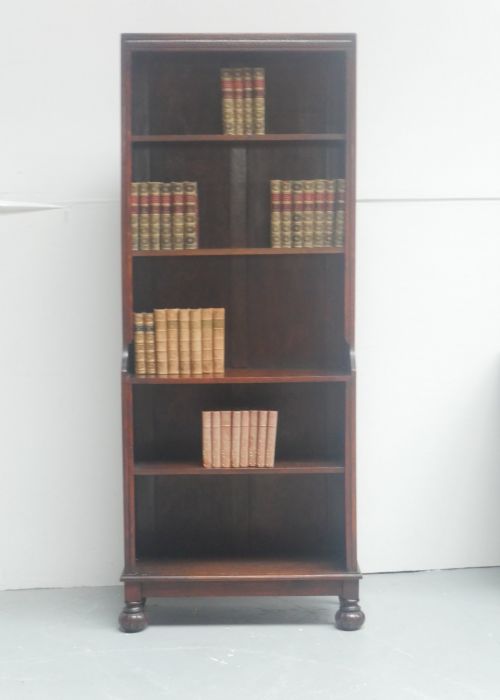
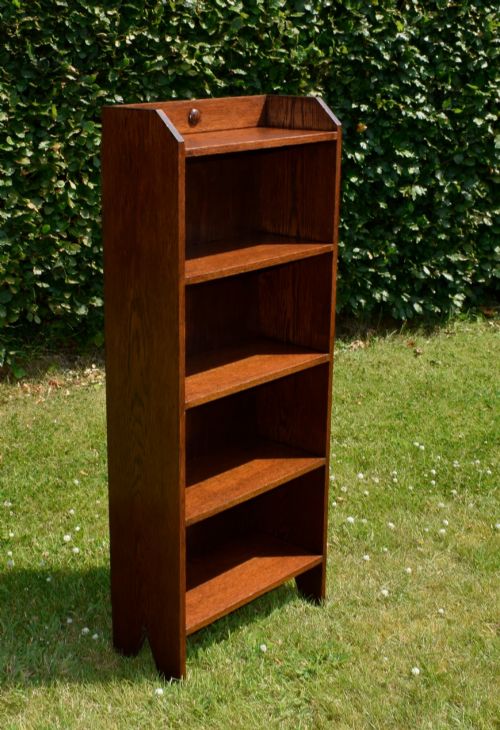

Vintage Tall Open Shelves
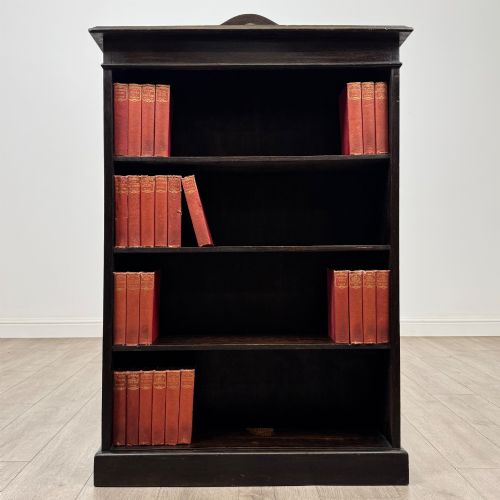
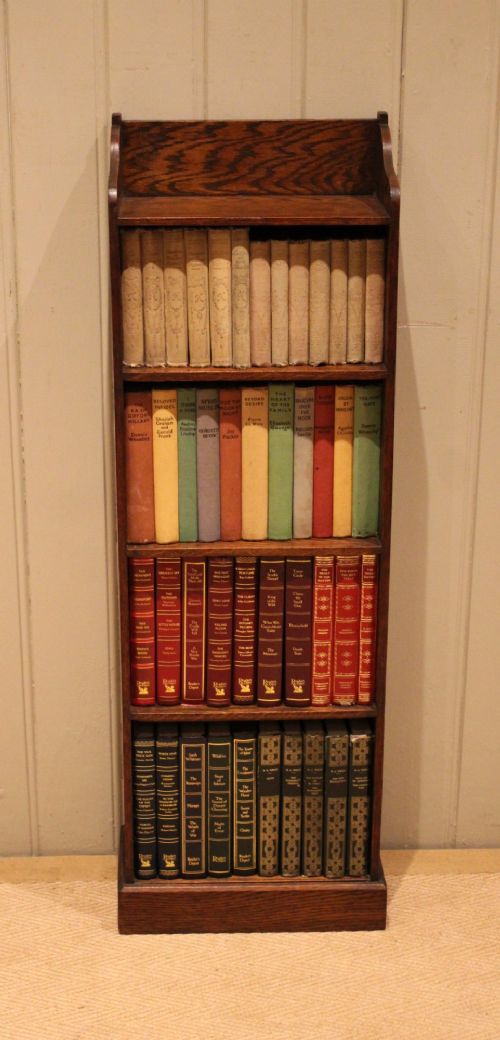
These vintage tall open shelves offer practical vertical storage, combining sturdy timber construction with accessible display space for books and decorative objects.
Vintage Tall Open Shelves
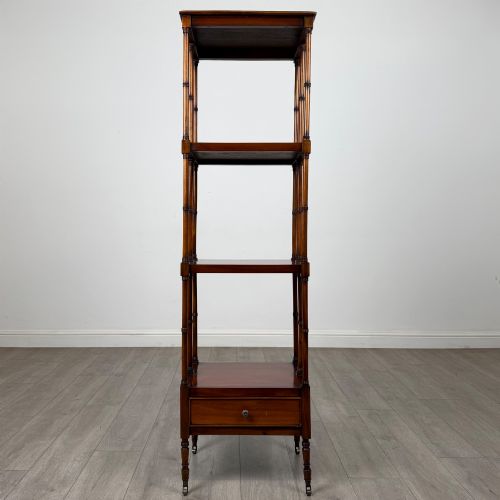
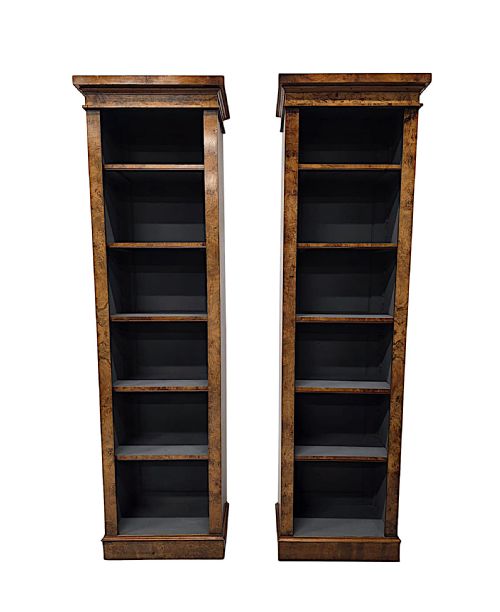
When buyers search for vintage tall open shelves, they seek vertical storage solutions that display books and objects without the visual barrier of doors. These pieces take the form of open bookcases, tall shelving units, and narrow whatnots spanning from the late nineteenth century through to the art deco period.
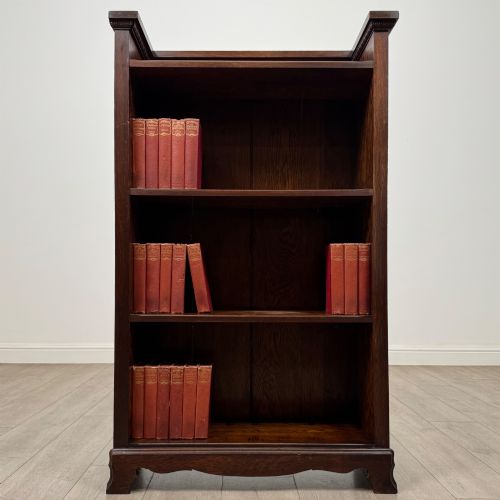
The selection here draws heavily from the Edwardian era and the nineteenth century, alongside pieces from the nineteen-twenties and nineteen-thirties. Oak and mahogany dominate the offerings, appearing in both substantial library proportions and slimmer, neat footprints designed for compact rooms.
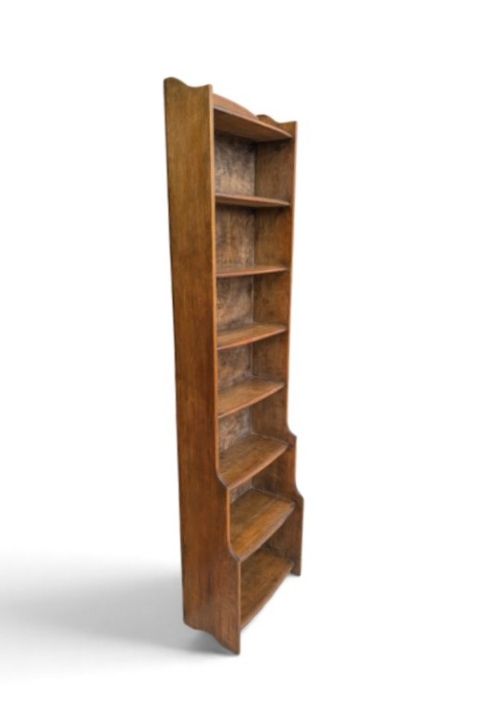
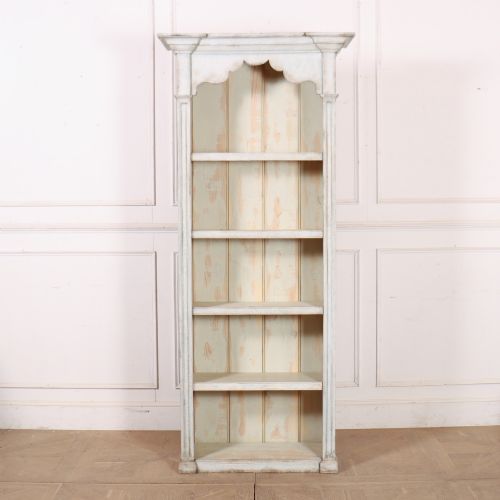
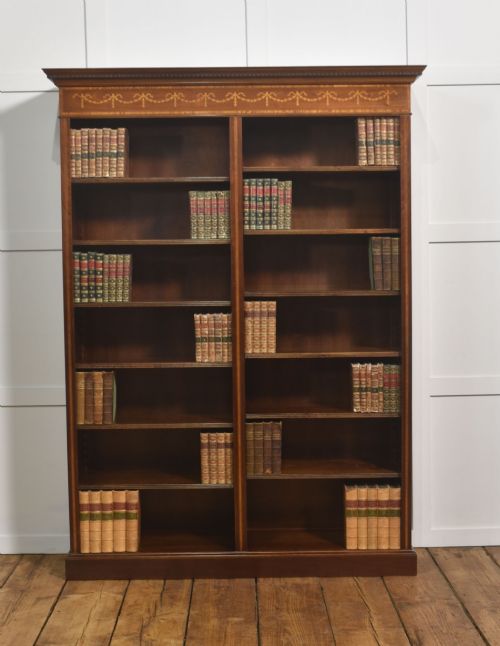
Stilistically, the inventory ranges from functional Arts and Crafts designs and rustic pine country pieces to refined Sheraton Revival inlaid mahogany. Buyers frequently encounter adjustable shelving systems, waterfall configurations, and carved architectural details that reflect the prevailing taste of their original decade.
Materials and Construction
Cabinet makers relied predominantly on solid oak and mahogany for structural integrity, occasionally employing walnut, burr walnut, and rosewood for more decorative finishes. Pine served well for simpler country pieces and utilitarian shelving units, while satinwood provided contrasting stringing for inlaid details.
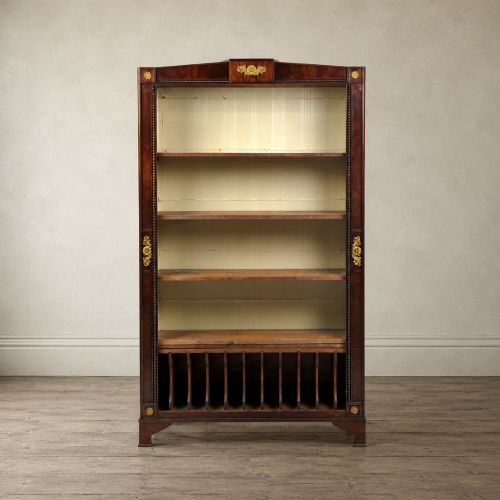
Joinery methods prioritized durability, utilising substantial timber framing, panelled sides, and beaded edges to stabilize the tall vertical frame. Brass embellishments and handles appear on select continental and painted examples, adding metallic contrast to the timber surfaces.
Materials across the selection range from utilitarian pine and sturdy oak to exotic rosewood, burr walnut, and finely inlaid satinwood.
Distinctions in Execution
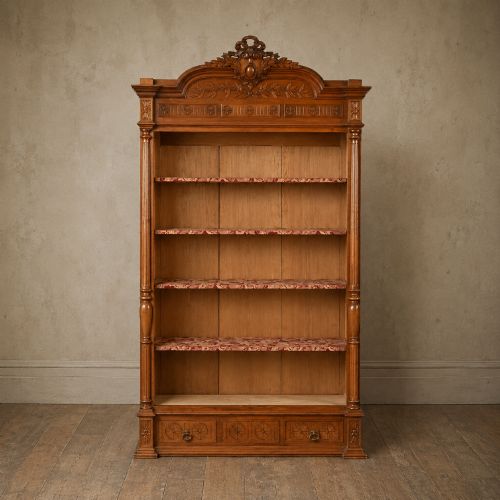
Quality separates pieces through the selection of timber and the subtlety of decorative flourishes such as fine marquetry inlay and hand-carved mouldings. Superior examples utilise dense, well-figured mahogany or quarter-sawn oak that exhibits strong natural grain patterns.
The sophistication of the internal hardware, including the mechanism and neatness of adjustable shelf supports, distinguishes standard utilitarian storage from finer cabinet work. Proportion also dictates worth, as slender, shallow depths require precise engineering to remain stable at height without heavy wall anchoring.
WYLIE LOCHHEAD of GLASGOW·E.A. TAYLOR
The Vintage Tall Open Shelves Glossary
- Edwardian
- Pertaining to the reign of King Edward VII, spanning from nineteen hundred to nineteen ten, characterised by lighter, often inlaid furniture styles.
- Arts and Crafts
- A design movement emphasising handcraftsmanship, simple forms, and visible construction methods rather than mass-produced ornamentation.
- Sheraton Revival
- A late nineteenth and early twentieth century style inspired by the neoclassical designs of Thomas Sheraton, featuring satinwood inlay and tapered legs.
- Waterfall Bookcase
- A tiered shelving unit where each successive shelf steps back from the one below, creating a cascade profile.
- Whatnot
- A piece of open shelving furniture designed for displaying ornaments, books, and curiosities, popular throughout the Victorian and Edwardian periods.
Vintage Tall Open Shelves: Frequently Asked Questions
How do I secure tall shelves safely?
Tall open shelving units require careful placement against a flat wall, particularly in older properties with uneven flooring. Many period pieces incorporate subtle fixing points or benefit from discrete wall brackets to prevent tipping.
Ensuring the heaviest items rest on the lowest shelves lowers the centre of gravity and improves overall stability. Taking time to level the feet using small shims protects both the timber joints and the surrounding walls.
Are the shelves usually adjustable?
Many Edwardian and Victorian tall bookcases feature adjustable shelving systems, utilising wooden notches, brass tracks, or fixed peg holes. This flexibility allows owners to accommodate oversized volumes alongside standard paperback or hardback books.
Simpler rustic pine or country pieces occasionally feature fixed shelves nailed or glued permanently into the vertical uprights. Checking the listing details clarifies whether the internal layout can be reconfigured to suit specific storage needs.
How do I distinguish Edwardian from Victorian oak?
Victorian oak furniture often displays darker finishes, heavier carved mouldings, and a more imposing overall presence suited to formal nineteenth-century libraries. The timber grain tends to be dense and robust, reflecting traditional revival styles.
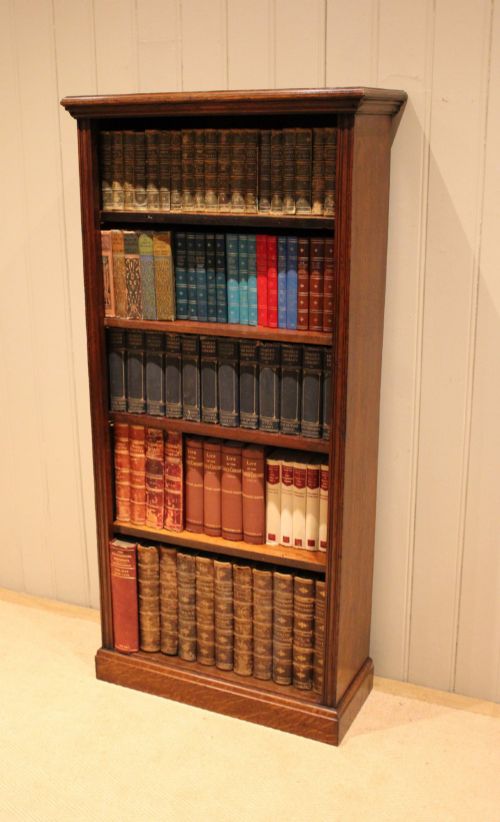
Edwardian pieces generally present a lighter, warmer honey tone with cleaner lines and restrained decoration, influenced by the Arts and Crafts movement. Lighter construction and simpler cornices help differentiate these early twentieth-century examples from their heavier predecessors.
What is the difference between an etagere and an open bookcase?
An etagere functions primarily as an open display piece with multiple tiers, often featuring slender uprights and a decorative silhouette meant for ornaments and small objects. These units prioritize decorative presentation over heavy book storage.
An open bookcase utilises deeper, sturdier shelves specifically engineered to support the weight of rows of books. While both share an open format, the structural reinforcement differs significantly between display furniture and library shelving.