


Vintage Table Gong
A vintage table gong brings a resonant acoustic chime to a room, mounted in wood or metal frames for summoning guests to dinner.
Vintage Table Gong
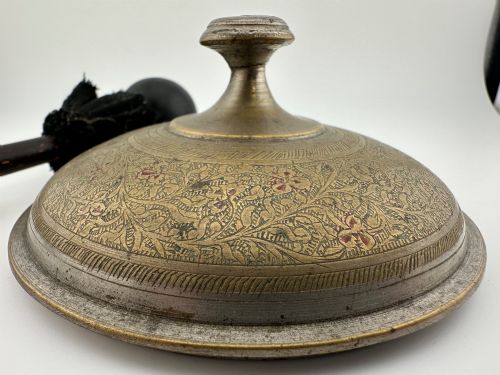
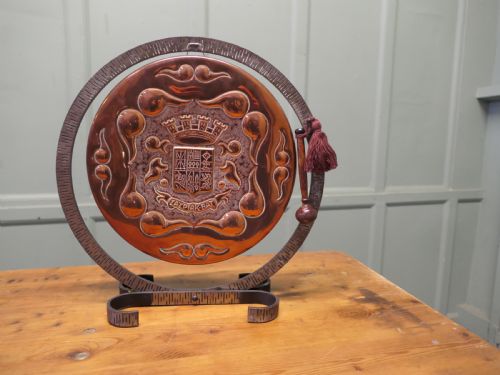
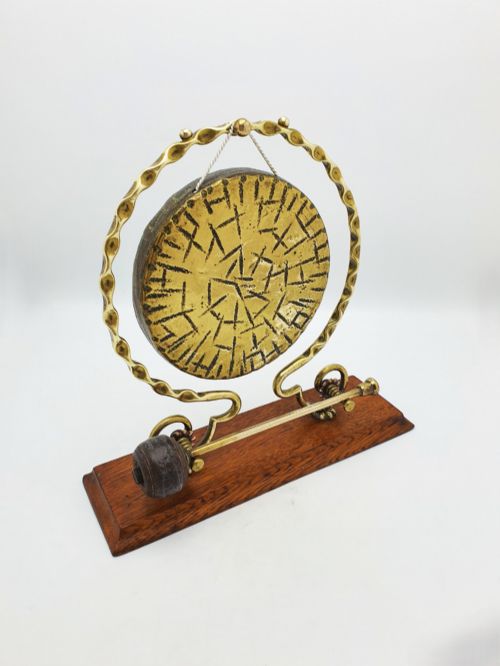
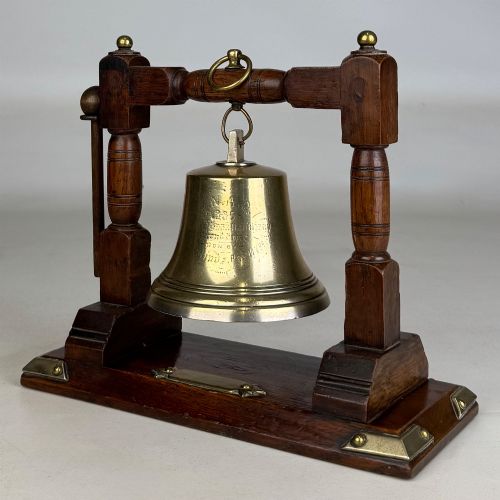
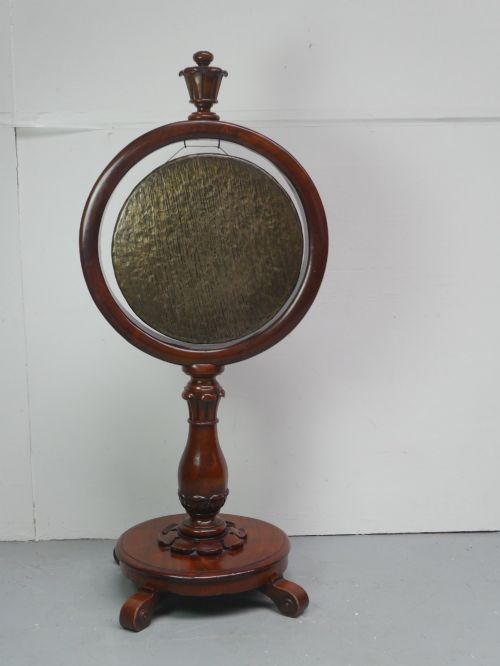
A vintage table gong is a decorative and functional striking instrument designed for domestic use, typically featuring a suspended metal disc or bell paired with a matching mallet. These pieces span the nineteenth and twentieth centuries, appearing in styles from simple Edwardian oak stands to elaborate Art Nouveau and Chinese Export designs.
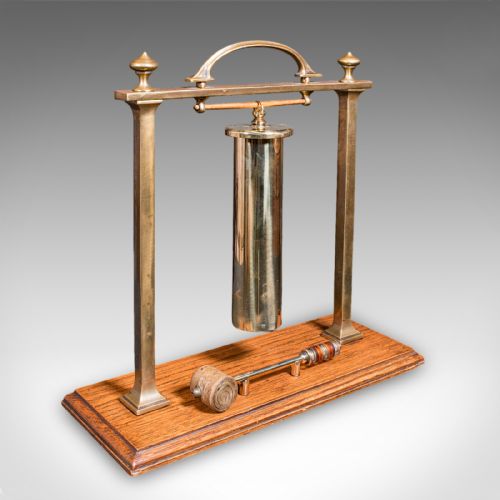
The most common examples encountered on this page pair a brass or bronze gong with a carved oak or hardwood base. Domestic dinner gongs range from compact table-top versions to larger assemblies incorporating novelty elements such as cow horns or carved animal figures.
Materials and construction
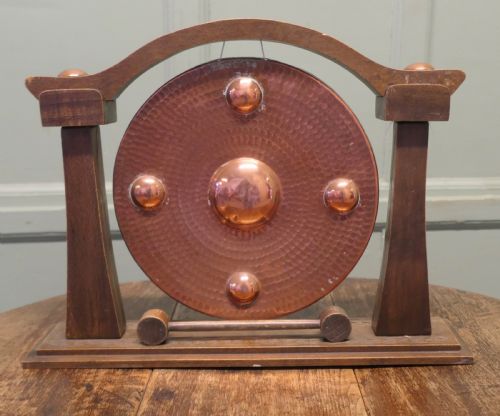
Makers utilised resonant metal alloys including brass, bronze, copper, and silver plate to form the striking gongs and bells. These metal elements were frequently hand-hammered or cast to achieve the desired acoustic properties and visual texture.
Supporting frameworks relied on sturdy timbers such as oak, mango wood, and general hardwoods, often carved with regional motifs or stylised floral patterns. Cord and metal fixings suspended the gongs securely within their stands to allow optimal vibration.
Several gongs incorporate unexpected biological elements, balancing heavy metal bells against carved cow horns and domestic animal figures.
Assessing quality and craftsmanship
Quality in a vintage table gong rests primarily on the depth and clarity of the metal ring, determined by the thickness of the alloy and the precision of the forging. Hand-hammered surfaces and heavy-gauge bronze or brass indicate superior metallurgical work compared to thin pressed plates.
The joinery and carving of the supporting base further distinguish finer pieces, with crisply hand-carved oak frames and integrated novelty elements demonstrating greater artisan input than mass-produced utilitarian stands.
The Vintage Table Gong Glossary
- Dinner Gong
- A percussion instrument mounted on a stand, historically used in large houses to announce meals. They range from small table-top versions to substantial floor-standing pieces.
- Striker
- The handheld mallet or beamer used to hit the gong or bell. These often feature turned wooden handles matching the main stand.
- Chinoiserie
- European artistic style reflecting Chinese aesthetic influences, frequently seen in the carved wooden stands of imported gongs. This style was particularly popular during the Victorian and Edwardian eras.
- Silver Plate
- A thin layer of silver applied to a base metal such as copper or brass. This finish appears on several decorative nineteenth-century table gongs.
- Art Nouveau
- A decorative style characterised by fluid, organic lines and floral motifs. Pieces from this period often display sinuous cast iron or brass framing.
Vintage Table Gong: Frequently Asked Questions
How were table gongs originally used?
Table gongs served a practical domestic purpose in large nineteenth and twentieth-century households, acting as an audible signal to gather family and guests for meals or afternoon tea.
Servants or hosts struck the suspended metal disc with a handheld mallet, producing a resonant tone that carried across multiple rooms.
What materials make up these gongs?
The hanging striking elements are typically formed from cast bronze, hammered brass, copper, or silver plate. These metals are chosen specifically for their acoustic resonance when struck.
Supporting frames and bases are constructed from timber, predominantly carved oak, mango wood, or assorted hardwoods, occasionally incorporating novelty organic elements like cow horns.
How do I date a vintage table gong?
Dating relies heavily on the stylistic indicators of the wooden stand and the manufacturing techniques of the metal gong. Victorian and Edwardian pieces often feature deep oak carving or distinct Art Nouveau curves.
Later twentieth-century examples shift towards simpler mango wood bases or distinct regional carving styles, while silver-plated items frequently carry period hallmarks.
Where should I place a table gong at home?
These pieces function well on sideboards, entrance hall consoles, or living room tables where their decorative stands can be appreciated. Ensure the suspended gong has enough clearance on all sides to vibrate freely without hitting the wooden frame when struck.
Are all table gongs loud?
The volume depends entirely on the mass of the metal disc and the alloy composition used in its manufacture. Smaller brass table bells produce a sharp, bright ring, while larger bronze and copper gongs yield a deep, sustained tone.