





Vintage Table Coasters
These vintage table coasters protect polished dining surfaces while adding period character to the table.
Vintage Table Coasters
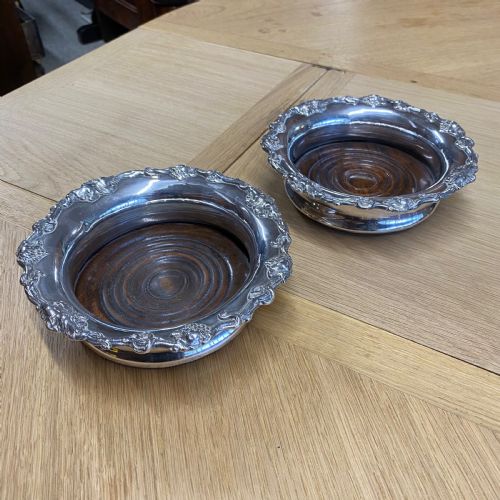
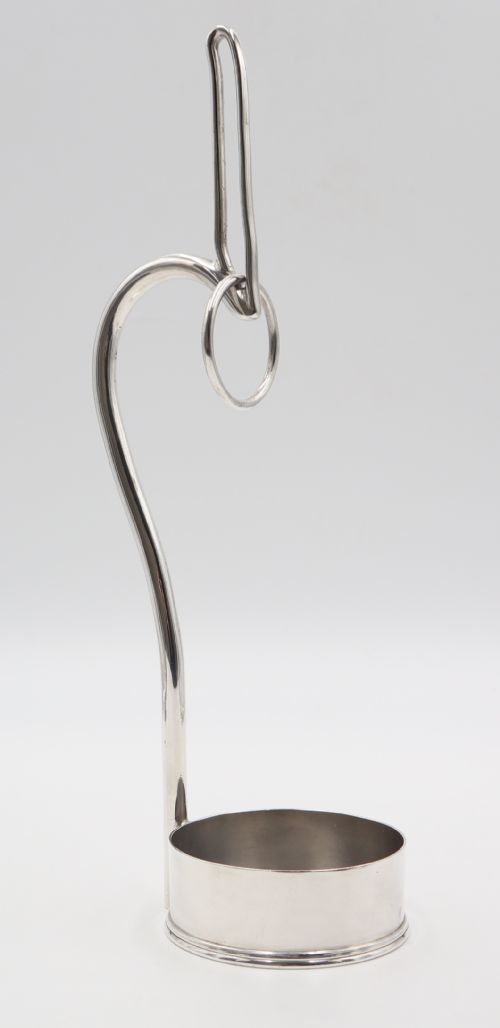
Vintage table coasters encompass wine bottle holders, decanter stands and cheese coasters designed to guard dining room furniture against moisture and marks. These pieces range from Georgian and Victorian examples to twentieth-century designs, reflecting shifting dining rituals across different eras.
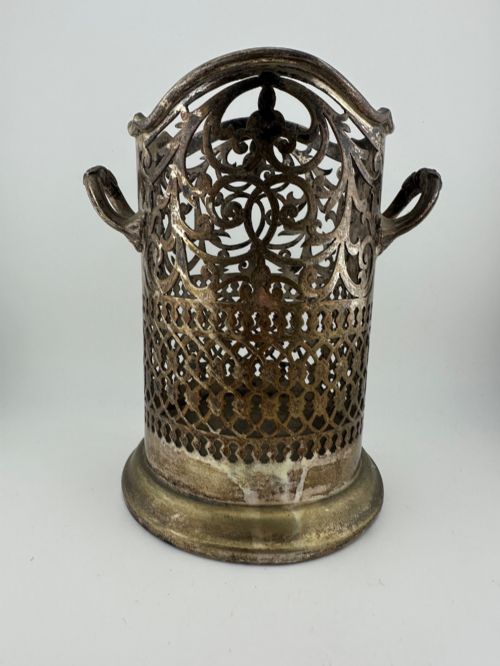
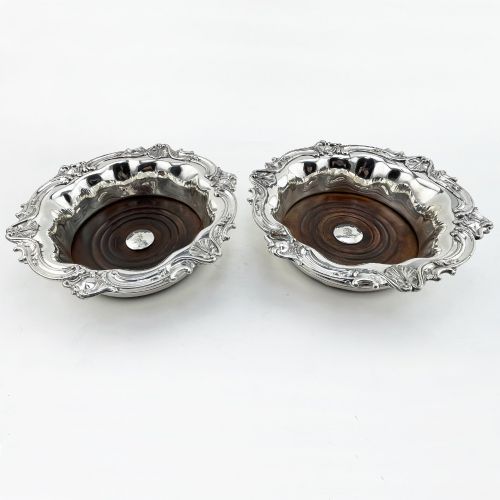
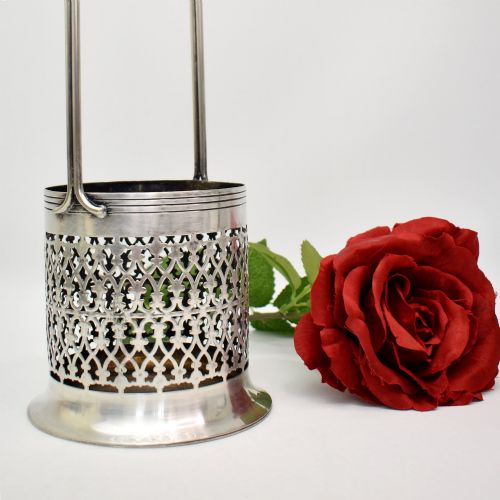
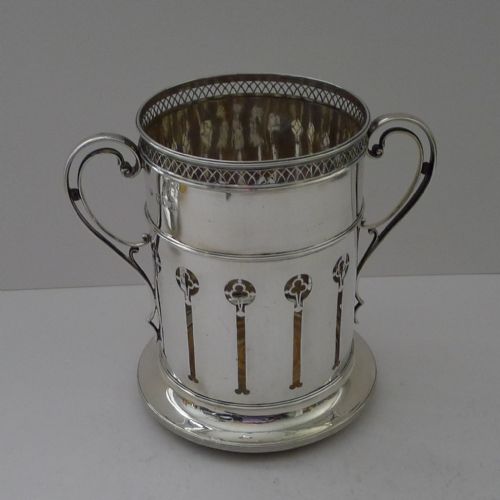
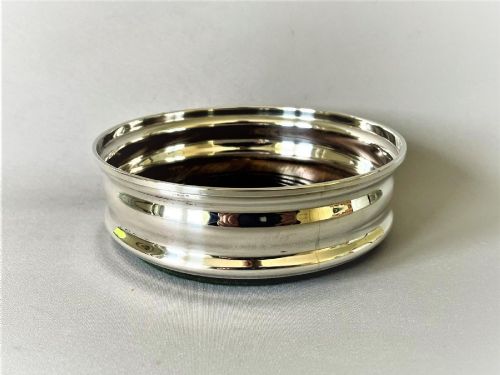
The versions most commonly met on this page include silver-plated and sterling silver wine bottle holders, often featuring pierced galleries or grape and vine motifs. Treen and mahogany specimens paired with metal also appear, alongside traditional Old Sheffield plate examples.
How they were made
Makers shaped these items using traditional metalworking and woodworking techniques, combining sterling silver or silver plate with turned woods like mahogany. Piercing, casting and engraving gave metal galleries their decorative detail, whilst turned bases provided sturdy foundations for heavy bottles.
Old Sheffield plate pieces fuse a thin layer of silver to a copper base, creating durable vessels with distinctive edge trims. Wooden items utilise turning lathes and fitted metal castors to allow smooth movement across the dining table.
Vintage Table Coasters Retail Price Guide 2026
Typical asking prices for vintage table coasters among the pieces listed under this phrase on Sellingantiques today, from the lower quarter to the upper quarter. They describe what is for sale here now, not the wider market.
What varies in quality
Quality rests upon the crispness of chased or pierced metalwork and the weight of the silver or base metal used in construction. Substantial gauge silver and well-turned mahogany bases distinguish finer examples from lighter utilitarian items.
The integrity of applied rims, the retention of silver plating over copper or base metal, and the presence of original turned bases or castors influence the standing of a piece within its period.
Mappin & Webb·Brook & Son·Christofle·Asprey
The Vintage Table Coasters Glossary
- Old Sheffield plate
- A composite material formed by fusing a sheet of silver to a copper ingot before rolling into sheets, used for tableware before electroplating.
- Pierced work
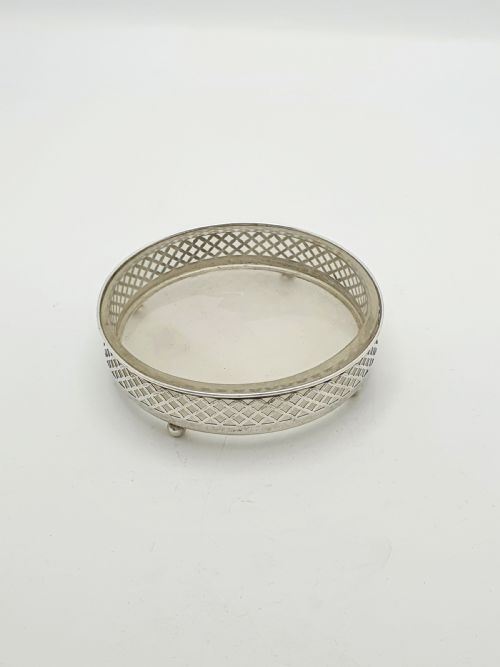
- Metal pierced with decorative openwork patterns, common in silver galleries to lighten the visual weight of bottle coasters.
- Treen
- Small handmade wooden household objects, encompassing turned wooden coaster bases and bottle stands.
- Castor
- A small swiveling wheel attached to the base of furniture or serving equipment to allow easy movement across tables or floors.
Vintage Table Coasters: Frequently Asked Questions
How do I clean silver table coasters?
Clean silver and silver-plated coasters gently using a soft cloth and a specialised silver polish, avoiding abrasive materials that might damage thin plating.
For pieces with wooden bases or glass liners, keep moisture away from the wood and remove liners before polishing the metal surround.
Can these hold modern wine bottles?
Most standard wine and champagne bottles fit comfortably within these vintage holders, though unusually wide bordeaux or burgundy bottles may require specific larger sizes.
Measuring the internal diameter of a coaster helps ensure compatibility with contemporary bottle dimensions.
How do I date a silver coaster?
Dating relies on hallmarks stamped into the metal, stylistic clues such as Victorian pierced galleries or Art Nouveau curves, and construction methods like Old Sheffield plate.
Maker marks and registration numbers further pinpoint the decade of manufacture for silver-plated and sterling items.
Are these coasters suitable for daily use?
These pieces function well for everyday dining when handled with care, offering practical protection for tables alongside decorative appeal.
Promptly wiping away condensation prevents moisture damage to older wooden bases and preserves silver plating over decades of use.