
Vintage Table Accessories
Vintage table accessories bring character to dining spaces through small silver and glass utensils designed to serve meals with traditional refinement.
Vintage Table Accessories
Vintage table accessories encompass the smaller implements and decorative objects placed upon a dining surface during meals, including napkin rings, menu holders, place card holders, and condiment sets. These items span from the Victorian and Edwardian eras through the mid-twentieth century, reflecting changing dining rituals.
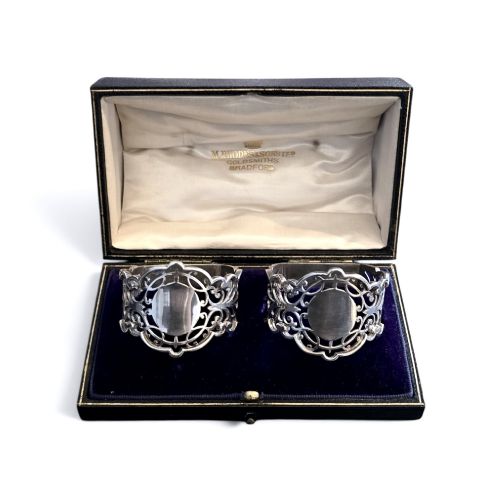
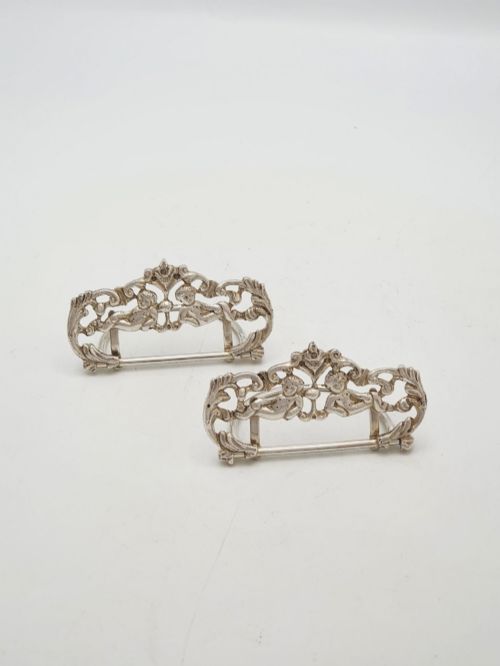
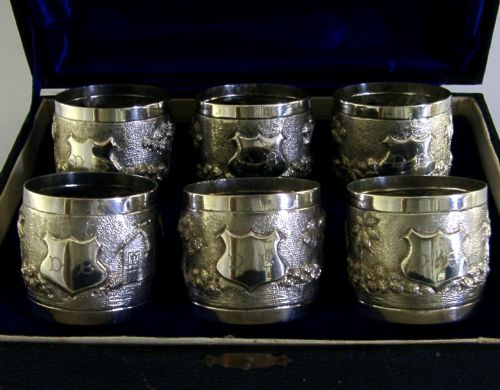
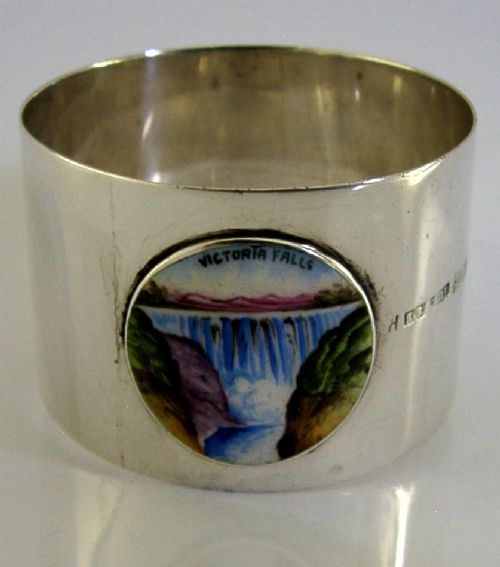
Napkin rings and menu holders dominate the forms seen, often appearing in matched pairs or cased sets intended for formal entertaining. Alongside these functional pieces, table lighters, grape shears, and knife rests complete the repertoire of dining room appointments.
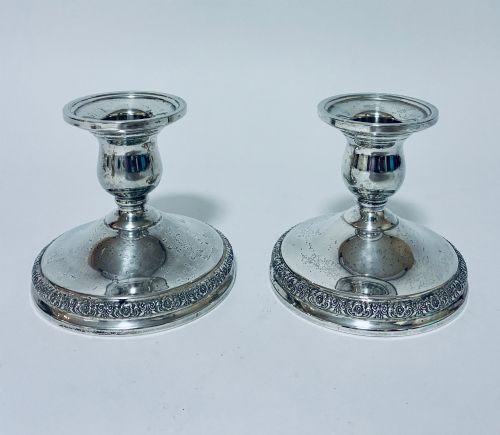
The materials range from sterling silver and silver plate to brass, glass, and rosewood, with sterling silver examples frequently bearing hallmarks that record their exact assay office and year. Many pieces showcase whimsical or figurative motifs such as animals, cherubs, and horse shoes.
Materials and methods
Silversmiths utilised sterling silver and silver plate as the primary mediums, shaping them through casting, stamping, and hand-engraving. Pieces such as menu holders and napkin rings often incorporated detailed sculptural elements soldered to the main body.
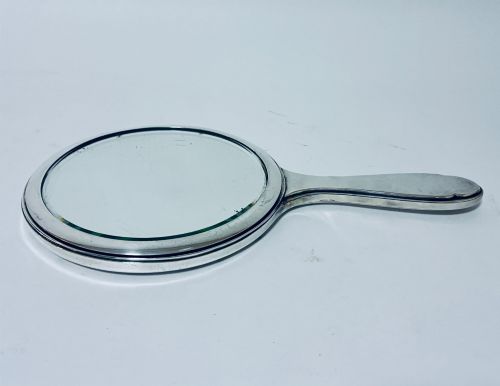
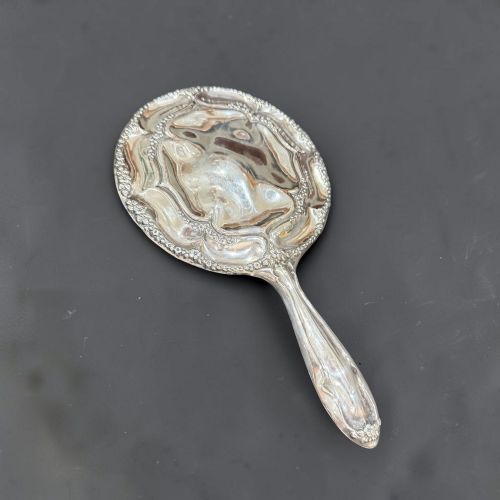
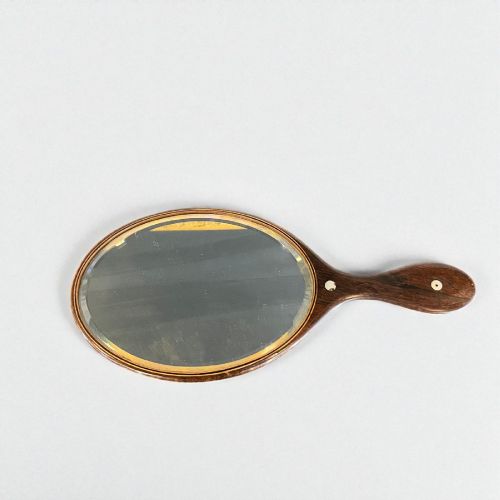
Complementary materials like glass, mother of pearl, velvet, and leather were integrated into items including condiment bottles, hand mirrors, and cased presentation sets. These combinations relied on traditional mounting and setting techniques to secure delicate inserts within metal frameworks.
Listings feature sterling silver, silver plate, glass, velvet, brass, and leather across periods from the Victorian era to the mid-twentieth century.
Assessing quality
The weight of the metal and the presence of clear, legible hallmarks significantly influence the standing of a piece. Substantial gauge silver and intact original cases or fitted boxes indicate higher original status and careful preservation.
Martin Hall & Co·Sampson Mordan·Levi & Salaman·William Neale·A. Wilcox·Mappin & Webb·R. E. Stone
The Vintage Table Accessories Glossary
- Hallmark
- Official stamps applied to precious metals indicating the assay office, purity standard, and year of manufacture. These marks provide definitive evidence of origin and age.
- Menu holder
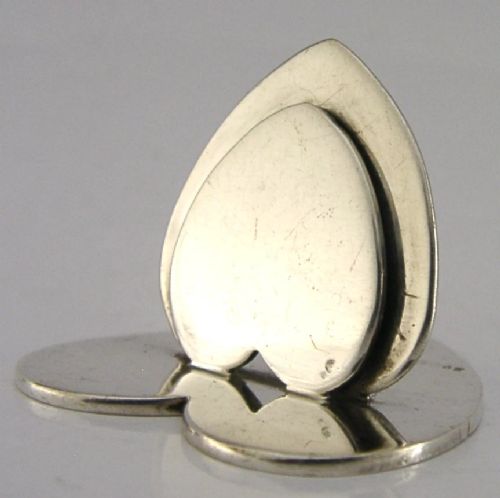
- A small desk-like stand used to display the menu on a dining table. They frequently take figurative forms such as animals or architectural subjects.
- Napkin ring
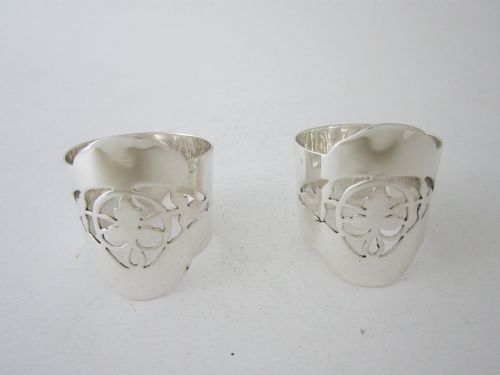
- A personal ring used to identify individual table napkins between meals. They often appear in matched sets of four, six, or eight, sometimes housed in velvet-lined cases.
- Grape shears
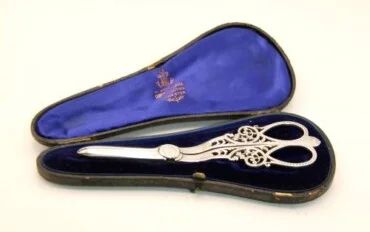
- Specialised scissors designed for severing clusters of grapes at the table. Their curved blades allow access to fruit without crushing individual berries.
- Condiment set
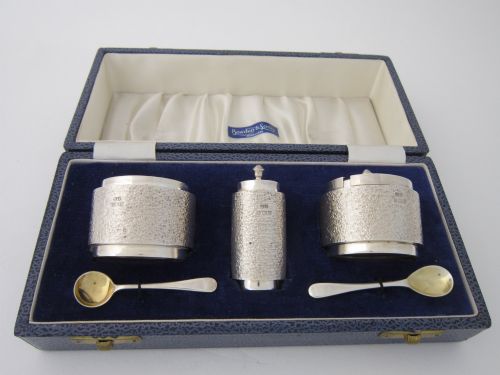
- A matched group of small vessels holding salt, pepper, and mustard. These sets often include matching spoons and blue glass liners.
Vintage Table Accessories: Frequently Asked Questions
What are vintage table accessories used for?
These items serve both practical and decorative functions during formal and casual meals, ranging from holding napkins and place cards to dispensing condiments and lighting cigars.
Collectors and hosts continue to utilise them to recreate traditional dining atmospheres or add character to modern table settings.
How do I identify Edwardian table accessories?
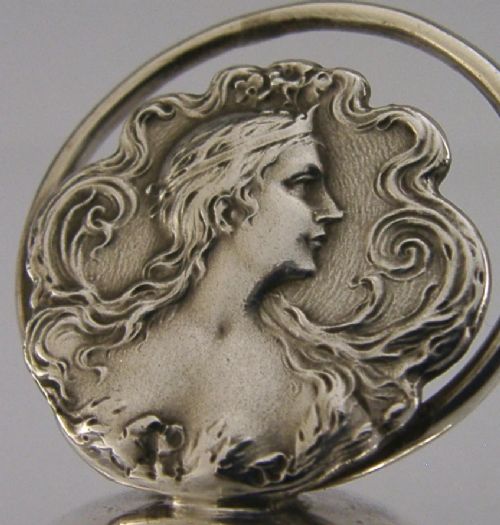
Edwardian pieces date from the reign of King Edward VII between 1901 and 1910, often displaying hallmarks from this specific decade alongside light, graceful designs influenced by Art Nouveau.
Look for motifs such as flowers, maidens, and stylised curves which distinguish this period from heavier Victorian or geometric Art Deco styles.
Are cased sets more desirable?
Cased sets of napkin rings or condiment items generally retain higher collector interest because the original fitted boxes protect the pieces from damage and wear over the decades.
Finding a set complete with its original velvet or silk lining adds historical context and ensures the components remain together.
How should I clean silver table accessories?
Sterling silver and silver plate require gentle cleaning with a specialised non-abrasive silver cloth or mild soapy water to remove tarnish without harming fine engraving or applied details.
Avoid harsh chemical dips that can strip away desirable patination and damage softer integrated materials like mother of pearl, enamel, or glass liners.