

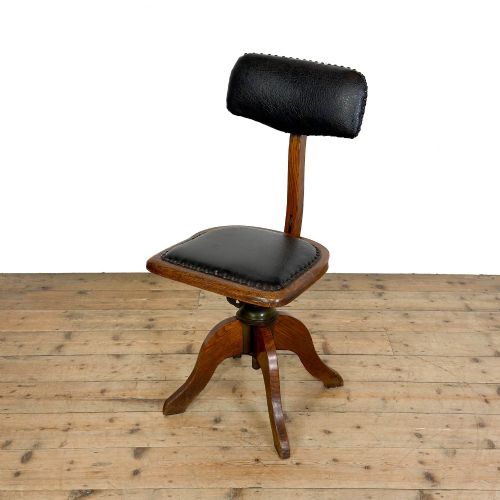
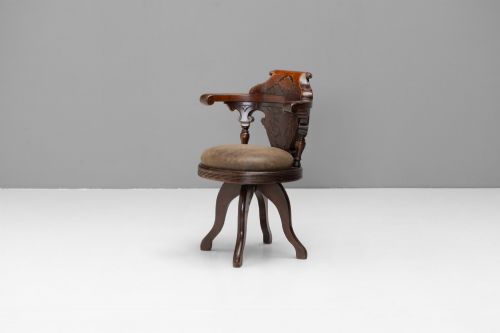
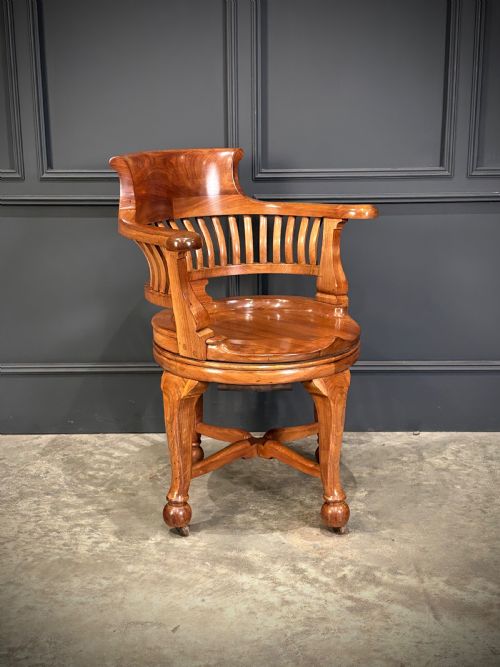


Vintage Swivel Seat
A vintage swivel seat brings mechanical ingenuity and practical comfort together, offering a functional piece of history for any room.
Vintage Swivel Seat
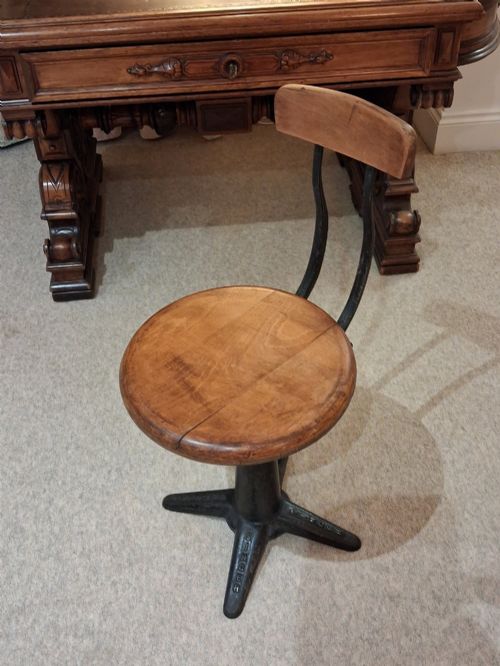
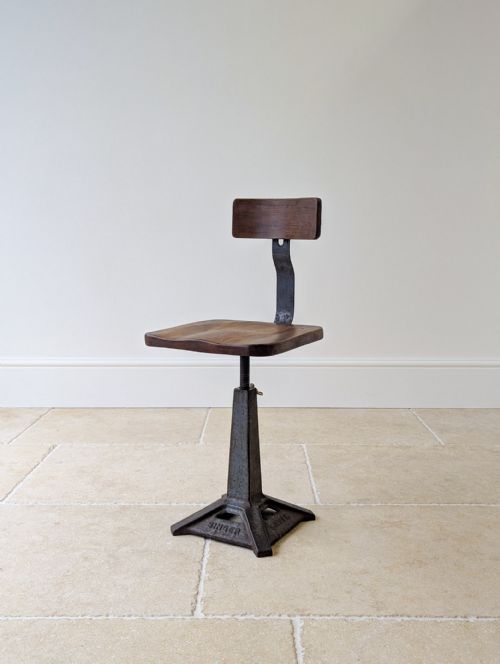
A vintage swivel seat encompasses various forms designed to rotate, including desk chairs, office chairs, piano stools, and industrial machinist seats. These items appear across multiple periods, most notably the Victorian, Edwardian, and George V eras, alongside 1930s industrial workshops.
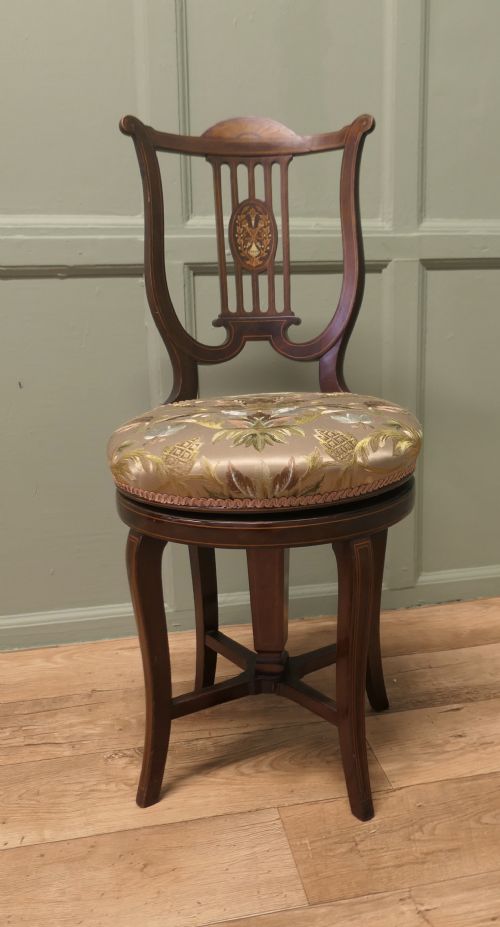
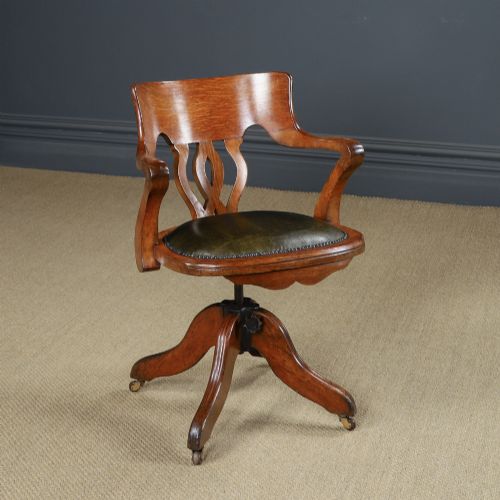
The selection here ranges from heavily carved oak desk chairs with green leather seats to cast iron and wood industrial stools. Buyers will also encounter specialised seating such as music chairs, ships chairs, and adjustable dressing table chairs.
Origins vary from domestic English workshops to maritime contexts and French salons, providing diverse stylistic interpretations of the revolving mechanism. Whether searching for a sturdy oak office chair or a rosewood piano stool, the primary appeal lies in the combination of period craftsmanship and movement.
Materials and construction
Makers utilised robust timbers such as mahogany, oak, walnut, beech, and rosewood for the main frames and seats, often pairing them with supple leather upholstery. These woods were carved, polished, or left with industrial utility finishes depending on whether the intended destination was a formal study or a workshop.
Metal components played a critical structural role, utilising cast iron, brass, and plain iron for the central revolving mechanisms, height adjustment screws, and underframes. Industrial examples relied heavily on cast iron bases combined with elm or wood tops for maximum durability during long working hours.
Vintage Swivel Seat Retail Price Guide 2026
Typical asking prices for vintage swivel seat among the pieces listed under this phrase on Sellingantiques today, from the lower quarter to the upper quarter. They describe what is for sale here now, not the wider market.
Materials recorded on this page include mahogany, oak, walnut, rosewood, leather, cast iron, brass, and elm.
Assessing quality in revolving seating
Quality shows in the smoothness and stability of the mechanical swivel mechanism, which should rotate evenly without excessive wobble in the central column or spindle. Superior examples feature well-engineered rise and fall adjustments that operate cleanly after decades of use.
The grade of timber and the depth of carving separate standard utility pieces from high-end workshop productions or branded items. Finely preserved leather upholstery, traditional joinery methods, and balanced proportions further distinguish the finer pieces on the market.
Gillows·James Shoolbred·Evertaut·Singer
The Vintage Swivel Seat Glossary
- Swivel seat
- A chair or stool constructed with a central pivot that allows the top to rotate fully around its base. This mechanism often incorporates a threaded spindle for height adjustment.
- Revolving desk chair
- An office seat designed to turn on a central axis, frequently paired with a curved backrest and upholstered leather insert. These chairs supported administrative and clerical work in the nineteenth and twentieth centuries.
- Piano stool
- An adjustable seat created for keyboard players, usually featuring a circular or square top that alters in height through a screw mechanism. They appear in woods like rosewood, walnut, and mahogany.
- Machinist stool
- A heavy-duty industrial seat utilising cast iron framing and a wooden top, built for factory and workshop environments during the early twentieth century. They emphasise utilitarian strength over decorative carving.
- Ships chair
- A specialised nautical seat designed to remain stable and functional in maritime conditions, often weighted or heavily constructed in polished oak.
Vintage Swivel Seat: Frequently Asked Questions
How do I date a swivel chair?
Dating relies on identifying the prevailing style, timber choices, and mechanical patents used during manufacture. Pieces from the Victorian and Edwardian periods display specific carved motifs and joinery techniques that separate them from later twentieth-century industrial designs.
Examining the metal components under the seat also helps, as cast iron and brass assemblies evolved significantly between the nineteenth century and the 1930s.
Are these chairs comfortable for daily desk work?
Many vintage office and desk chairs were engineered with ergonomic curved backrests and supportive leather pads designed for prolonged seating. Their proportions reflect the working habits of the eras in which they were made.
Buyers should check the seat height and adjustment range to ensure the piece matches modern desk dimensions and personal comfort requirements.
How do the height adjustment mechanisms work?
Most period swivel seats operate on a threaded central metal screw or a rise and fall spindle. Rotating the seat in one direction raises it on the thread, while turning it the opposite way lowers it.
Some industrial workshop stools utilise a simple side lever or pin system to lock the height into place once adjusted.
Can I use a piano stool as a vanity seat?
Adjustable piano stools make ideal dressing table or vanity seats because their height can be fine-tuned to mirror low tables. Their compact footprints and decorative walnut or mahogany frames suit smaller dressing spaces.
Additionally, their historical use as music seating means they were built to be sturdy yet visually refined.