



Vintage Swiss Brass Clock
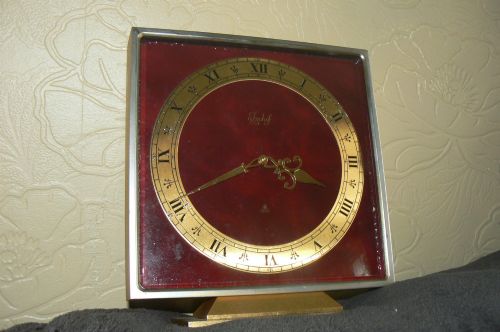
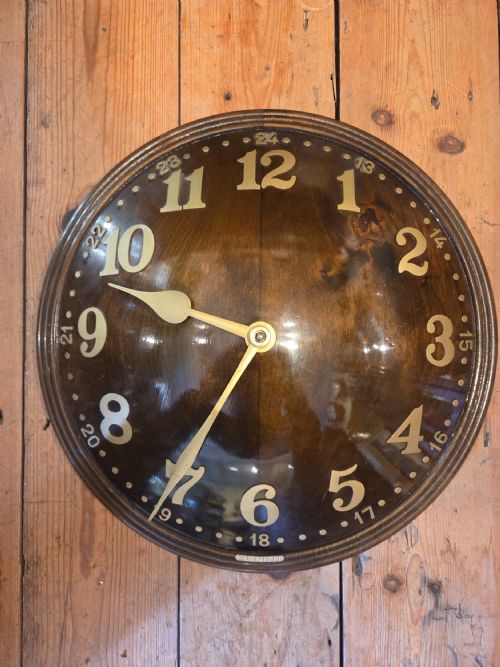
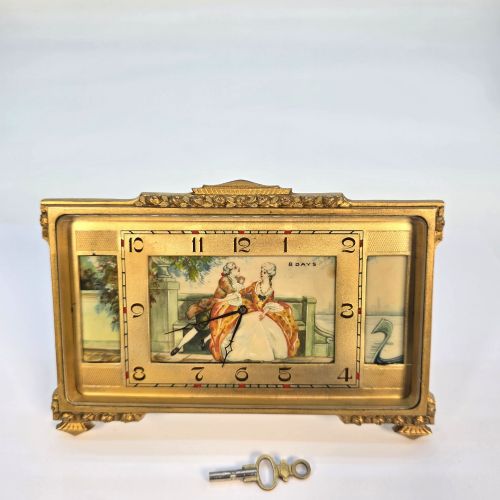
A vintage swiss brass clock brings precise engineering and striking metallic lustre to a desk, mantel or wall.
Vintage Swiss Brass Clock
A vintage swiss brass clock encompasses everything from heavy perpetual motion mantelpieces to portable carriage pieces and railway wall timepieces. Buyers searching for a vintage swiss brass clock will encounter diverse forms, including desk clocks, strut models with easel backs, and skeleton designs.
The pieces on this page span from the nineteenth century through the Edwardian era up to mid-century modern innovations. Carriage clocks and heavy brass mantel designs dominate the earlier periods, while desk and skeleton styles emerge strongly in the 1950s and 1960s.
Origins range from standard production timepieces made for international markets to specialised creations by prominent watchmakers. Whether housed in simple mahogany wall frames or intricate gilt bronze travel cases, each item relies upon Swiss movement traditions.
Materials and construction
Brass serves as the primary structural medium, often appearing in polished, gilt, or bronze-finished variations to form heavy cases and bezels. Glass panels protect delicate dials, while secondary materials such as mahogany, silver, enamel, and leather add decorative contrast to travel and wall models.
Mechanically, movements utilise jewel bearings, such as fifteen-jewel systems, alongside eight-day springs and complex perpetual motion mechanisms driven by atmospheric pressure changes. Artisans incorporated champlevé enamel work and fine metal engraving to embellish the exterior housing of luxury desk and carriage pieces.
Vintage Swiss Brass Clock Retail Price Guide 2026
Typical asking prices for vintage swiss brass clock among the pieces listed under this phrase on Sellingantiques today, from the lower quarter to the upper quarter. They describe what is for sale here now, not the wider market.
Listings feature brass, gilt metal, glass, and mahogany, spanning wall clocks, carriage clocks, and perpetual motion mantel pieces.
Distinguishing quality across the range
The refinement of the internal movement dictates the standard of each piece, moving from standard timekeeping to complex alarm functions, grande sonnerie striking capabilities, and perpetual motion mechanisms. Finishes also separate items, with hand-gilded bronze, intricate enamel work, and heavy silver mounts marking out superior manufacturing.
Preservation of original components, such as leather travel cases, presentation boxes, and factory paperwork, elevates an example. Consistency between the dial signatures, casework materials, and the precision of the underlying Swiss caliber defines the upper tier of the selection.
Imhof·Zenith·Jaeger LeCoultre·Van Cleef and Arpels·J. F. Bautte Et Cie·Mappin and Webb
The Vintage Swiss Brass Clock Glossary
- Carriage clock
- A portable timekeeper designed for travel, typically featuring a rectangular brass case with glazed sides and a carrying handle on top. These originated for officers on the move during the nineteenth century.
- Atmos clock
- A mechanical timepiece manufactured by Jaeger-LeCoultre that operates using thermal expansion of gas within a sealed capsule. Temperature fluctuations wind the mainspring without human intervention.
- Skeleton clock
- A timepiece designed with an open framework that exposes the gears, wheels, and escapement to view. This style emphasises the intricate mechanics of the gear train.
- Champlevé
- An enamelling technique where troughs or cells are hollowed out of the metal surface and filled with vitreous enamel paste before firing. It creates vibrant patterns against a metallic boundary.
- Strut clock
- A small timepiece supported by a hinged prop or easel leg at the rear for display on a flat surface. They frequently appear in silver, gilt metal, or leather travel formats.
Vintage Swiss Brass Clock: Frequently Asked Questions
How do atmos clocks work?
An Atmos clock runs entirely on changes in room temperature and atmospheric pressure. A hermetically sealed chamber expands and contracts with these shifts, winding the mainspring continuously.
This clever mechanical design means the clock requires no manual winding or batteries to maintain continuous operation over many decades.
Where were carriage clocks used?
Carriage clocks originated as portable timepieces for travellers during the nineteenth century. Wealthy individuals packed them into leather travel cases for journeys by coach or train.
Over time, they transitioned from practical travel accessories into decorative mantel ornaments displayed in studies and drawing rooms.
What is a grande sonnerie movement?
A grande sonnerie is a highly complex clock mechanism that strikes both the hours and the quarters automatically as time passes. It often includes an alarm feature for waking or scheduling.
Watchmakers reserve this intricate complication for their finest luxury pieces, requiring exceptional skill to assemble and tune properly.
How should I clean a brass clock case?
Brass cases require gentle dusting with a soft, dry cloth to prevent the accumulation of grit and grime. Avoid harsh chemical polishes that can strip original gilding or lacquer coatings.
Leaving a natural patina intact helps preserve the historical character of older metal surfaces without causing abrasion.