


Vintage Survey Instrument
These vintage survey instrument examples span precision brass theodolites to pocket barometers, offering mechanical ingenuity and tactile historical presence for the study or desk.
Vintage Survey Instrument
When you search for a vintage survey instrument, you are looking at mechanical tools used for measuring land, angles, and atmospheric pressure. These objects encompass complex theodolites, compasses, barometers, and drafting tools that served engineers, surveyors, and explorers.
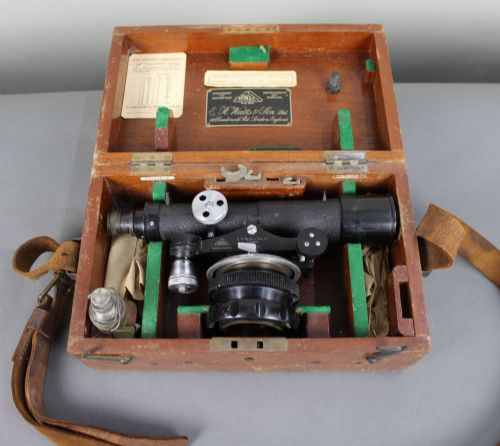
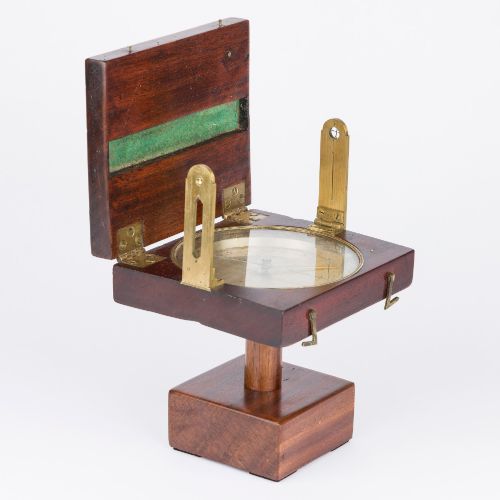
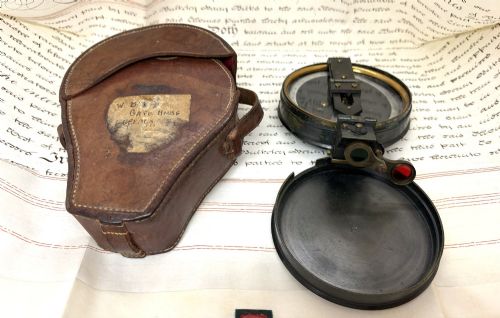
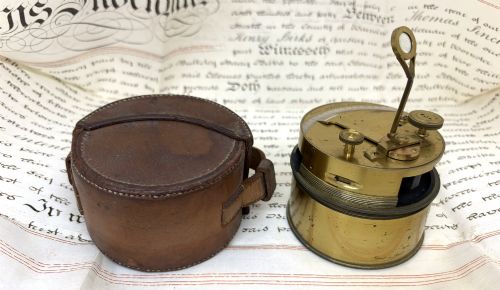
The versions you are most likely to meet on this page originate from the nineteenth and early twentieth centuries. They arrive in forms such as pocket barometers, prismatic compasses, and cased levels, often retaining their fitted wooden transport boxes.
Examples span Georgian, Victorian, and Edwardian periods, reflecting the shifting technological demands of military mapping, maritime navigation, and civil engineering. Each piece demonstrates the specific mechanical approach of its era, from simple boxwood folding rules to complex transit instruments.
How vintage survey instrument pieces were made
Makers built these instruments primarily from heavy brass, polished steel, and silvered metal, selected for durability and precision in the field. Components like dials and lenses incorporated clear glass, whilst housing cases utilised dense hardwoods such as mahogany alongside stitched leather.
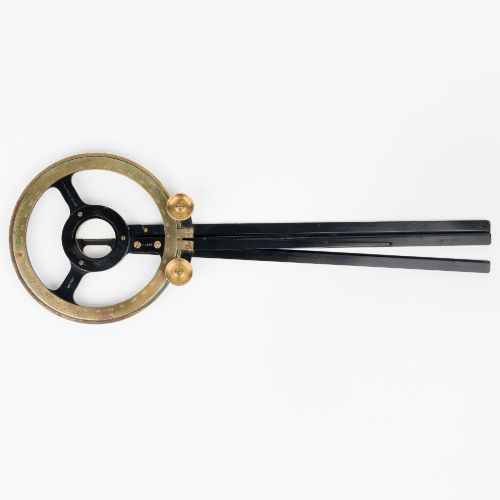
Metal parts underwent casting, lathe-turning, and hand-engraving to produce fine graduation scales and vernier plates. Delicate glass vials formed bubble levels, and specialised makers fitted these elements into custom enclosures designed to withstand rugged travel.
Early surveyors trusted their lives to brass needles floating in tiny glass capsules while traversing uncharted colonial terrain.
What varies in quality in vintage survey instrument examples
Quality separates instruments produced for precise governmental or military survey work from simpler commercial pieces intended for general trade. The reputation of the maker, the complexity of the internal optics, and the fineness of the engraved scales dictate the standing of an item.
The survival of original fitted cases, auxiliary lenses, and matching accessories elevates an instrument. Superior examples exhibit crisp, unpolished signatures on the metalwork and smooth mechanical movement across all adjustable limbs and leveling screws.
G. Davis of Leeds·P. Orr Madras·Baker London·W&S Jones·L Casella & Co·Cooke Troughton & Simms·Stanley London·Elliott Bros of London·Alexander Adie of Edinburgh·Thomas Dunn·W. H. Harling·Negretti & Zambra London·John Lilley & Son London·Cox of Devonport·De Grave & Co·Barker & Son·J Hicks·R. Field & Son Birmingham·WF Stanley
The Vintage Survey Instrument Glossary
- Theodolite
- An precision instrument for measuring horizontal and vertical angles, mounted on a tripod and fitted with a telescope. These complex brass devices formed the backbone of nineteenth-century land mapping.
- Prismatic compass
- A pocket-sized navigation tool that allows the user to view a magnetic bearing and a distant landmark simultaneously. The internal prism reflects the scale while sighting.
- Clinometer
- A tool used for measuring angles of slope, elevation, or depression with respect to gravity. Surveyors and engineers paired these with compasses for topographical work.
- Altazimuth
- An instrument designed to measure both altitude and azimuth coordinates of celestial bodies or terrestrial points. These feature dual axes for horizontal and vertical movement.
- Vernier
- A auxiliary sliding scale that permits reading a fractional part of the main graduated scale. This mechanical device ensures high precision in reading angular measurements.
Vintage Survey Instrument: Frequently Asked Questions
What is a theodolite used for?
A theodolite measures horizontal and vertical angles for land surveying, construction layout, and mapping. Surveyors mounted them on tripods to triangulate positions over large tracts of land.
These instruments combined telescopes with precise graduated brass circles and vernier scales. They enabled engineers to map terrain and establish property boundaries with high accuracy.
How do you read a pocket barometer?
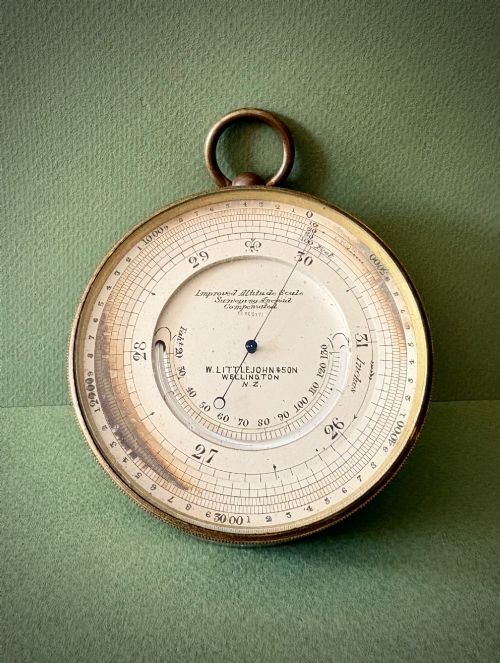
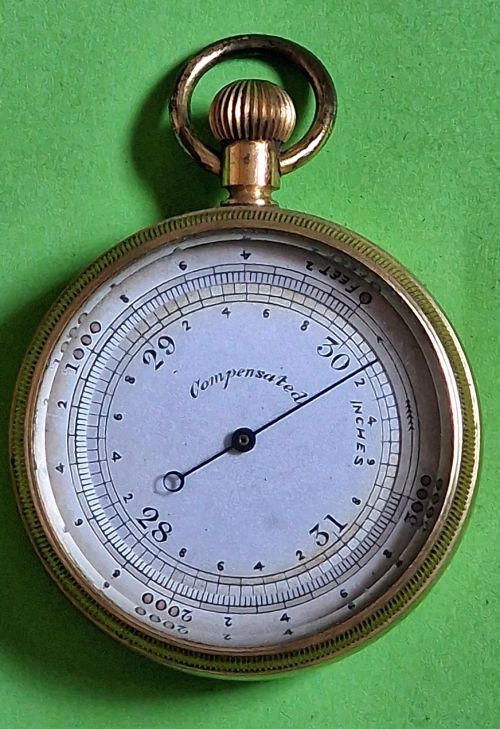
Pocket barometers measure atmospheric pressure to help predict weather changes or calculate altitude during travel. The pointer moves across a graduated dial linked to an internal evacuated metal capsule.
Compensated barometers adjust automatically for temperature variations to ensure accurate readings. Users rotated the outer bezel to record baseline pressure changes throughout the day.
How do I care for brass instruments?
Keep brass instruments away from excessive moisture and direct sunlight to preserve the patinated metal surface. Dust them gently with a soft, dry cloth without applying chemical metal polishes.
Store wooden cases in stable indoor environments with moderate humidity. Protecting the original lacquered or aged finish maintains the historical integrity of the instrument.
How can I tell the age of a compass?
Examine the typography of the dial lettering, the mounting style of the needle, and the materials of the case. Georgian and early Victorian examples often feature hand-engraved silvered brass dials and mahogany boxes.
Makers frequently signed their work directly on the face or inside the lid. Comparing these signatures with known trade operating dates helps narrow the period of manufacture.