
Vintage Style Footstool
A vintage style footstool brings low-profile seating and period character into a room through traditional woods and classic upholstery.
Vintage Style Footstool
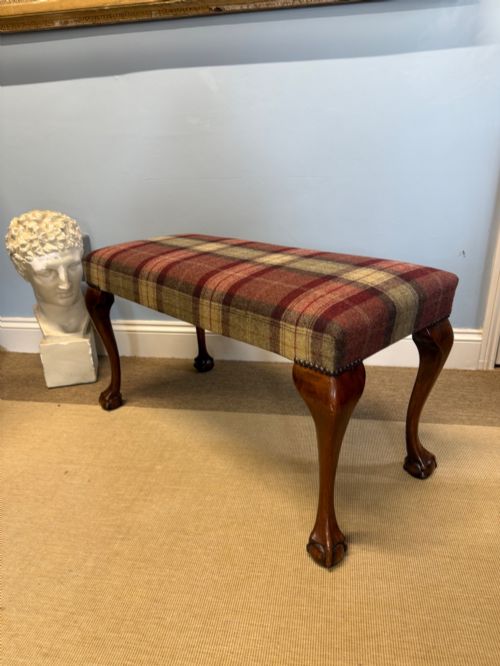
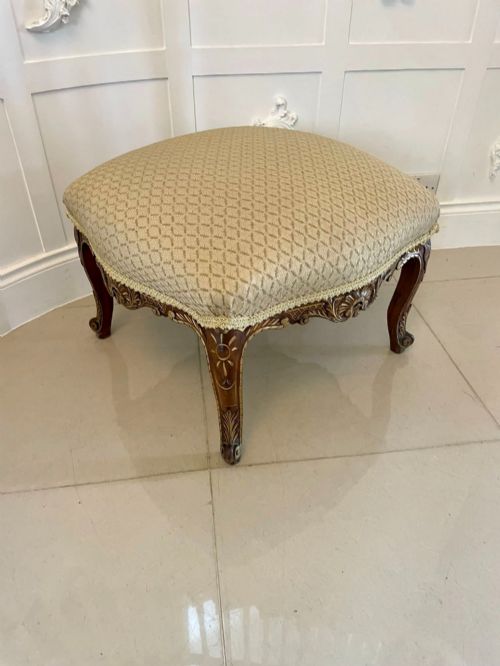
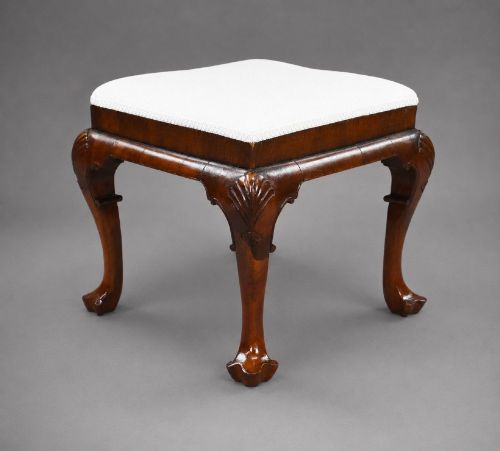
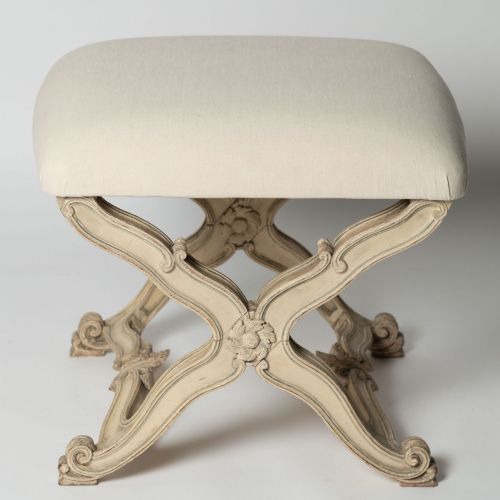
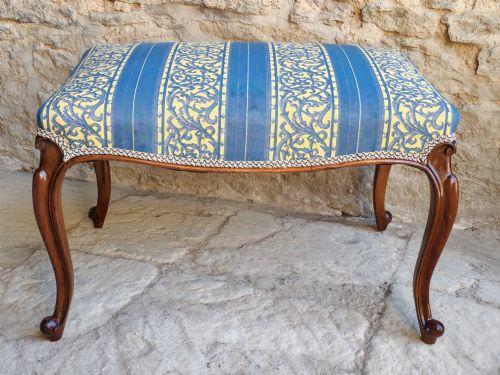
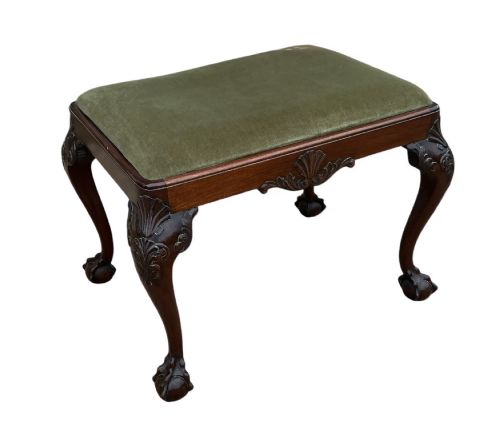
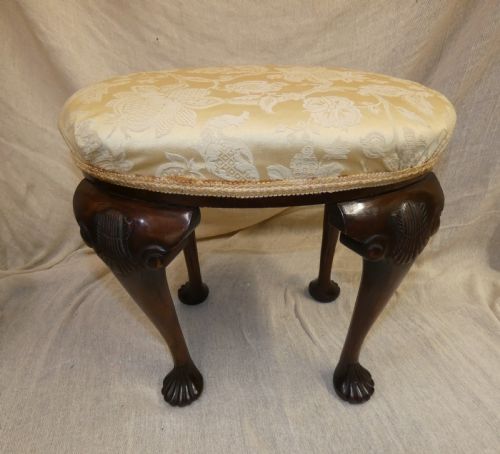
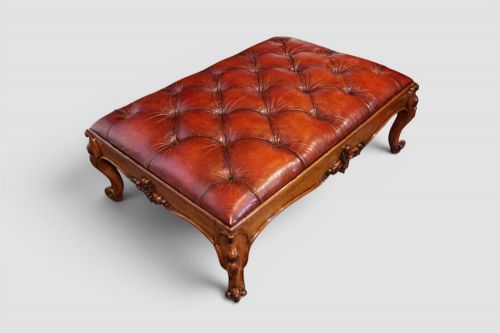
When you search for a vintage style footstool, you encounter a variety of forms ranging from compact dressing table seats to large leather ottomans and low gout stools. The pieces available here span multiple eras, including Victorian, Edwardian, and Regency periods, alongside revival designs that emulate earlier centuries.
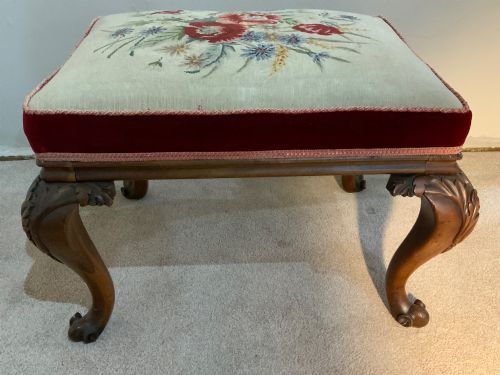
The most common formats on this page are walnut and mahogany stools featuring upholstered tops, needlework, or buttoned leather. You will also find specialised pieces such as piano stools, long benches, and low footstools designed for domestic comfort.
Materials and construction
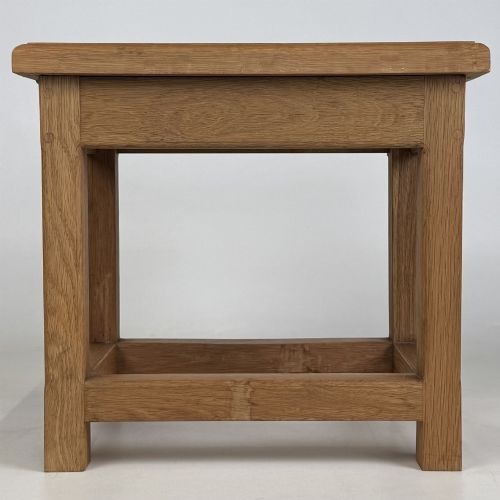
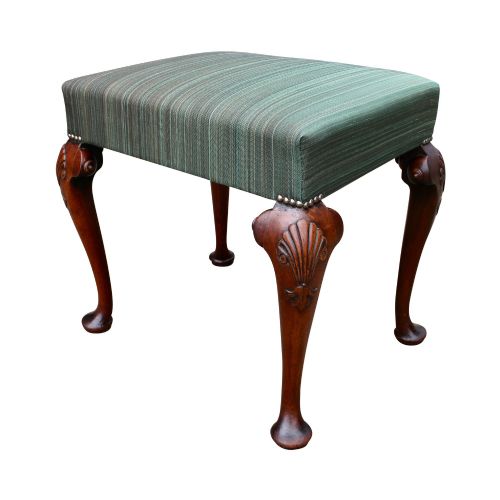
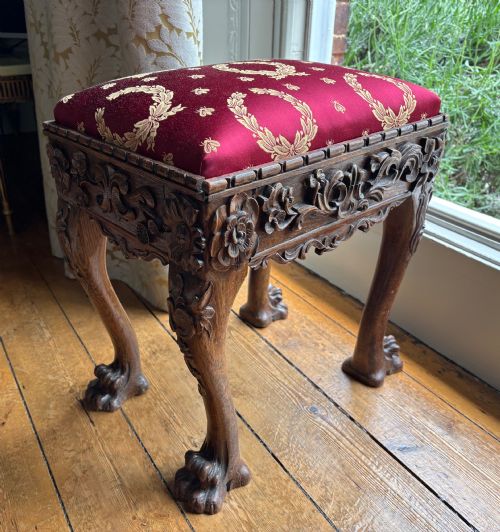
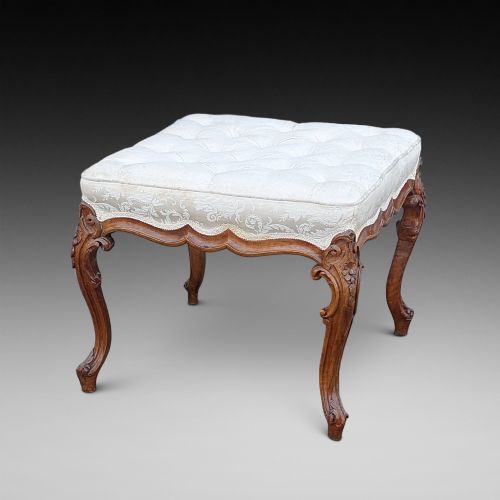
Cabinetmakers utilised hardwoods such as walnut, mahogany, oak, and beech to build sturdy frames, occasionally adding giltwood or brass details for decorative effect. Turning, carving, and cabriole legs define the woodwork across these periods.
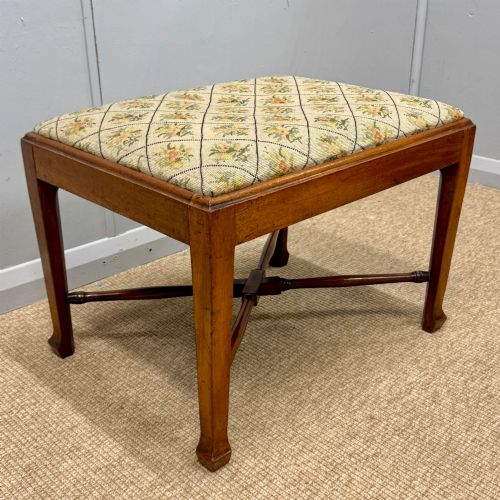
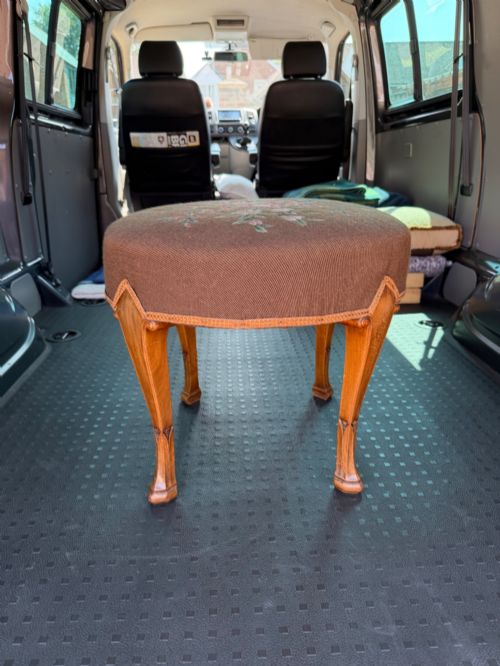
Upholstery relies on traditional textiles, wool, fabric, and hand-dyed leather, sometimes finished with buttoning or needlepoint. Caning also appears on specific tabletop or stool combinations from the early twentieth century.
Listings feature walnut, mahogany, and oak frames alongside leather, wool, and needlework textiles.
Assessing quality and build
The caliber of a vintage style footstool rests on the crispness of the timber carving, the stability of the frame joints, and the integrity of the secondary woods underneath. Heavier timber frames with tight joinery demonstrate superior workshop practice.
Upholstery finish and leather quality also determine the standard of the piece, with hand-dyed finishes and detailed needlework reflecting higher artisan input than standard commercial re-coverings.
Omersa For Liberty·Liberty & Co·Howard & sons
The Vintage Style Footstool Glossary
- Cabriole leg
- A furniture leg that curves outward at the knee and tapers inward toward the foot, often ending in a pad or scroll. This form was popular during the eighteenth century and later revival periods.
- Gout stool
- A specialised adjustable footstool designed to elevate and support the foot of someone suffering from gout. Edwardian examples often include a mechanical pivoting mechanism.
- Buttoned leather
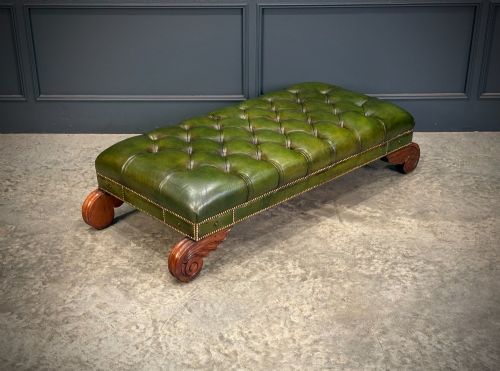
- Upholstery secured with deep indentations held by buttons arranged in a geometric diamond pattern. This technique provides tension and a padded surface on large ottomans and club stools.
Vintage Style Footstool: Frequently Asked Questions
What is a vintage style footstool used for?
These pieces serve as functional footrests, low seating options, and impromptu coffee tables depending on their dimensions and upholstery. Larger leather ottomans work well centrally in a room, while smaller dressing stools fit neatly beneath tables.
Compact gout stools and piano stools offer specific height adjustments or angled surfaces tailored for prolonged seating or foot elevation.
How do I identify a Victorian footstool?
Victorian examples typically feature dark hardwoods like walnut or mahogany, often combined with heavy buttoned leather or needlework upholstery. Cabriole legs, turned supports, and robust frames are common hallmarks of this era.
Construction details such as hand-cut joinery and traditional stuffing materials help separate mid to late nineteenth-century pieces from later reproductions.
Are these footstools suitable for daily use?
Solid hardwood frames and sturdy joinery ensure these stools handle regular weight and movement in a modern home. Many incorporate durable leathers or tight wool textiles suited for high-traffic rooms.
Checking the internal webbing and padding helps confirm whether an upholstered top requires reinforcement before heavy daily sitting.
How do I date a wooden stool?
Dating relies on examining the timber species, tool marks on unexposed wood, and stylistic revival cues such as Queen Anne or Chippendale proportions. Secondary woods inside the frame often reveal the true period of manufacture.
Hardware, screw types, and stretcher configurations provide further clues to distinguish an original nineteenth-century piece from an Edwardian or later revival adaptation.