




Vintage Storage Bag
A vintage storage bag brings nomadic tribal craftsmanship into a modern interior, offering both historical textile art and practical utility.
Vintage Storage Bag
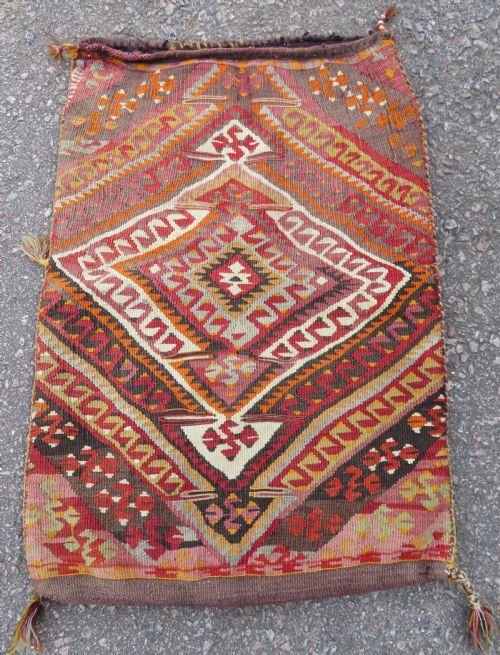
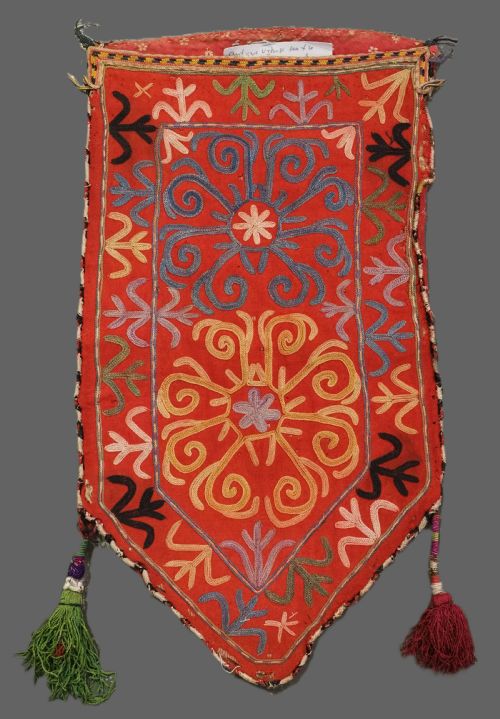
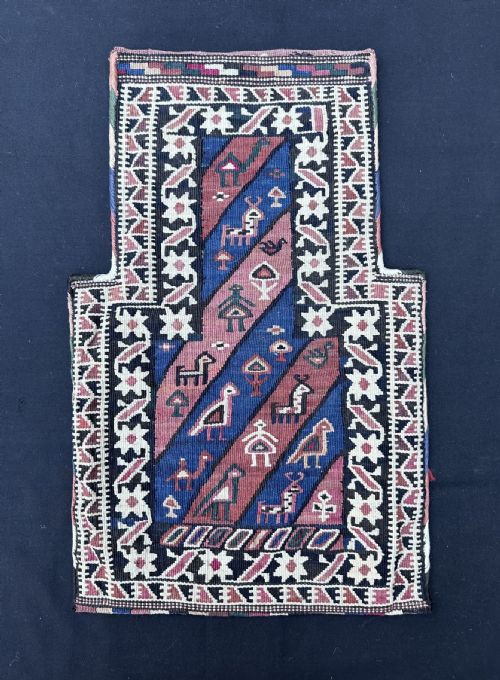
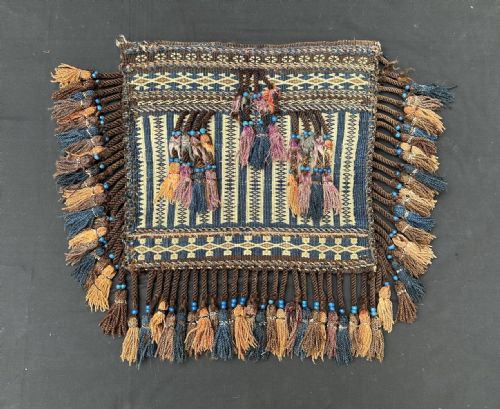
A vintage storage bag represents the utilitarian textile art of nomadic and tribal groups across Central Asia, Persia, and Anatolia. These pieces served practical functions in tribal camps, holding grain, salt, clothes, or household goods.
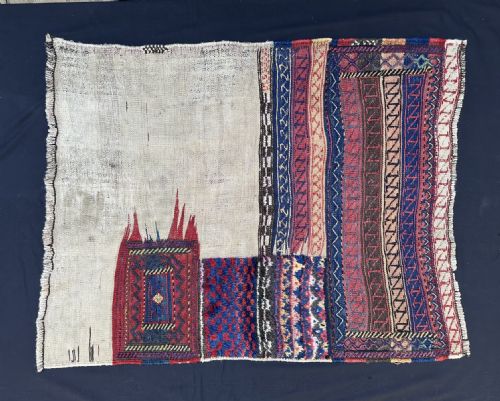
Buyers encounter regional forms such as the large chuval, the smaller torba, or the specialised spindle bag and salt-bag. Many examples retain original plain-weave backs or hanging loops from their daily domestic deployment.
Originating from tribal confederations including the Yomut, Tekke, Ersari, Baluch, and Bakhtiari, these storage pieces reflect distinct weaving traditions passed down through generations.
Wool, Dyes, and Loom Work
Weavers utilised hand-spun wool and occasionally goat hair to construct durable textiles capable of enduring the rigorous demands of nomadic life. Natural dyes provided rich, enduring colour palettes that evolved gracefully over decades of exposure.
Complex construction techniques combined pile knotting with flatweave bands, creating structured vessels designed to hang inside tents or pack securely during migration.
Vintage Storage Bag Retail Price Guide 2026
Typical asking prices for vintage storage bag among the pieces listed under this phrase on Sellingantiques today, from the lower quarter to the upper quarter. They describe what is for sale here now, not the wider market.
Current listings feature nomadic storage pieces spanning the mid-nineteenth century to the early twentieth century, originating from Persian, Afghan, and Turkmen tribes.
Weaving Density and Design Integrity
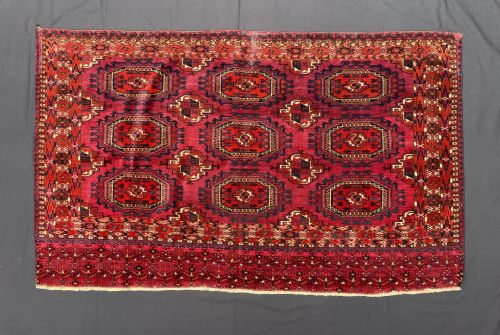
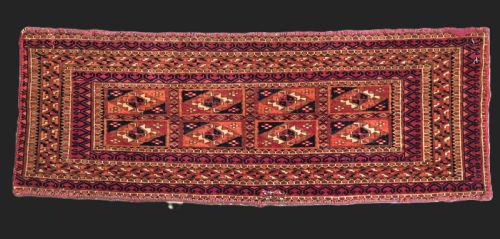
Quality separates through the density of the weave, the clarity of tribal motifs like guls, and the precision of geometric layouts. Tighter knotting and finely executed repeating patterns distinguish superior examples from standard utility pieces.
Condition plays a role, particularly the preservation of original plain-weave backs, hanging loops, and the vibrancy of natural dye wools. Pieces retaining complete structures demonstrate higher integrity.
The Vintage Storage Bag Glossary
- Chuval
- A large Turkmen storage bag traditionally used for bedding and household possessions within the felt tent.
- Torba
- A smaller horizontal storage bag produced by Turkmen and other tribal groups, often hung on the interior lattice walls of a yurt.
- Gul
- A primary medallion motif repeated across Turkmen carpets and storage bags, identifying specific tribal groups and lineages.
- Mafrash
- A rectangular storage bag or trapper face, frequently woven in pile or flatweave techniques.
- Igsalyk
- A specialised spindle bag utilised by nomadic weavers to store spinning implements and wool roving.
Vintage Storage Bag: Frequently Asked Questions
What were vintage storage bags used for?
Nomadic tribes utilised these bags to store grain, salt, clothing, and bedding inside tents or during seasonal migrations.
Their robust construction protected domestic goods from damp ground and dust while organising household supplies.
How do I hang a storage bag on the wall?
Many bags feature original hanging loops along the top edge which can accommodate a slim metal or wooden rod for secure display.
Alternatively, conservation-grade Velcro or custom mounting sleeves stitched by a textile restorer support heavier pile pieces safely.
How do I tell different tribal designs apart?
Weavers incorporated distinct structural motifs, such as the repeating octagonal guls of Tekke groups or the banded flatweaves of Yomut tribes.
Palette choices and specific border patterns further separate pieces originating from Afghanistan, Persia, and Turkmenistan.
Are these bags sturdy enough for daily use?
While historic textiles tolerate gentle handling and decorative display, centuries of age make them unsuited for heavy modern storage.
Light use as wall hangings or decorative placement preserves the structural integrity of the hand-spun wool and natural dyes.