
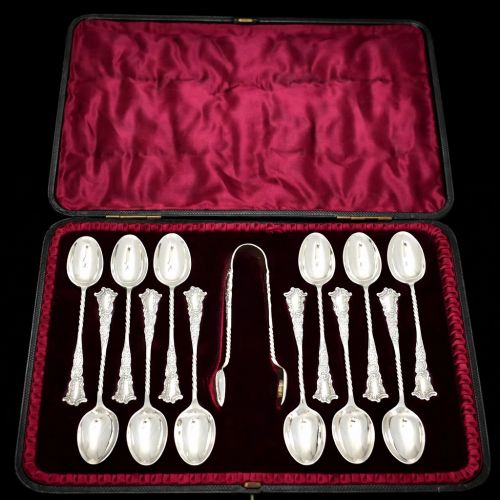


Vintage Sterling Silver Tongs
Vintage sterling silver tongs bring practical elegance to the table, offering refined forms for serving sugar, asparagus, and pastries across multiple centuries.
Vintage Sterling Silver Tongs
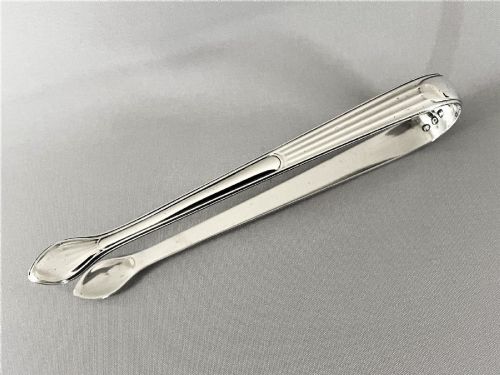
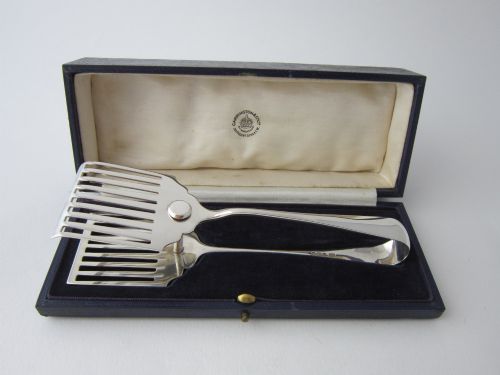
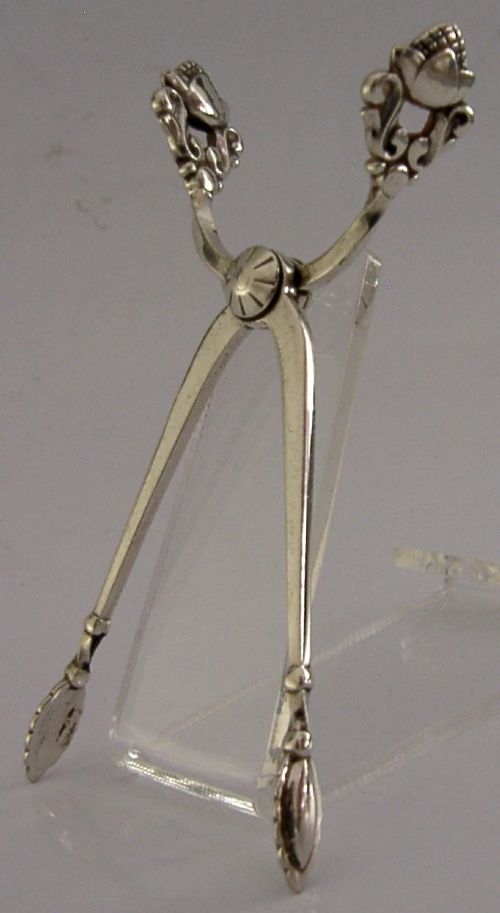
Vintage sterling silver tongs encompass a wide array of specialised serving implements, from small sugar nips to substantial asparagus and pastry tongs. Buyers seeking vintage sterling silver tongs will encounter pieces ranging from ornate Victorian and Georgian designs to sleek mid-century Danish modern creations.
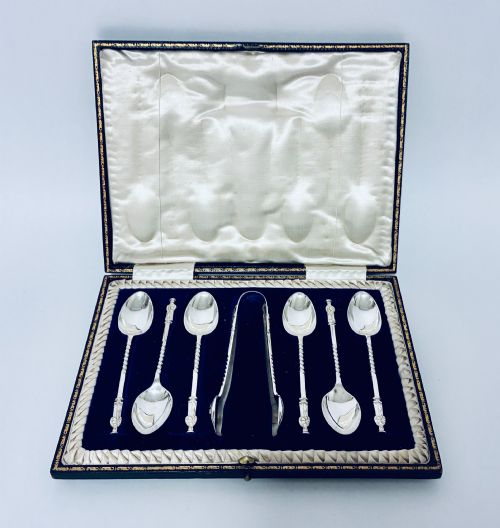
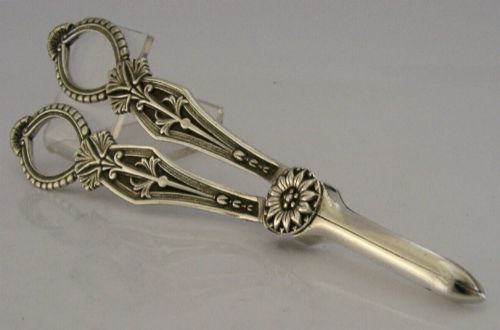
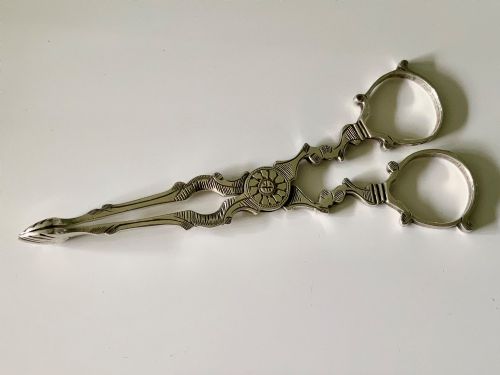
The selection on this page includes specific forms like sugar tongs, bar tenders tongs, and grape shears alongside sets paired with apostle spoons. Origins span various British assay offices alongside notable international makers, reflecting centuries of dining traditions.
Materials and construction
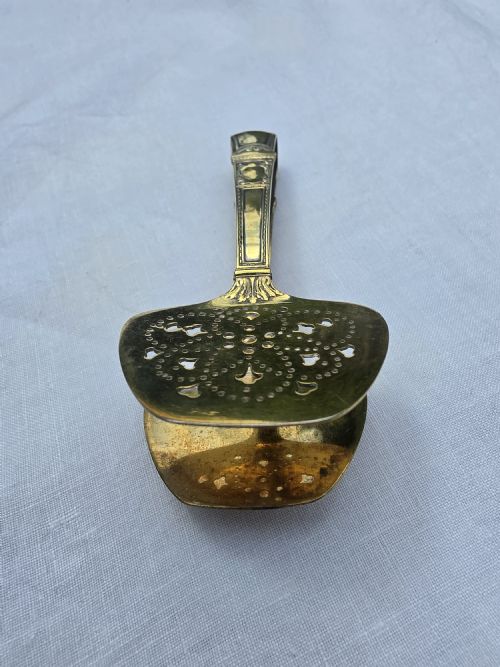
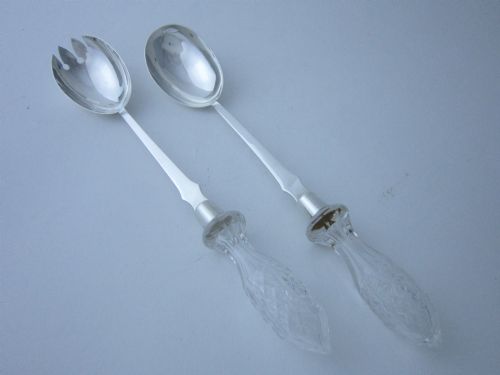
Items in this category are fashioned primarily from sterling silver, occasionally featuring silver gilt finishes for a rich golden lustre. Certain cased sets and fitted boxes incorporate complementary materials such as velvet, silk, leatherette, and cut glass.
Manufacturing methods combine traditional hand-casting and forging techniques seen in 18th-century and Georgian pieces with later patterned stamping and modernist silversmithing. Spring mechanisms and pivot joints are engineered to maintain tension across decades of use.
Some bar tenders required specialised tongs just for ice, proving that Victorian cocktail hours were taken with the utmost seriousness.
Assessing quality and craftsmanship
Quality in these implements rests on the gauge of the silver, the crispness of chased or cast ornamentation, and the enduring spring of the arms. Superior examples maintain balanced weight in the hand and precise alignment at the tips.
Pieces bearing clear hallmarks from recognised makers or workshops command particular interest for their documented provenance and superior finishing. The integrity of any silver gilt layer and the snug fit of fitted presentation cases further distinguish finer items.
Bateman Family·Tiffany and Company·Georg Jensen·Josiah Williams and Co·Garrard and Co·Robert Stebbings
The Vintage Sterling Silver Tongs Glossary
- Sterling silver
- An alloy comprising ninety-two point five percent silver and seven point five percent other metals, typically copper, chosen for durability. This standard is denoted by specific hallmarks on British silver.
- Silver gilt
- Sterling silver that has been coated with a thin layer of gold through chemical or electrolytic processes. This technique adds a warm dual-tone appearance often utilised on serving utensils.
- Sugar nips
- A specialised, smaller variety of tongs designed specifically for grasping sugar lumps. They frequently feature decorative pierced bowls or shell-shaped terminals.
- Hallmark
- An official stamp applied by an assay office indicating the purity of the metal, the maker, and the year of production. These marks provide definitive historical context for antique silver.
- Asparagus tongs
- Long, broad utensils engineered to grip delicate stalks securely without crushing them. They represent a specialised form of Victorian and Edwardian dining silver.
Vintage Sterling Silver Tongs: Frequently Asked Questions
How do I clean antique silver tongs?
Use a soft microfiber cloth with a dedicated silver polish, applying gentle pressure to avoid flattening delicate chasing or hallmarks. Rinse thoroughly with warm water and dry immediately to preserve the metal's finish.
Avoid abrasive cleaners or harsh dipping solutions that can strip away desirable patina or damage any silver gilt surfaces present on the piece.
Can I use these tongs for daily dining?
Most vintage sterling silver tongs are structurally robust enough for regular use at the dining table or bar. Their sturdy construction handles sugar cubes, pastries, and small side dishes quite capably.
Hand washing is essential after every use to prevent food acids from pitting the silver surface. Storing them in lined boxes helps prevent accidental scratching.
How do I date Georgian and Victorian tongs?
Examine the stamped hallmarks on the inner or outer arms, which include date letters and assay office symbols that correspond to specific years. Monarch duty marks and maker's marks also assist in narrowing down the period of manufacture.
Stylistic cues such as bright-cut engraving in the Georgian era or heavy floral casting in the Victorian period provide additional chronological clues.
What is the difference between sugar tongs and nips?
Sugar tongs generally feature two sprung arms connected at a pivot or arch, designed for general sugar lump service. Sugar nips often resemble miniature scissors with shaped finger loops and pivoted blades.
Both serve the same fundamental purpose at the tea table but reflect different stylistic preferences across the eighteenth and nineteenth centuries.