



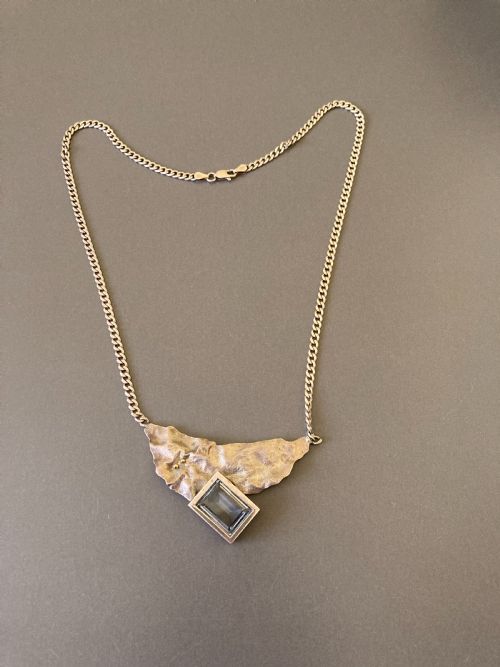

Vintage Sterling Necklace
A vintage sterling necklace brings together period metalwork and stones, ranging from heavy watch chains to enamelled pendants.
Vintage Sterling Necklace
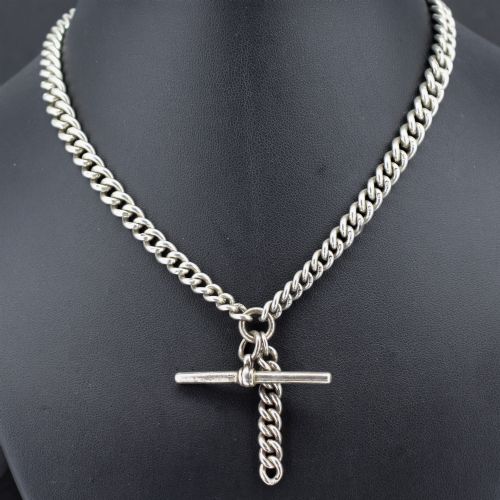
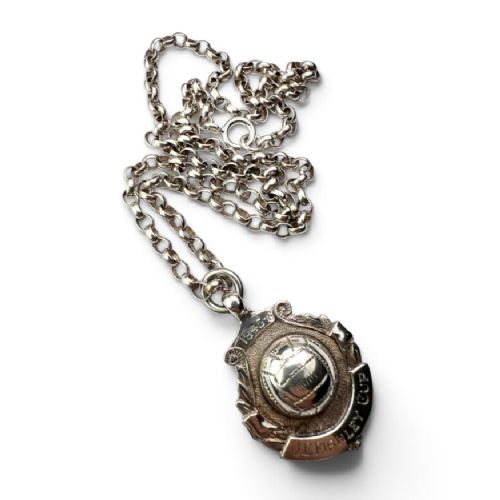
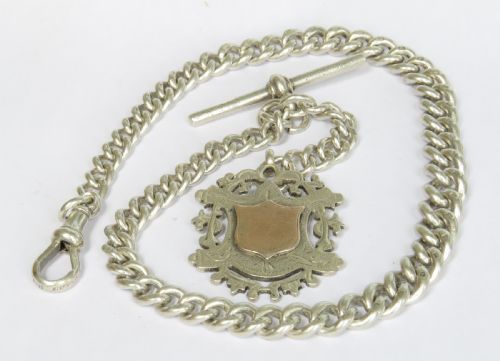
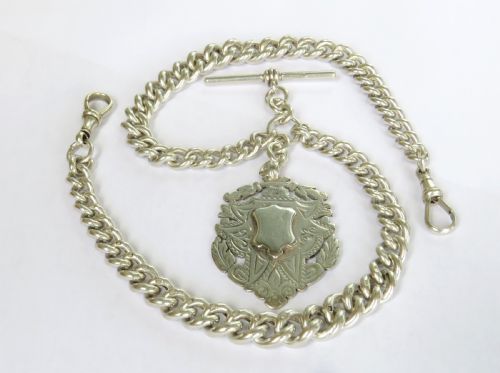
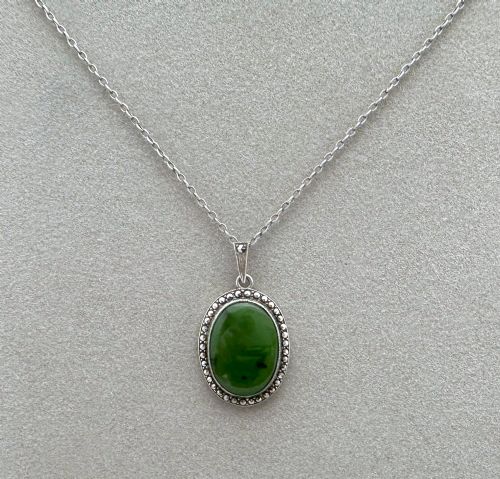
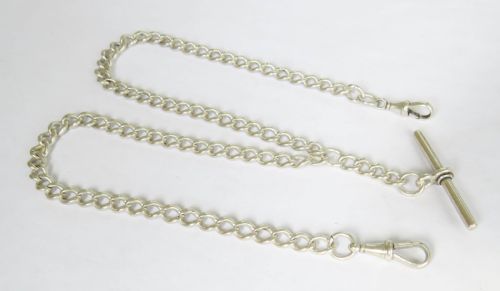
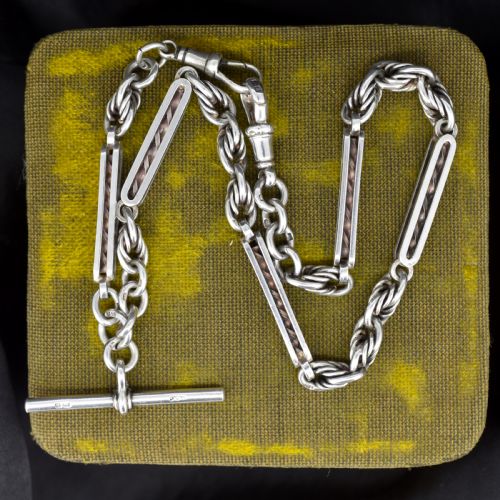
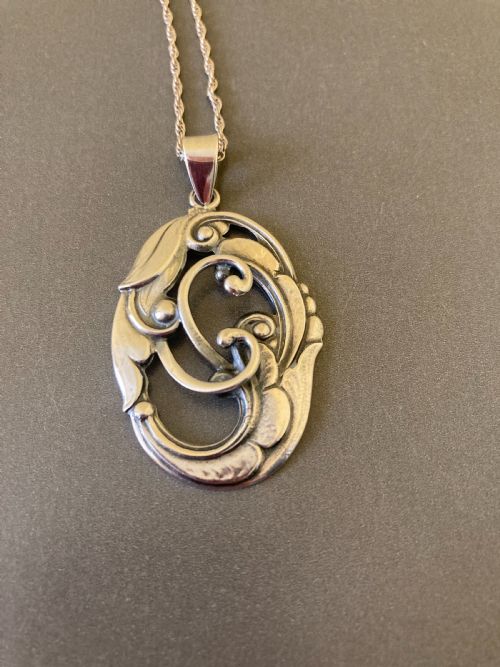
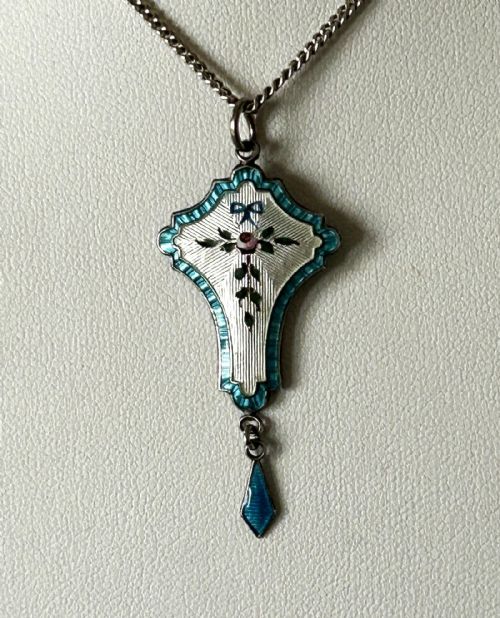
A vintage sterling necklace spans forms from heavy pocket watch chains repurposed as neckwear to distinct pendants set with stones. The selection includes long curb link chains, double albert chains fitted with t-bars, and drop pendants.
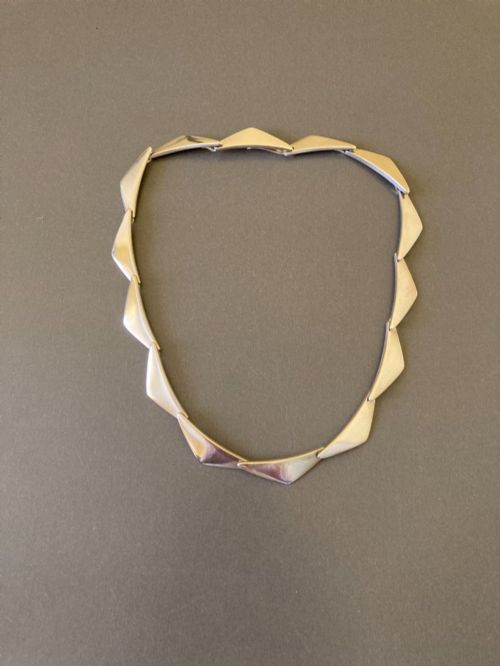
The objects cross multiple decades and design movements, moving from Victorian and Edwardian iterations through Art Nouveau and Art Deco periods to mid-century Scandinavian modernism.
Buyers encounter everything from simple silver links to intricate lockets, crosses, and naturalist motifs incorporating enamel or glass.
How they were made
Metals rely primarily on sterling silver and continental silver, shaped into trombone links, curb links, and delicate filigree wirework.
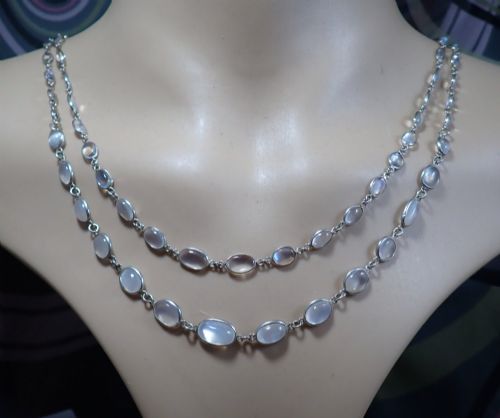
Gemstones and organic materials such as amber, amethyst, moonstone, opal, turquoise, and marcasite are hand-set into bezels or mounted alongside enamel and butterfly wing panels.
Vintage Sterling Necklace Retail Price Guide 2026
Typical asking prices for vintage sterling necklace among the pieces listed under this phrase on Sellingantiques today, from the lower quarter to the upper quarter. They describe what is for sale here now, not the wider market.
Materials appearing across the current selection include sterling silver paired with amber, amethyst, moonstone, opal, and enamel.
What varies in quality
Quality rests in the precision of the metalwork, whether links are uniformly cast and securely joined or filigree is executed with fine gauge wire. Maker attribution also separates standard commercial production from workshop pieces.
The choice and treatment of set materials dictate distinction, from well-matched natural stones and vibrant enamel to simpler glass inserts.
Georg Jensen·G. Hoppe·WH Haseler·Liberty and Co·Thomas L Mott
The Vintage Sterling Necklace Glossary
- Albert chain
- A heavy watch chain originally designed to secure a pocket watch to a waistcoat, now frequently worn as a necklace. These chains often feature solid curb or trombone links.
- Marcasite
- Small, faceted pyrite stones polished and set in silver to create a sparkling, metallic surface texture. This technique was popular in Victorian and Art Deco jewellery.
- Filigree
- Delicate jewellery work formed from fine twisted threads of silver soldered together in openwork patterns. It requires high skill to execute without distortion.
- Dog clip
- A spring-loaded clasp shaped like a small hound restraint, commonly used on watch chains and long necklaces to attach fobs or pendants.
- T-bar
- A short transverse bar attached to the centre of a watch chain, traditionally tucked through a buttonhole.
Vintage Sterling Necklace: Frequently Asked Questions
How do I wear an albert chain as a necklace?
An albert chain can be fastened around the neck using its original dog clips, with the t-bar hanging as a decorative pendant drop in the centre.
These heavier chains sit closely at the collarbone or fall slightly lower depending on the original length of the piece.
What is the difference between an Edwardian and a Victorian pendant?
Victorian pendants tend to be heavier, featuring substantial silver lockets and darker stones like emeralds or heavy engraving.
Edwardian pieces often adopt lighter, airier styles influenced by Art Nouveau curves, incorporating enamel and delicate stone settings.
How can I identify mid-century Scandinavian pieces?
Scandinavian modern pieces from the mid-century focus on clean modernist silhouettes and sculptural silver forms rather than ornate historical revival motifs.
Signatures or maker marks often accompany these cleaner designs, distinguishing them from earlier antique work.
Are these chains and pendants hallmarked?
Many pieces carry standard silver marks such as 925 or specific antique assay office stamps indicating the year of manufacture and origin.
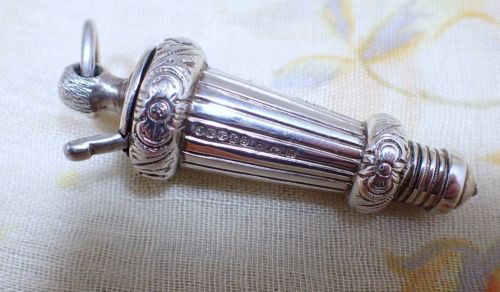
Older watch chains and custom pendants may show marks on individual links, dog clips, or the reverse of the main pendant frame.