




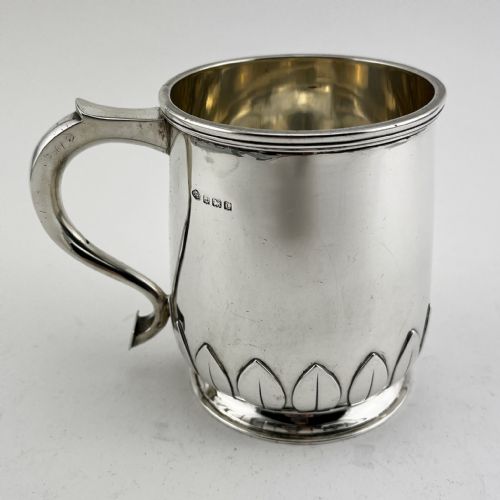
Vintage Sterling Mug
A vintage sterling mug brings genuine silver weight and domestic history to a desk or display shelf.
Vintage Sterling Mug
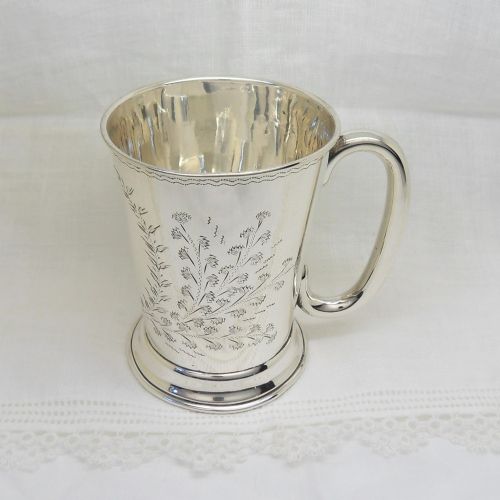
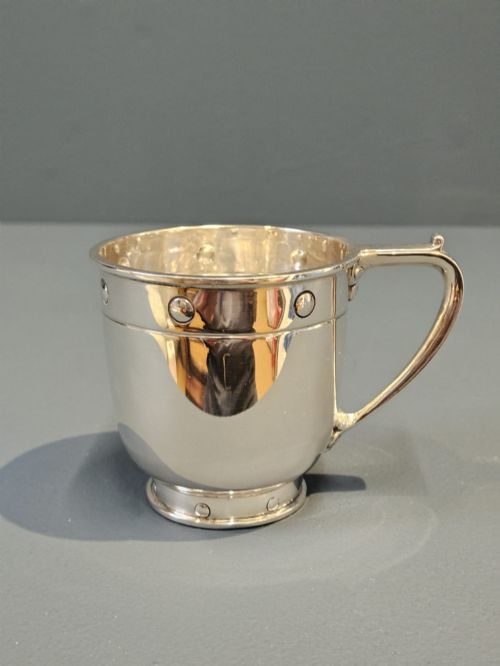
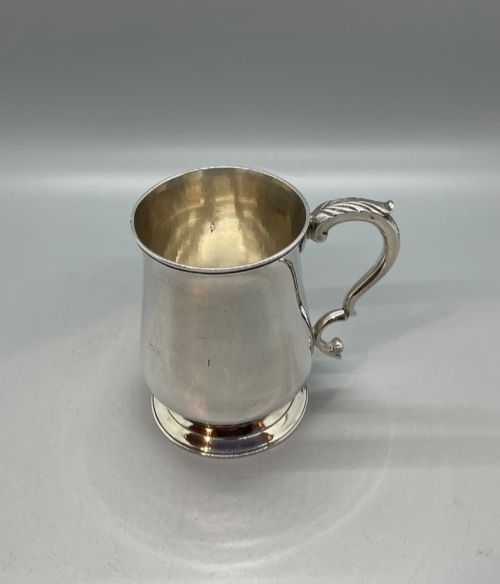
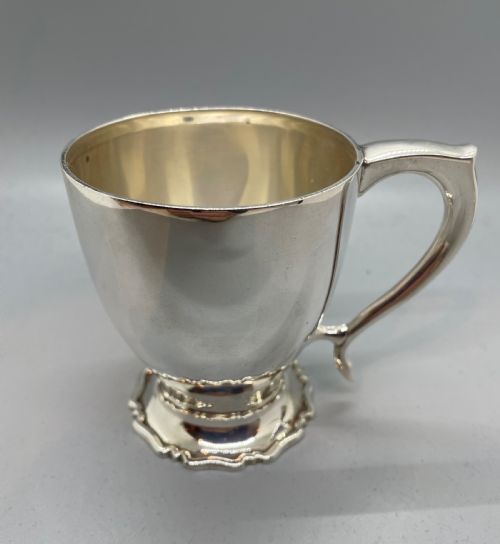
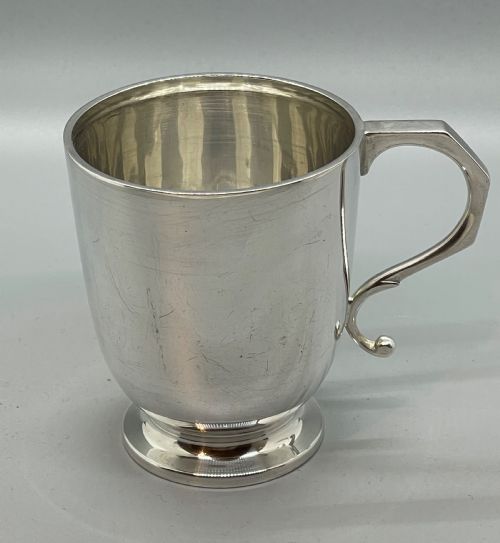
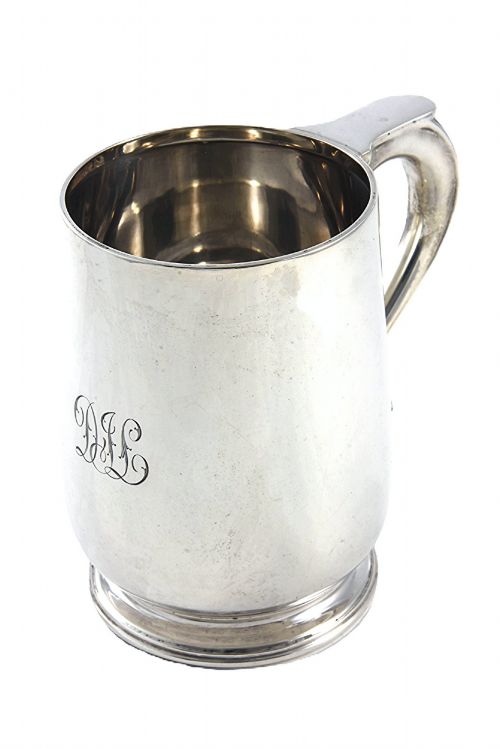
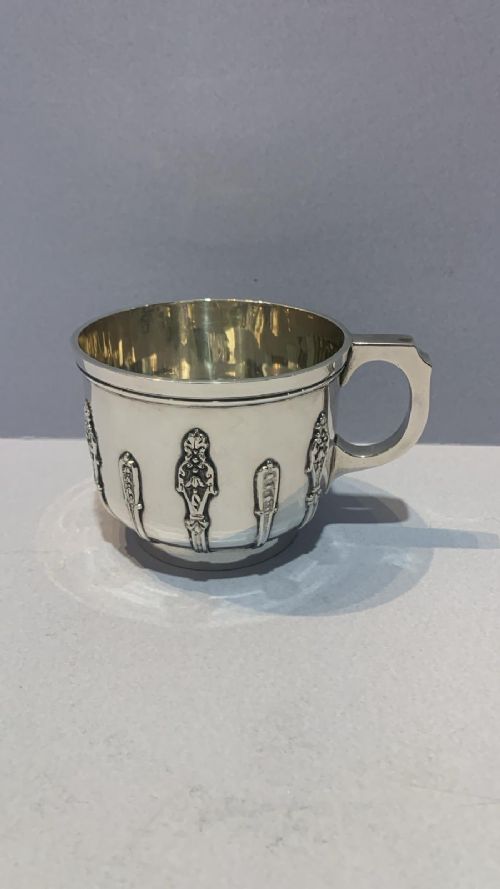
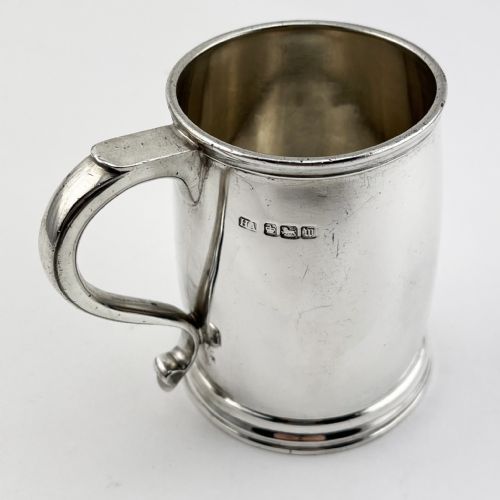
A vintage sterling mug encompasses everything from pint tankards to small christening cups intended for children. The pieces span periods from the Georgian era through Victorian, Edwardian, and George V reigns up to mid-century designs. Buyers encounter smaller christening vessels alongside larger drinking tankards intended for daily use or barware.
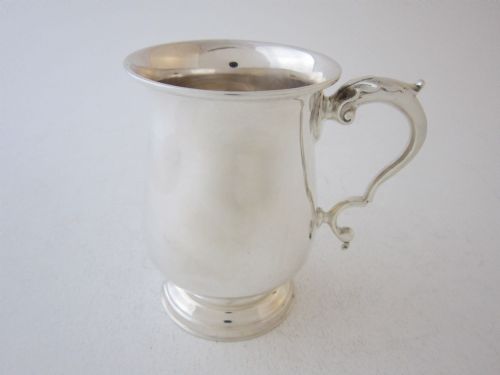
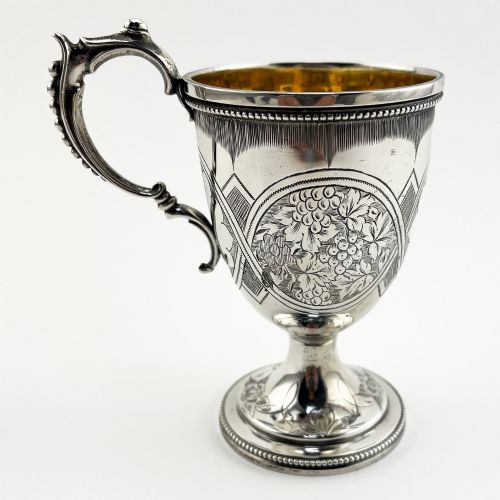
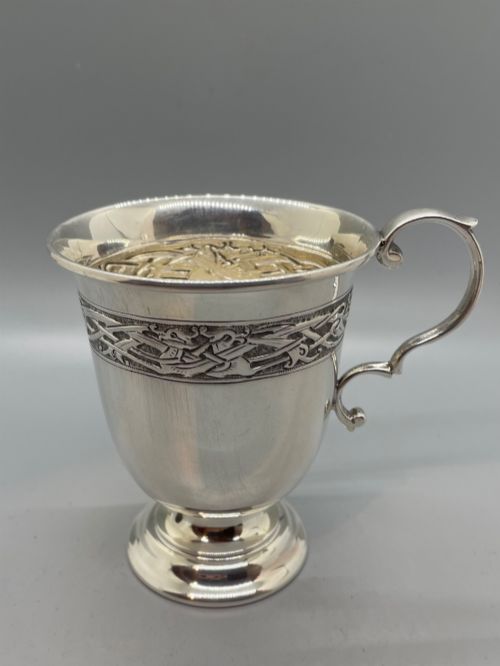
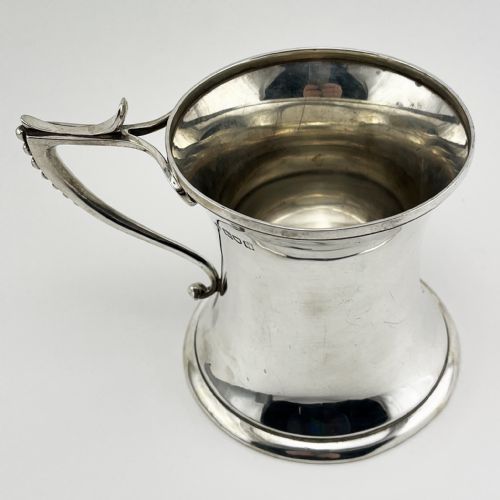
Most examples appear as plain cylindrical or baluster forms, while others carry detailed scroll handles and engraved decoration. The selection includes specific functional items such as lidded tankards and boxed presentation sets. Origin cities like London, Birmingham, Sheffield, and Chester stamp their marks across these drinking vessels.
Materials and construction methods
Silversmiths constructed these drinking vessels primarily using solid sterling silver, occasionally applying gilt or silver gilt to interior surfaces. Makers shaped the metal through raising and spinning techniques, often attaching cast handles with scroll or plain profiles. Some specialised pieces integrate elements of leather and silk, particularly within fitted presentation cases.
Surface finishes vary from plain polished bodies to heavy engraved patterns characteristic of specific stylistic periods. Workshops utilised traditional hammering, chasing, and engraving to finish the exteriors of both pint mugs and smaller christening cups.
Vintage Sterling Mug Retail Price Guide 2026
Typical asking prices for vintage sterling mug among the pieces listed under this phrase on Sellingantiques today, from the lower quarter to the upper quarter. They describe what is for sale here now, not the wider market.
Listings feature sterling silver and solid silver materials across periods spanning from the eighteenth century to the mid-twentieth century.
Assessing quality in silver mugs
The distinction between standard utility items and superior examples lies in the thickness of the silver gauge and the crispness of the maker marks. Heavier grams provide a substantial feel in the hand, separating robust drinking vessels from thinner commemorative pieces. The balance of the handle and the precision of any hand-engraving reveal the skill of the original workshop.
Provenance and original presentation context elevate certain pieces above standard production. Surviving fitted boxes and recognizable maker attributions add historical depth to individual drinking vessels without altering their primary silver content.
Barker Bros·R E Stone·Tiffany and Co·William Bateman·Mappin and Webb
The Vintage Sterling Mug Glossary
- Sterling silver
- A standard alloy consisting of ninety-two point five percent silver and seven point five percent other metals, typically copper. This composition ensures durability for functional items while maintaining a bright metallic lustre.
- Christening mug
- A small silver cup traditionally presented to a child on the occasion of a christening or birth. These pieces frequently feature engraved initials, dates, or decorative motifs.
- Tankard
- A tall drinking vessel with a single handle, traditionally used for beer or ale. Versions in this category include pint capacities and lidded variants.
- Baluster form
- A shape characterised by a rounded lower body that tapers upward toward a flared rim. This profile draws inspiration from classical architectural columns.
- Gilt
- A thin layer of gold applied to the interior surface of a silver vessel. This technique protects the silver from acidic drinks and adds a warm interior tone.
- Hallmark
- A series of stamped symbols indicating the metal standard, assay office, maker, and year of manufacture. These marks provide the definitive history of each piece.
Vintage Sterling Mug: Frequently Asked Questions
What is a sterling mug used for?
These pieces function as decorative desk accessories, display items, or traditional vessels for holding beverages. Larger pint versions suit everyday use for cold drinks.
Smaller christening mugs serve primarily as commemorative gifts or cabinet displays due to their compact scale.
How do I clean a silver mug?
Maintenance requires specialised silver polish and a soft cloth to remove tarnish without abrading the metal surface. Regular gentle wiping preserves the original polish and hallmark details.
Avoid harsh chemical dips that strip away the natural patination built up over decades of existence.
How can I tell the age of a mug?
Assay office marks and date letters stamped directly into the silver provide the exact year of manufacture. Stylistic clues such as Rococo scroll handles or Art Deco geometry also point toward specific decades.
Comparing the form against known periods like the Georgian or Edwardian eras narrows down the timeframe.
Are these mugs safe for drinking?
Solid silver possesses natural antimicrobial properties that make the metal safe for holding liquids. Gilt interiors help prevent any metallic taste when consuming beverages.
Buyers should inspect the interior for cleanliness and ensure no damage compromises the structural integrity before use.