

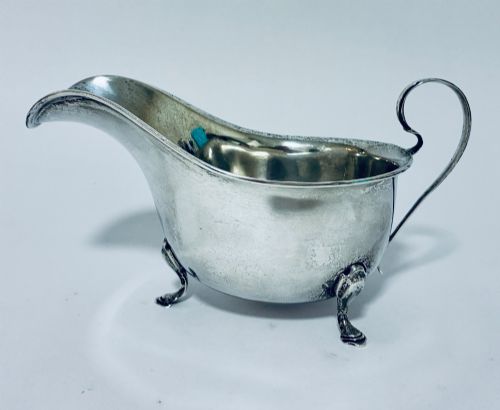
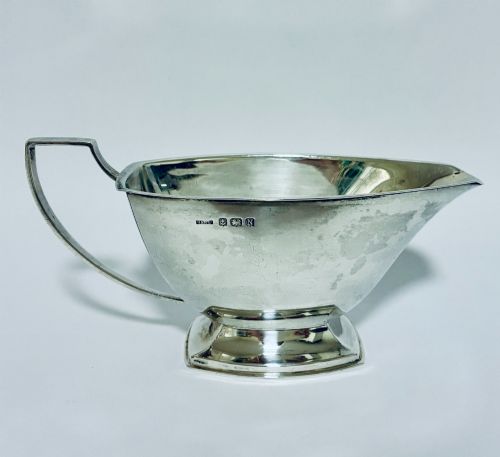
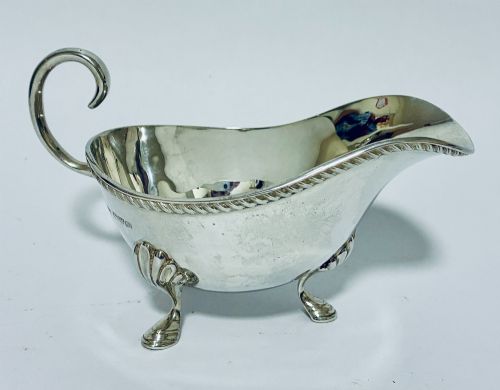
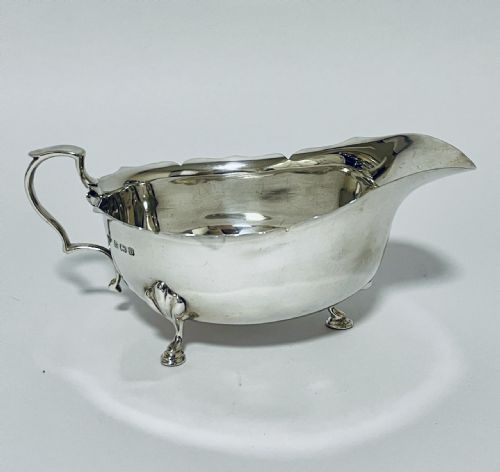
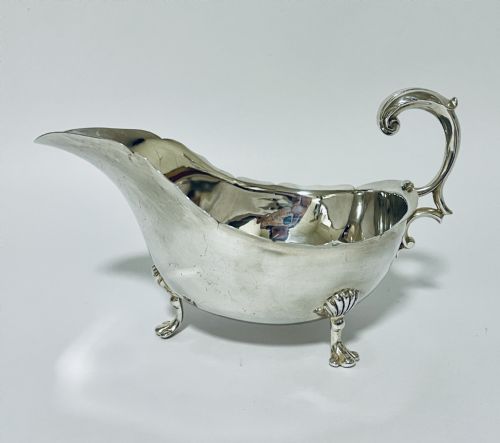

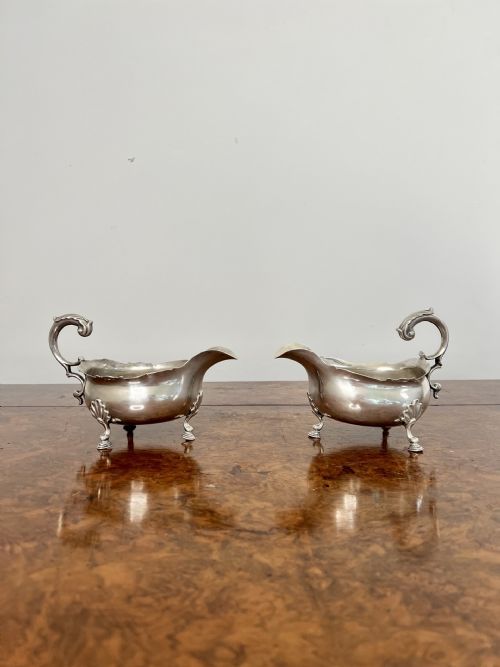

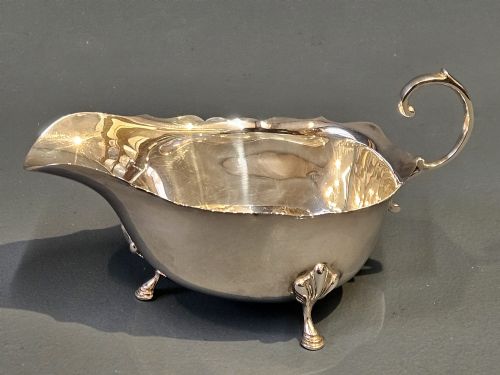


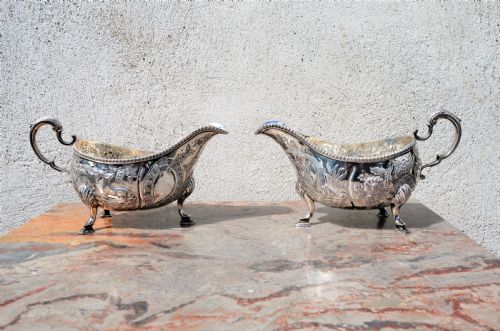


Vintage Sterling Gravy Boat
These vintage sterling gravy boat examples bring genuine Georgian and Art Deco elegance to the table, offering a solid silver form designed for pouring sauce in style.
Vintage Sterling Gravy Boat
When you search for a vintage sterling gravy boat, you are looking at solid silver serveware designed for table service, spanning periods from the eighteenth century through to the mid twentieth century. These vessels range from early Georgian examples to later Art Deco designs and George V pieces.
The pieces on this page appear in various forms, including single sauce boats and matching pairs. Origins include English, Scottish, Irish and American workshops, displaying styles from Celtic Revival to plain traditional forms.
How they were made
These items are fashioned from sterling silver and solid silver, utilising traditional silversmithing techniques such as casting, hammering and embossing. Makers shaped the metal to create sturdy bodies, often supported on three or four feet.
Detailing on these pieces includes embossed patterns and Celtic style decoration applied by hand. Handles are securely attached to the main body to withstand regular use at the dining table.
Vintage Sterling Gravy Boat Retail Price Guide 2026
Typical asking prices for vintage sterling gravy boat among the pieces listed under this phrase on Sellingantiques today, from the lower quarter to the upper quarter. They describe what is for sale here now, not the wider market.
Some sauce boats stand firmly on three dainty little feet, looking suspiciously like they might scuttle off the dining table when nobody is watching.
What varies in quality
The distinction between standard examples and the finest pieces lies in the crispness of the workmanship and the weight of the silver used. Earlier eighteenth century items often show a heavier gauge of metal and finer hand finishing.
Design complexity also sets pieces apart, with embossed decoration and matched pairs commanding greater attention from collectors. Maker attribution adds another layer of distinction to individual items.
Theodore B. Starr·James Welch·Walker and Hall
The Vintage Sterling Gravy Boat Glossary
- Sterling silver
- A silver alloy containing 92.5 percent pure silver and 7.5 percent other metals, usually copper, ensuring durability for tableware.
- Sauce boat
- A small open vessel with a lip and handle used for serving gravies or sauces at the dining table.
- Embossed
- Decorated with raised designs hammered or pressed into the surface of the metal from behind.
- Georgian
- Pertaining to the period of the British kings George I to George IV, spanning the eighteenth and early nineteenth centuries.
- Assay office
- A body that tests the purity of precious metals and stamps items with hallmarks, such as the marks associated with Sheffield and Birmingham.
Vintage Sterling Gravy Boat: Frequently Asked Questions
How do I date a silver gravy boat?
Dating relies heavily on hallmarks stamped into the silver, which indicate the assay office, the year of manufacture and the maker's mark.
Stylistic cues such as Georgian cabriole legs or Art Deco geometric lines also help place a piece within its correct era.
Were these vessels used only for gravy?
While named gravy boats or sauce boats, these vessels served any warm or cold table sauce during formal meals.
Their open spout and handled design made them practical for passing around the dining table.
How should I clean my silver sauce boat?
Regular dusting and gentle washing with warm soapy water keep silver clean without harming the metal.
Avoid harsh abrasive cleaners that can wear down antique hallmarks and delicate embossed details.
Are pairs harder to find than single pieces?
Matched pairs of sauce boats are considerably less common than individual pieces because many sets were separated over generations.
Finding two identical vessels from the same maker and period is a notable discovery for a dining collection.