


Vintage Steamship Art
Vintage steamship art records the ocean liners and merchant vessels of past centuries through oil, watercolour and folk art.
Vintage Steamship Art
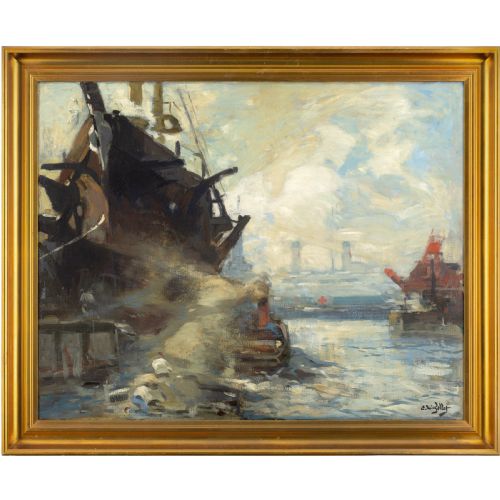
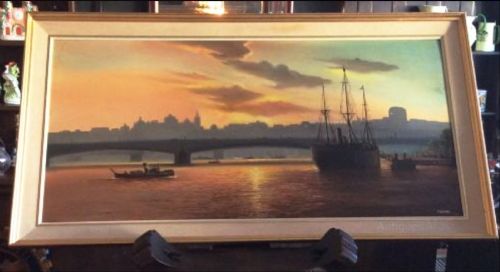
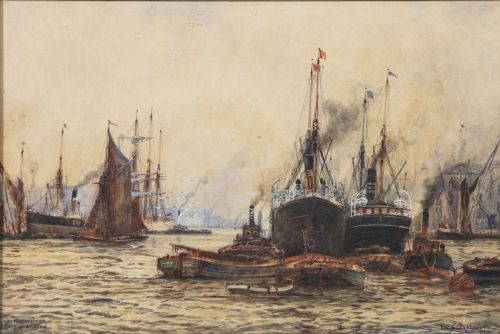
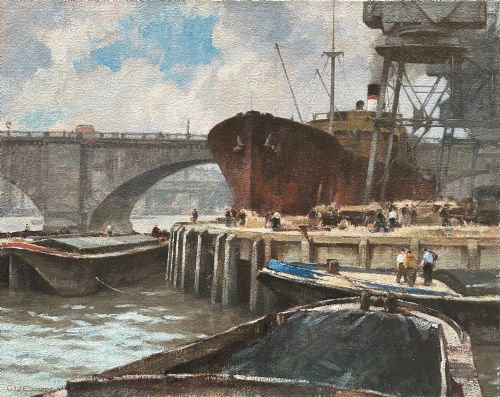
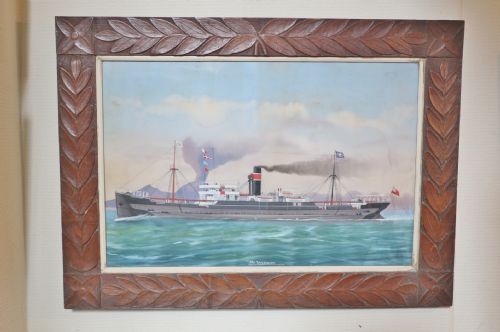
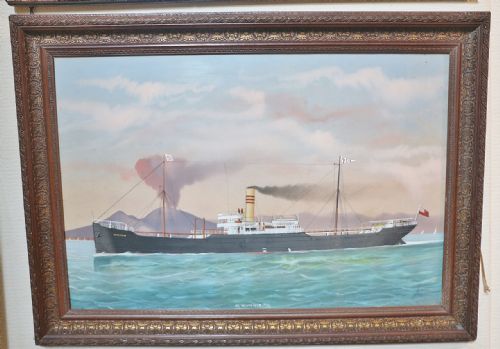
Vintage steamship art covers marine paintings, watercolours, dioramas and lithographs recording vessels from the nineteenth and twentieth centuries. Buyers seeking vintage steamship art encounter depictions of named liners, tugs and hospital ships navigating rivers and coastal waters.
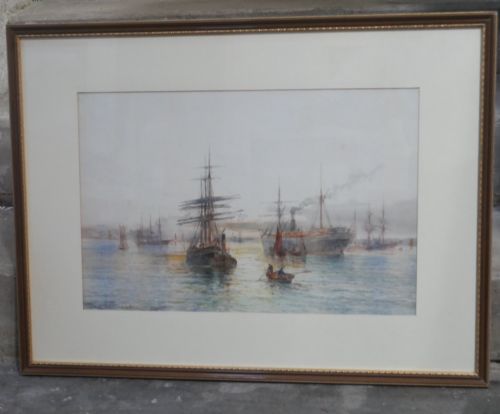
The pieces appearing here span Edwardian watercolours, nineteenth-century oils and mid-century maritime scenes. Many works capture specific ports such as London, Liverpool and Dublin, alongside international harbours.
Makers and artists range from named watercolourists to anonymous folk art practitioners working with scratch-built models and shadow boxes. The selections include framed advertising, ship portraits and panoramic seascapes.
Materials and methods
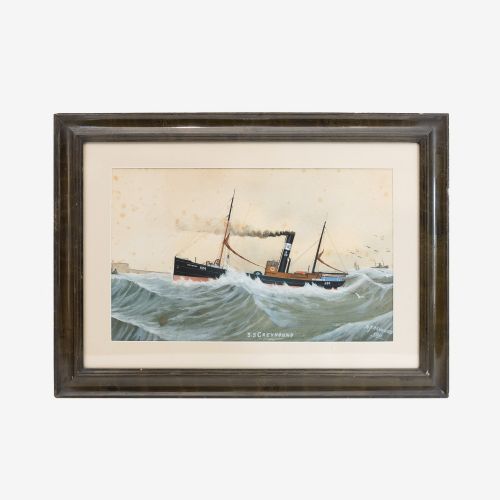
Artists relied primarily on oil on canvas and watercolour on paper, frequently incorporating gouache for highlights on waves and funnels. Canvas works often sit within period wooden frames, while works on paper utilise glass protection.
Materials span canvas, wood, paper, glass, oil paint and watercolour across multiple decades of maritime production.
Factors influencing quality
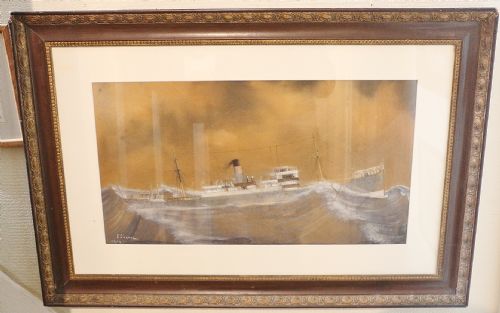
Quality rests upon the precision of the vessel's rigging and hull proportions, coupled with the artist's handling of water and atmospheric conditions like smoke or heavy seas. Named artists commanding professional training deliver sharper architectural accuracy than anonymous folk art pieces.
The integrity of the original framing and the preservation of the paper or canvas surface dictate the overall condition. Works retaining their original glass, wooden housings and legible vessel inscriptions hold greater documentary value.
Eugène-Louis Gillot·FRANK WILLIAM SCARBROUGH·Cyril Walduck Edwards·Alexander Harwood·Lieutenant Harold E Frecker·EDWARD FLETCHER·Frances E Nesbitt·Johan Jens Neumann·JAMES SCRIMGEOUR MANN
The Vintage Steamship Art Glossary
- Pierhead painting
- A specialised genre of marine art depicting commercial ships, often commissioned by captains or owners while docked in port. These works prioritize accurate details of the vessel's flags and funnels over artistic license.
- Shadow box diorama
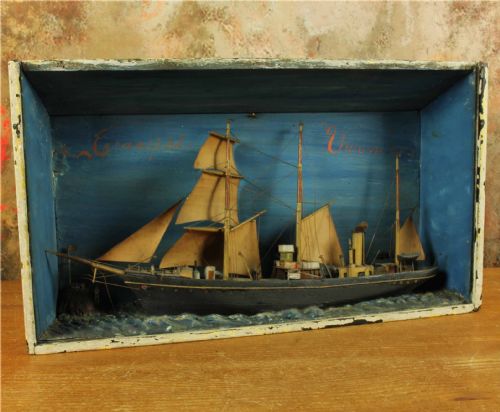
- A shallow display case containing a three-dimensional model of a ship set against a painted maritime backdrop. Glass protects the layered components from dust.
- Watercolour and gouache
- Water-soluble painting media where gouache adds opaque highlights to transparent watercolour washes. This technique suits the depiction of churning white water and metallic steamship hulls.
- Maritime folk art
- Self-taught craftsmanship encompassing objects like scratch-built models and bottled ships. These items reflect civilian ingenuity rather than formal marine academy training.
- Lithograph
- A print produced from a flat stone or metal plate inked for reproduction. Nineteenth-century examples often record notable passenger liners in multiple colours.
Vintage Steamship Art: Frequently Asked Questions
What periods do these pieces cover?
The works span from the nineteenth century through the Edwardian era and into the mid-twentieth century.
Dating relies on vessel types, artist signatures and stylistic traits recorded across oil paintings and watercolours.
How do I identify a specific ship?
Artists frequently inscribed the vessel's name directly onto the mount, canvas or within the title of the work. Funnel colours, house flags and port names provide further clues for identification.
Are these works hand-painted?
Many examples are original oils on canvas or watercolours executed by named marine artists. Other items include handmade folk art dioramas and period lithograph prints.
How should I display framed paper pieces?
Watercolours and paper items require placement away from direct sunlight to prevent fading of the pigments. Original wooden frames and glass should be preserved where possible to maintain historical integrity.