
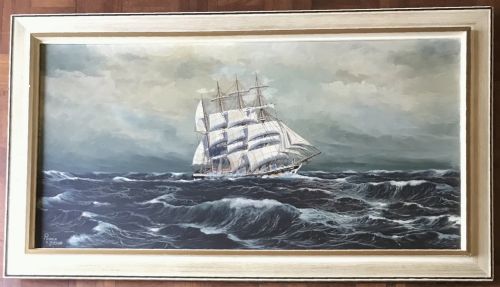
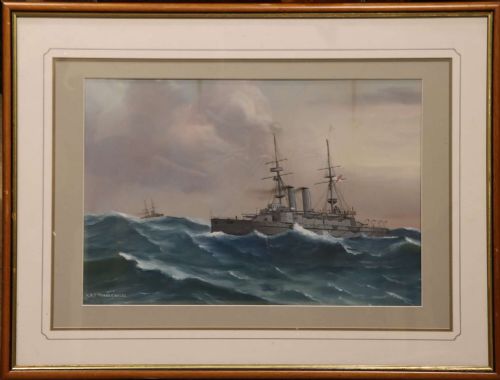
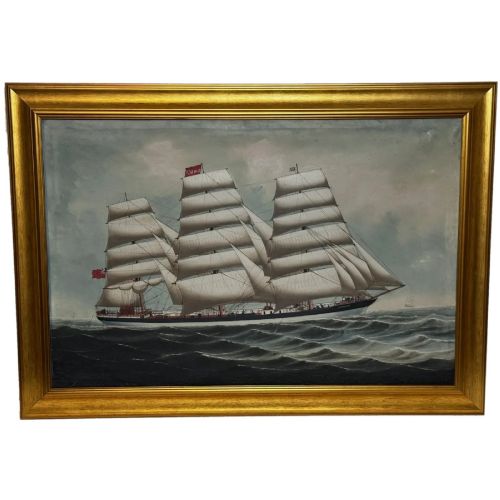
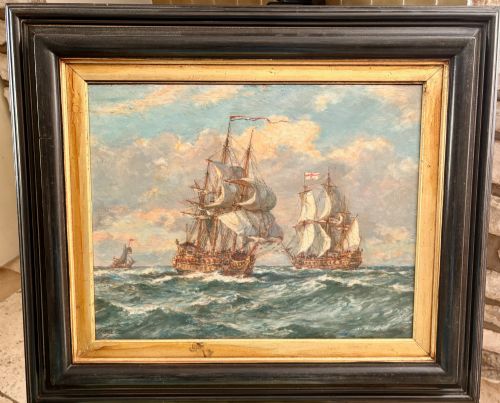



Blue Sea Ship Painting
A blue sea ship painting captures the movement of water and canvas across centuries of maritime history.
Blue Sea Ship Painting
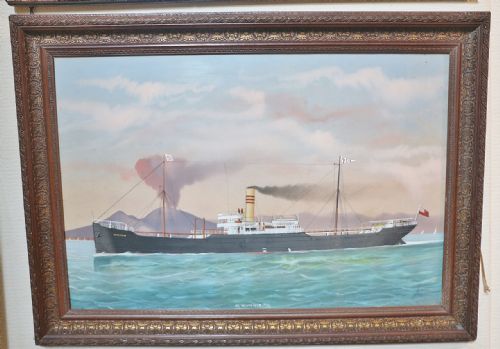
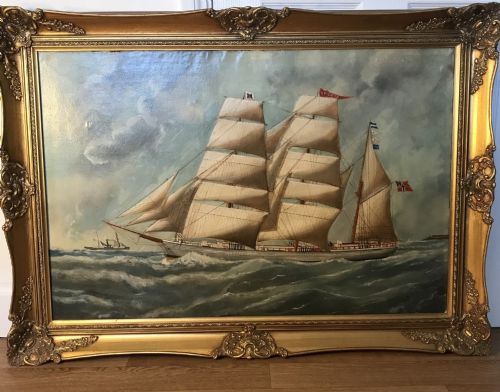
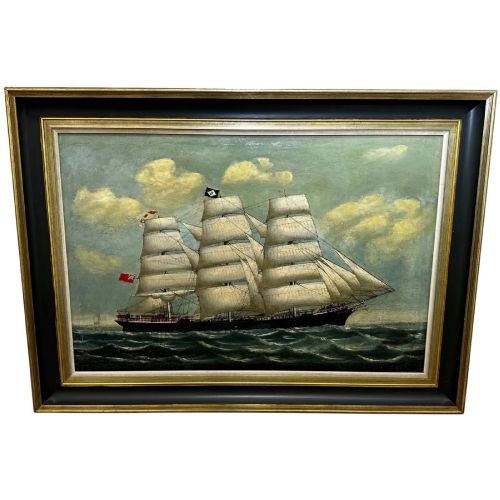
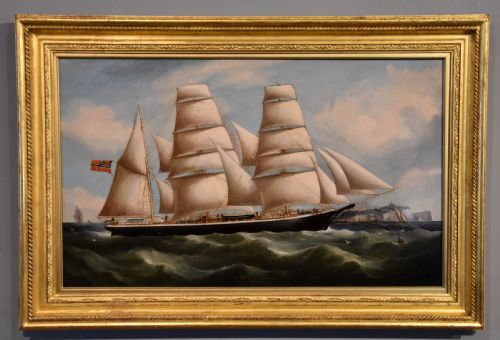
When searching for a blue sea ship painting, buyers encounter works depicting vessels navigating coastal waters, open oceans, and historic sea battles. These pieces range from detailed portraits of specific merchant barques and naval cruisers to dramatic storm scenes.
The selections span the Victorian, Edwardian, and twentieth-century periods, capturing sail and steam vessels alike. Common formats include framed oils on canvas, delicate watercolours, and card paintings.
Originating largely from British and European schools, these artworks reflect a deep maritime heritage. They serve as historical records of named vessels, clipper ships, and coastal lighthouses.
Materials and technique
Artists relied primarily on oil paint applied to canvas or wood panels, alongside watercolour and gouache on paper and card. These traditional mediums allowed painters to render the translucent qualities of sea water and the heavy textures of billowing sails.
Frames frequently utilise giltwood and oak, preserving the paper, board, and canvas supports. Folk art variations incorporate unconventional materials, reflecting maritime craftsmanship beyond the traditional studio.
Assessing quality and execution
Quality rests upon the artist's ability to render the anatomy of rigging, hull construction, and the shifting weight of ocean waves. Superior works demonstrate a precise understanding of maritime architecture combined with confident brushwork.
Provenance and attribution elevate certain pieces, particularly those linked to documented marine artists or specific historical vessels. The handling of atmospheric light and turbulent weather conditions separates masterworks from standard decorative ship portraits.
Bernard Gribble·Bernard Benedict Hemy·Richard B Spencer·Daniel Sherrin·Samuel Owen·George Gregory·Charles Dixon·Joseph Heard·WF Mitchell·Samuel John Milton Brown·Francis Holman
The Blue Sea Ship Painting Glossary
- Barque
- A sailing vessel with three or more masts having the fore and mainmasts square-rigged and the mizzenmast fore-and-aft rigged. This rig was common for long-distance cargo transport during the nineteenth century.
- Pierhead painting
- A specific genre of ship portrait created for sailors and shipowners, typically depicting a vessel arriving at or departing from a specific port.
- Gouache
- An opaque watercolour medium consisting of pigment mixed with a water-bound gum and chalk. It creates a flat, matte finish suitable for crisp architectural details on ships.
- Giltwood
- Wood carved and treated with a thin layer of gold leaf. It is commonly found on traditional frames enclosing nineteenth-century marine art.
Blue Sea Ship Painting: Frequently Asked Questions
What subjects appear in these paintings?
The works depict named vessels, naval frigates, three-masted schooners, and steamships navigating coastal waters and stormy seas. Many capture specific historic ships like the Mary Brack or the clipper Slieve Roe.
Scenes range from calm pierhead portraits to dramatic sea battles and vessels passing lighthouses.
How do I identify the period of a maritime painting?
Dating relies on the vessel type, clothing of figures, and framing materials. Nineteenth-century works frequently feature wooden sailing barques, while Edwardian pieces often introduce steamships and early twentieth-century vessels.
Signatures, artist attribution, and canvas stamps also provide key chronological markers.
Where were these marine artworks produced?
Most pieces originate from British and European schools, reflecting maritime traditions centered around major trading ports and naval stations. Artists often worked in coastal towns to observe shipping traffic directly.
Foreign school influences also appear, including works from Chinese treaty port artists depicting Western vessels.
How should I display a framed painting?
These works require placement away from direct sunlight and excessive moisture to protect canvas, paper, and watercolour mediums. Stable indoor temperatures prevent warping in wooden panels and giltwood frames.
Proper wall anchoring is essential due to the weight of period frames and glass covers.