



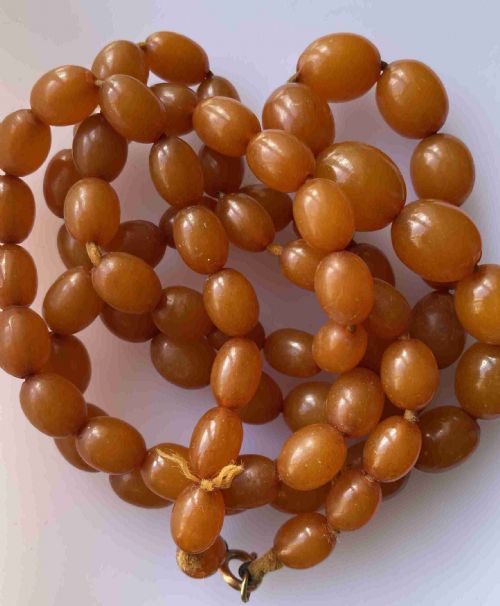

Vintage Statement Pendant
A vintage statement pendant brings scale and strong focal design to the neckline, drawing the eye instantly.
Vintage Statement Pendant
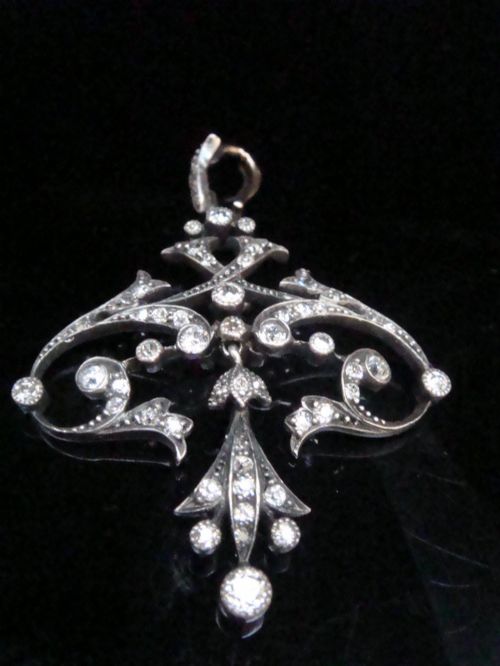
A vintage statement pendant stands as a substantial piece of jewellery designed to command attention through bold scale and distinct period character. When searching for a vintage statement pendant, buyers encounter forms ranging from geometric Art Deco designs to fluid Edwardian lavalieres.
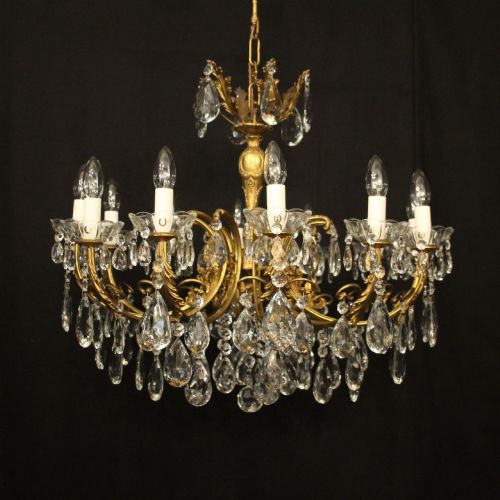
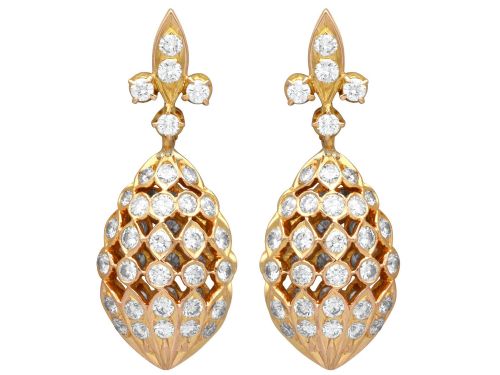
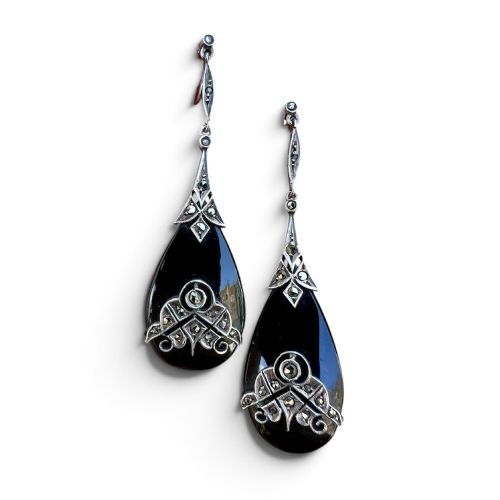
The pieces appearing on this page span several decades, including Edwardian, 1930s Art Deco, and mid-century Modernist creations. Alongside central pendants, the selection incorporates related drop earrings, elaborate necklaces, and occasional large lighting fixtures.
Makers and designers worked across various precious and base mediums, producing everything from platinum and diamond clusters to chrome and bakelite compositions. Each item carries the distinct aesthetic signatures of its respective decade.
How they were made
Goldsmiths and silversmiths utilised 18ct yellow gold, 18ct white gold, platinum, and silver as the foundational metals for mounting significant stones and geometric frames. Techniques combined traditional hand-setting of diamonds, opals, and aquamarines with structured prong and bezel arrangements.
Period manufacturing also embraced alternative substances, incorporating glass, enamel, bakelite, and galalith into modernist chrome and silver-plated settings. These varied material choices allowed workshops to achieve striking visual contrasts without relying solely on precious gems.
Vintage Statement Pendant Retail Price Guide 2026
Typical asking prices for vintage statement pendant among the pieces listed under this phrase on Sellingantiques today, from the lower quarter to the upper quarter. They describe what is for sale here now, not the wider market.
Listings feature items spanning the 19th century through the 1960s, incorporating gold, silver, platinum, diamonds, opals, and amber.
What varies in quality
The calibre of a piece rests on the precision of the metalwork and the weight of the central stones, such as large aquamarines, rubies, or diamonds. Superior examples display meticulous stone-cutting and secure, integrated settings that hold prominent gems firmly in place.
Design ambition separates standard items from exceptional ones, particularly within Art Deco and Modernist works where symmetry and clean architectural lines define the overall execution. The harmony between the mounting and the chosen materials dictates the lasting visual impact.
C'est Laudier
The Vintage Statement Pendant Glossary
- Lavaliere
- A pendant featuring a swinging drop suspended from a shorter chain or necklace section. This style gained particular popularity during the Edwardian era.
- Art Deco
- A design style emerging in the 1920s and 1930s characterised by geometric shapes, stylised motifs, and strong vertical lines.
- Parure
- A matched set of jewellery intended to be worn together, typically including earrings, a necklace, and a ring.
- Galalith
- A semi-synthetic plastic derived from milk casein, frequently utilised in 1930s modernist and Art Deco jewellery for its smooth finish and rich colour.
- Old European Cut
- An early form of diamond cutting featuring a small table, heavy crown, and a large culet, common in pieces from the late 19th and early 20th centuries.
Vintage Statement Pendant: Frequently Asked Questions
How do I style a statement pendant?
Pair the piece with simple necklines to allow the prominent metalwork and central stones to remain the main focus of the outfit. Keeping accompanying accessories minimal prevents visual clutter and highlights the period character.
Selecting appropriate chain lengths ensures the pendant rests centrally against the fabric. Adjusting the drop height changes how the scale of the jewellery interacts with different garments.
What materials are common in vintage pendants?
Gold in yellow and white variations, platinum, and silver frequently form the primary structure for precious gemstone designs. Alternative examples incorporate chrome, brass, glass, and early plastics like bakelite.
Gemstone selections include diamonds, aquamarines, amethysts, opals, and turquoise. Each material combination reflects the prevailing design preferences of its specific decade of production.
How do I date an Art Deco pendant?
Examine the geometric symmetry, use of platinum or white gold, and signature motifs such as chevrons, sunbursts, and stepped outlines. These architectural elements point firmly to the 1920s and 1930s.
Assessing the stone cuts, such as early brilliant cuts or calibrated baguettes, provides further chronological context. Maker marks and metal purity stamps also help confirm the era.
Can I wear these pieces every day?
Robust settings in gold or platinum generally withstand regular wear if handled with reasonable care. Items incorporating softer stones or delicate linkages require more mindful daily usage.
Storing pieces individually prevents scratching between harder gemstones and softer metals. Regular checks on the security of stone settings help maintain structural integrity over time.