







Vintage Starburst Gold Ring
A vintage starburst gold ring captures celestial motifs in precious metal, offering buyers a tactile piece of jewellery history.
Vintage Starburst Gold Ring
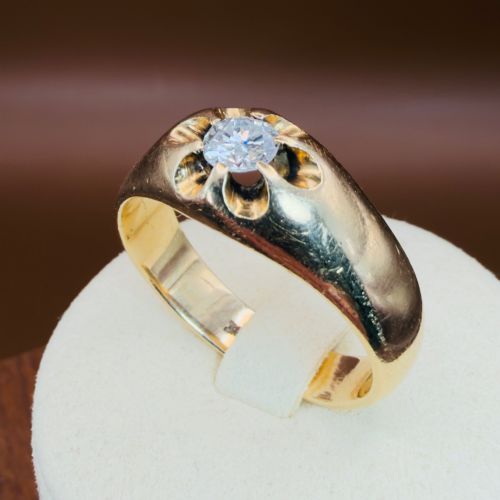
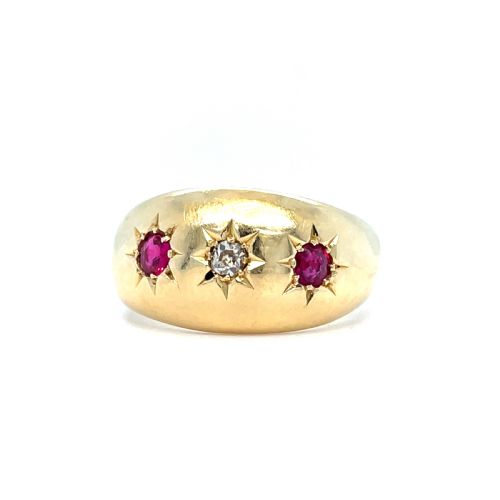
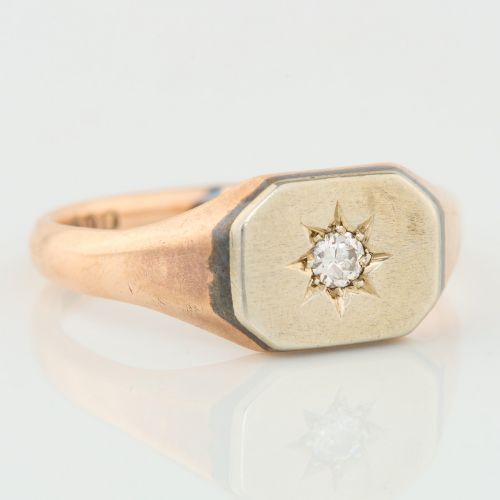
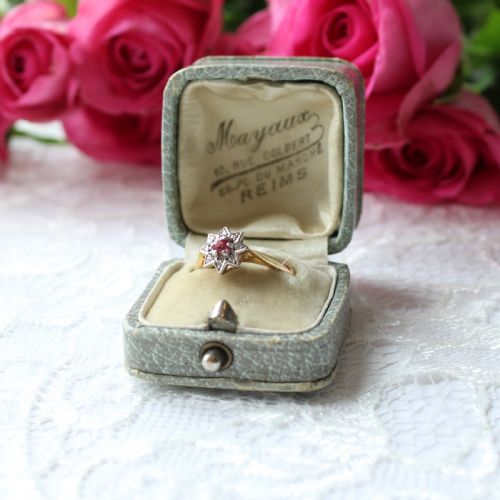
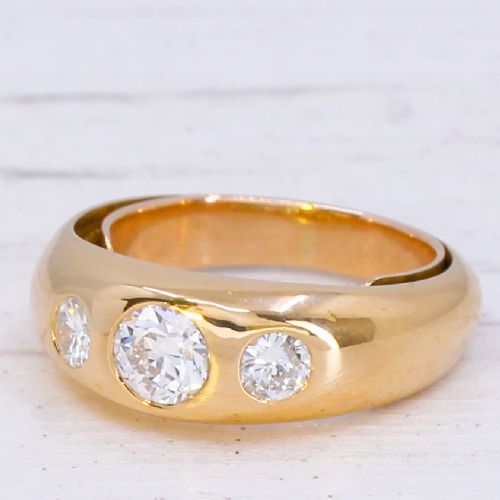
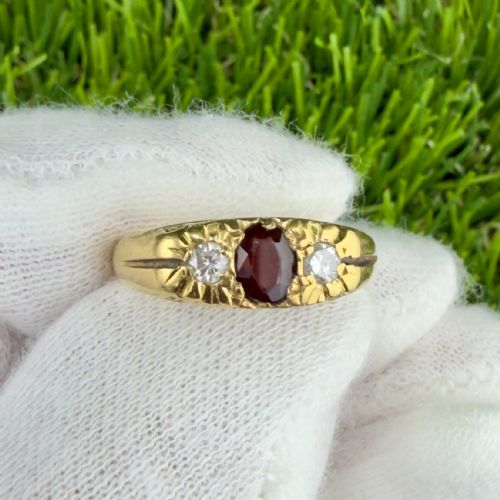
The version most commonly met on this page combines 18ct yellow gold with old cut diamonds and rubies. Forms range from heavy gypsy bands and signet rings to intricate cluster and trilogy settings.
Originating across the nineteenth and twentieth centuries, these rings reflect enduring fascination with celestial imagery. Makers utilised durable band forms designed for everyday wear whilst showcasing bright gemstones.
How they were made
Goldsmiths shaped these pieces predominantly from 18ct yellow gold, 9ct gold, and occasionally 18ct white gold or platinum settings. Metal was cast or hammered into solid bands before being hand-carved to form the rays of the starburst motif.
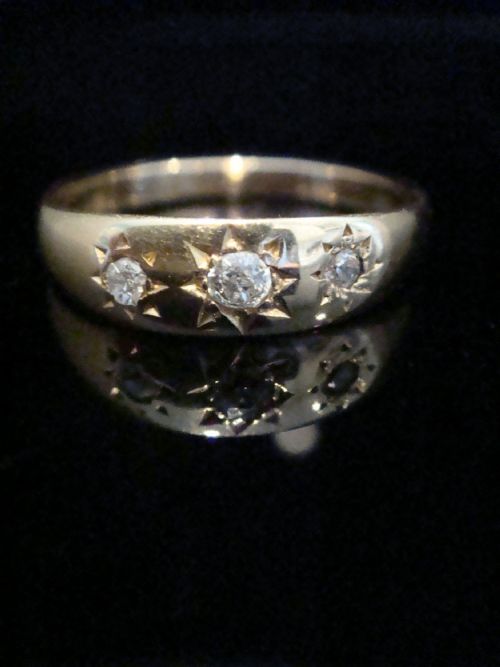
Stones such as diamonds, rubies, garnets, and sapphires were secured using gypsy settings or flush star engravings. Old cut diamonds and cushion cut rubies were meticulously positioned to catch the light within the metal rays.
The inventory spans the nineteenth century through the Edwardian, Art Deco, and mid-century decades.
What varies in quality
The crispness of the engraved starburst rays dictates much of the visual impact. Finer examples display deep, sharp incisions radiating evenly around the central stone, whereas lesser pieces show softer, worn lines from heavy past polishing.
Gemstone selection and weight heavily influence the overall standard. Superior rings incorporate well-matched old cut diamonds and vivid rubies rather than smaller, included stones.
The Vintage Starburst Gold Ring Glossary
- Starburst
- A decorative motif featuring engraved or raised rays spreading outward from a central point. It mimics the appearance of a twinkling star on the metal surface.
- Gypsy ring
- A ring style where the gemstone is flush-set into the thick band so that the metal surrounds it smoothly. This form gained immense popularity during the Victorian and Edwardian periods.
- Old cut
- A diamond facet style hand-cut before modern machinery standardised proportions. These stones feature smaller tables and larger culets, producing a distinctive candlelit sparkle.
- Trilogy ring
- A ring set with three stones, often symbolising the past, present, and future. In these listings, they frequently incorporate diamonds alongside rubies or garnets.
- Cluster ring
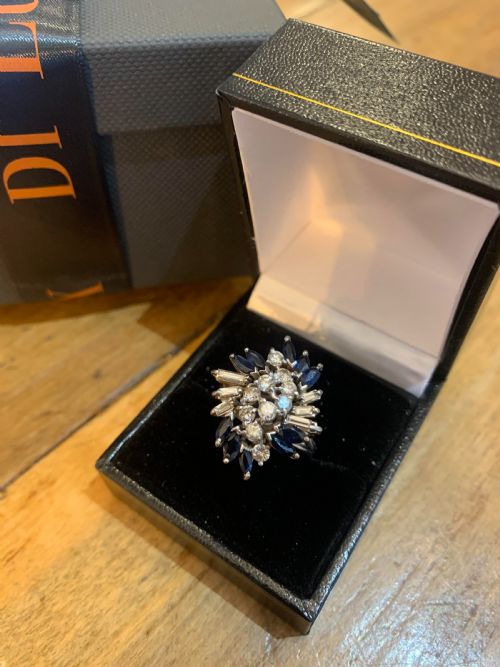
- A design featuring a central stone encircled by a group of smaller gems. This arrangement maximises visual presence and light reflection.
Vintage Starburst Gold Ring: Frequently Asked Questions
How do I date a starburst ring?
Dating relies on hallmark stamps, gold carats, and the specific cut of the diamonds or coloured stones. Victorian and Edwardian examples often feature hand-carved star motifs on heavier yellow gold gypsy bands.
Mid-century and later pieces tend to utilise cluster settings and whiter gold alloys. Comparing the mounting style against documented periods clarifies the likely decade of manufacture.
Are these rings suitable for daily wear?
Most antique and vintage examples are constructed from solid 18ct or 9ct gold designed for enduring strength. Gypsy and signet settings protect the stones particularly well by sinking them flush into the metal band.
Lighter or older pieces benefit from periodic checks by a jeweller to ensure the prongs or bezels remain secure. Careful handling preserves the hand-engraved starburst details over generations.
What stones are typically found in them?
Diamonds and rubies dominate the selection, often paired together in starburst and gypsy settings. Garnets, sapphires, and emeralds also appear across Edwardian and Art Deco variations.
The combination of deep red rubies against yellow gold creates a striking contrast that highlights the engraved star rays.