


Vintage Staffordshire Spaniels
These vintage staffordshire spaniels are classic ceramic figures that bring traditional English character to any mantelpiece.
Vintage Staffordshire Spaniels
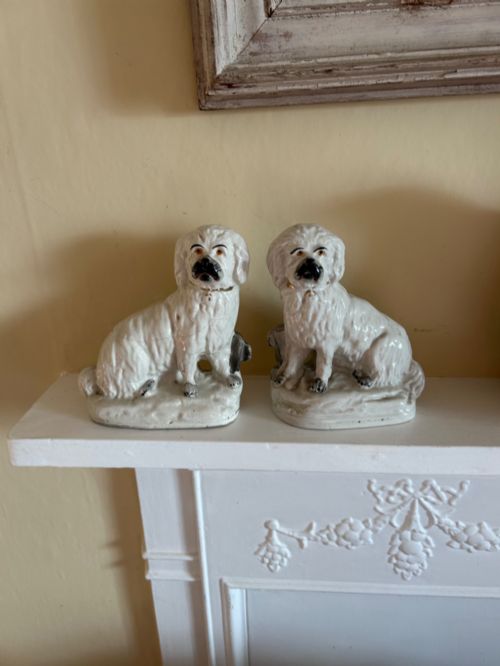
When searching for vintage staffordshire spaniels, collectors encounter decorative figurines shaped as seated dogs, most frequently appearing in pairs. These pieces span the nineteenth century and into the twentieth century, embodying English traditional styles.
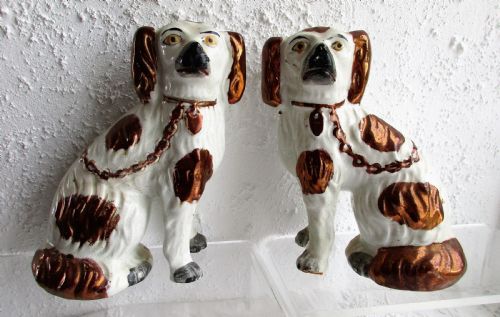
The selection includes figures in various colourways, such as white and gilt, black and white, red and white, and copper lustre. Alongside standard spaniels, the offerings feature Maltese terriers and money boxes.
Most items originate from the Victorian period, reflecting the domestic mantelpiece ornaments popular in British homes during the eighteen-fifties through to the end of the nineteenth century. Later twentieth-century examples also appear among the selections.
How They Were Made
These ceramic figures are shaped from earthenware and finished with a smooth glaze. Potters then added surface details using enamel colours, gilt, gold leaf, or copper lustre.
Some nineteenth-century spaniels doubled as money boxes, guarding pennies inside their hollow ceramic bodies.
What Varies in Quality
The fineness of the hand painting sets individual pieces apart, particularly the precision in rendering eyes, muzzles, and gilt highlights. Crisp execution of detail elevates the visual appeal of these earthenware figures.
Consistency in the glaze and the richness of the copper lustre or gold leaf contribute to the overall character of the piece. Matching pairs with well-preserved surface pigments represent the more desirable examples.
Royal Doulton·Beswick
The Vintage Staffordshire Spaniels Glossary
- Earthenware
- A porous type of pottery fired at lower temperatures, commonly used for traditional ceramic figures. It forms the solid body beneath the glaze.
- Copper Lustre
- A metallic glaze finish that creates a reflective, coppery sheen on the surface of the ceramic. This technique gives certain spaniel figures a distinctive bronze-like appearance.
- Money Box
- A hollow ceramic figure featuring a coin slot, combining ornamental display with a practical function. Victorian makers produced these in the form of spaniels.
- Comforter Spaniel
- A traditional term for the seated Staffordshire dogs traditionally placed on mantelpieces facing inwards. They derive their name from the toy spaniels kept as companion animals.
Vintage Staffordshire Spaniels: Frequently Asked Questions
What are Staffordshire spaniels?
Staffordshire spaniels are ceramic shelf figures modeled after the pet dogs popular in Victorian England. Potters designed them to sit in matching pairs on living room mantelpieces.
These earthenware figures typically depict seated spaniels adorned with chains and lockets. They remain enduring symbols of nineteenth-century domestic interior decoration.
How were they displayed?
Victorian households traditionally placed these dog figures at each end of a mantelpiece, facing inward toward the centre. They served as decorative ornaments rather than functional items.
Collectors today continue this traditional arrangement on shelves, sideboards, and mantelpieces. Their symmetrical pairing creates a balanced display in both traditional and modern rooms.
How do I identify Victorian pieces?
Nineteenth-century examples typically feature hand-painted details over earthenware bodies, often finished with copper lustre or gilt highlights. The modelling reflects traditional Victorian styles and manufacturing techniques.
Examining the base and the wear on the glaze helps distinguish older earthenware pieces from later twentieth-century productions. Subtle variations in the hand-painted markings point to earlier handcrafting methods.
What are comforter spaniels?
Comforter spaniels refer to the specific breed type that inspired these Victorian ceramic ornaments. King Charles spaniels were known as comforters because they kept their owners warm.
Potters captured this popular lapdog in clay, creating decorative figures that replicated the stance and expression of the real animals. These ceramic versions became household staples across Britain.