

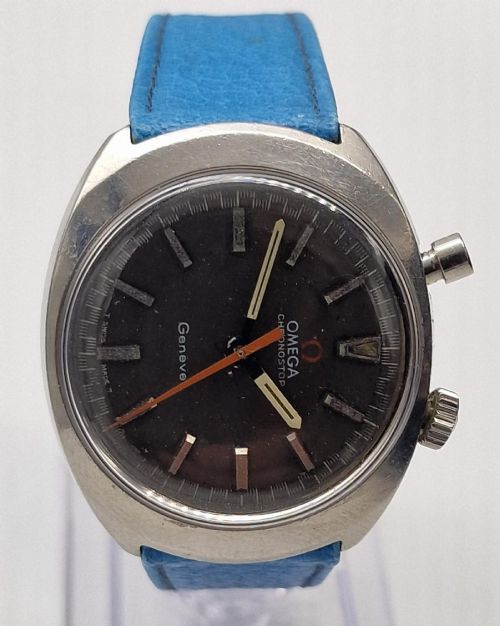


Vintage Sports Chronograph
These vintage sports chronographs are mechanical timing instruments built for drivers, pilots, and navigators during the mid-twentieth century.
Vintage Sports Chronograph
When you search for vintage sports chronograph pieces, you encounter wristwatches and pocket watches designed for active timing in aviation and motoring. These mechanical tools combine standard timekeeping with independent stopwatch complications for measuring elapsed intervals.
The pieces listed here predominantly stem from the 1950s and 1960s, reflecting the mid-century expansion of specialised tool watches. Wristwatches dominate this selection, featuring distinct dial layouts built for legibility under movement and pressure.
Forms range from round steel cases to square configurations, alongside specialised pocket watch formats. Each variant represents the specific timing requirements demanded by mid-century aviators, drivers, and field professionals.
How they were made
Watchmakers constructed these cases using durable metals including stainless steel, gold plate, and chrome-plated metal. Acrylic glass or standard glass protected the complex dials from dust and impact during active use.
Manual wind movements powered the internal timing mechanisms, requiring regular hand winding to maintain tension on the mainspring. Dials utilised contrasting sub-registers, often termed panda layouts, to display elapsed minutes and hours clearly.
Straps fashioned from leather and fabric secured the watches to the wrist during flight or motoring activities. These materials prioritized flexibility and sweat resistance under demanding physical conditions.
Vintage Sports Chronograph Retail Price Guide 2026
Typical asking prices for vintage sports chronograph among the pieces listed under this phrase on Sellingantiques today, from the lower quarter to the upper quarter. They describe what is for sale here now, not the wider market.
Materials across these listings span stainless steel, gold plate, chrome-plated metal, leather, fabric, glass, and acrylic.
What varies in quality
The sophistication of the internal movement dictates the baseline standard of a chronograph. Complex complications like split-second rattrapante mechanisms or GMT functions represent higher engineering ambition than standard time-and-stopwatch models.
Case finishing and dial preservation distinguish exemplary specimens from heavily worn examples. Crisp lettering on the dial and unpolished case edges indicate a higher degree of original integrity and survival state.
Omega·Breitling·Invicta·Benrus·Heuer
The Vintage Sports Chronograph Glossary
- Chronograph
- A watch that combines a standard timekeeping display with an independent stopwatch function for measuring elapsed time. This complication uses dedicated pushers to start, stop, and reset the central seconds hand.
- Manual Wind
- A mechanical movement powered by manually turning the crown to wind the mainspring, requiring no battery. Collectors value the tactile engagement of daily winding.
- Panda Dial
- A dial configuration featuring a light background with contrasting dark sub-registers, resembling the face of a panda. This layout enhances legibility during high-speed timing.
- Rattrapante
- A split-second chronograph featuring two superimposed stopwatch hands that measure intermediate or lap times simultaneously. This advanced mechanism requires intricate gear work within the movement.
- Sub-register
- A smaller auxiliary dial integrated into the main watch face for tracking elapsed minutes, hours, or continuous seconds. These subsidiary displays organise complex data without cluttering the primary dial.
Vintage Sports Chronograph: Frequently Asked Questions
How do I wind a manual chronograph?
Rotate the winding crown clockwise between your thumb and forefinger until you feel gentle resistance. Stop immediately to avoid damaging the internal mainspring.
Perform this action at the same time each day to maintain consistent tension and accurate timekeeping across the mechanical movement.
Can I wear these watches daily?
These vintage instruments benefit from careful handling and should be kept away from water and excessive moisture. Their mid-century seals lack modern waterproofing capabilities.
Pairing them with leather or fabric straps ensures comfortable wear during dry daily activities while preserving their historical case metals.
What is a flyback chronograph?
A flyback mechanism allows the stopwatch hand to return to zero and instantly restart with a single press of the reset pusher. This eliminates the traditional three-step stop, reset, and start sequence.
Pilots and drivers utilised this feature to time consecutive legs of a journey without losing valuable fractions of a second.
How do I read a tachymeter scale?
The tachymeter scale printed around the dial perimeter measures speed based on time travelled over a fixed distance. Start the stopwatch at a mile marker and stop it when you reach the next marker.
The central seconds hand points to the average speed in units per hour directly on the scale.